
$1,799.00
Shop Now
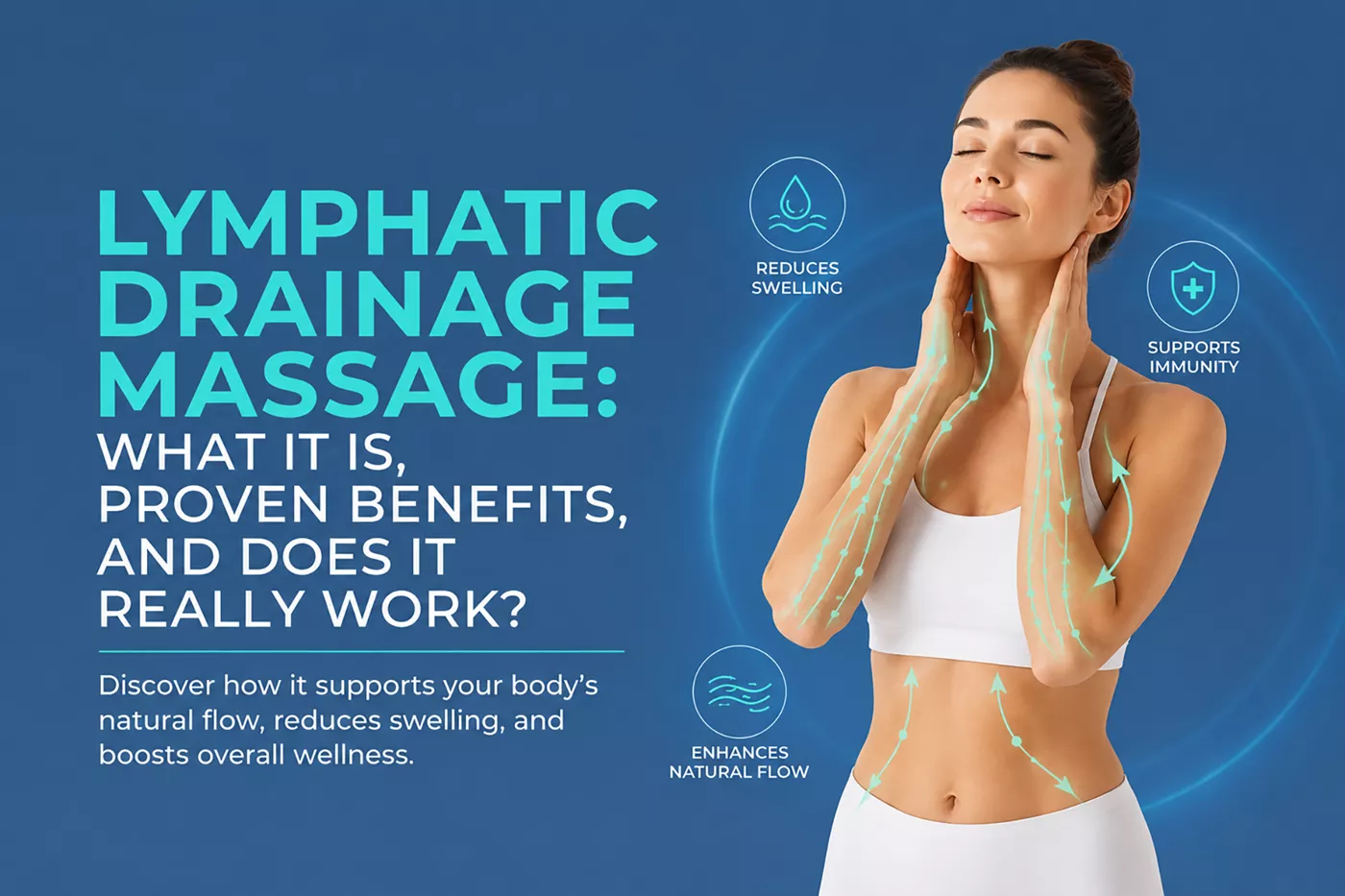
Lymphatic drainage massage has gone from a highly clinical therapeutic approach used in hospitals to one of the most talked-about wellness treatments on the internet.
People are turning to it for an impressive range of reasons: de-puffing a swollen face before a party, accelerating recovery after cosmetic or orthopedic surgery, managing chronic swelling in the legs and arms, and even supporting their immune system during periods of illness.
The gold standard for lymphatic drainage has long been Manual Lymphatic Drainage (MLD), a hands-on technique performed by a trained lymphatic therapist.
But for many people, consistent access to a skilled therapist isn’t always practical.
Sessions can be expensive, time-consuming, and need to be repeated regularly to maintain results.
This is where modern biohacking tools are changing the game.
In the sections below, we’ll explore exactly what lymphatic drainage massage does to the body, its proven benefits, how it’s performed, and how Whole Body Vibration fits into the picture as a go-to treatment.


Lymphatic drainage massage is a gentle, specialized technique that uses light, rhythmic pressure to move excess fluid from your body’s tissues toward your lymph nodes for filtering and removal.
Also known as Manual Lymphatic Drainage (MLD), it relieves painful swelling caused by a blocked or sluggish lymphatic system, most commonly in the arms and legs.
It supports immune function, reduces inflammation, and helps restore your body’s natural fluid balance.
The origins of this therapy trace back nearly a century.
Manual Lymphatic Drainage was pioneered by Danish doctors Emil Vodder and Estrid Vodder in the 1930s and was originally developed for the treatment of chronic sinusitis and other immune disorders.
Working with patients who presented with persistently swollen lymph nodes, Vodder developed a gentle circular massage technique to unblock the drainage of lymph from the head and neck—a method that proved extremely successful, with his first patient’s symptoms resolved within 10 sessions and having had zero side effects.
Unlike blood, which is pumped continuously through your arteries and veins by your heart, the lymphatic system has no dedicated pump.
It requires on movement against gravity instead
This makes it uniquely vulnerable to slowdowns if you’re sedentary.
When you’re sedentary, whether it’s due to age, recovery from surgery, or because you’re dealing with illness, lymph fluid can easily pool in the tissues, leading to puffiness, swelling, and a heavy, waterlogged sensation.
The lymphatic massage therapist then works with steady, rhythmic strokes that follow one another, stretching the skin, and matching the natural contraction rate of muscles to stimulate the lymph system.
Therapy is applied to unaffected areas first, making it possible for fluid to move out of the affected area more effectively.
In other words, the approach is designed to “decongest” the region.
By physically guiding stagnant lymph fluid through the network of lymphatic vessels and into the lymph nodes,
where it is filtered, MLD restores the natural drainage process that the body can no longer accomplish efficiently on its own.
|
Cardiovascular System |
Lymphatic System |
|
|
Pump |
Heart (active, automatic) |
None — relies on movement against gravity or external stimulation |
|
Flow direction |
Closed loop (arteries → veins → heart) |
One-way toward lymph nodes, then into venous blood |
|
Fluid type |
Blood (oxygen, nutrients, cells) |
Lymph (waste, proteins, immune cells, excess fluid) |
|
What drives it |
Heartbeat |
Muscle contraction, breathing, massage |
|
When it slows |
Rarely (cardiac failure) |
Inactivity, illness, surgery |
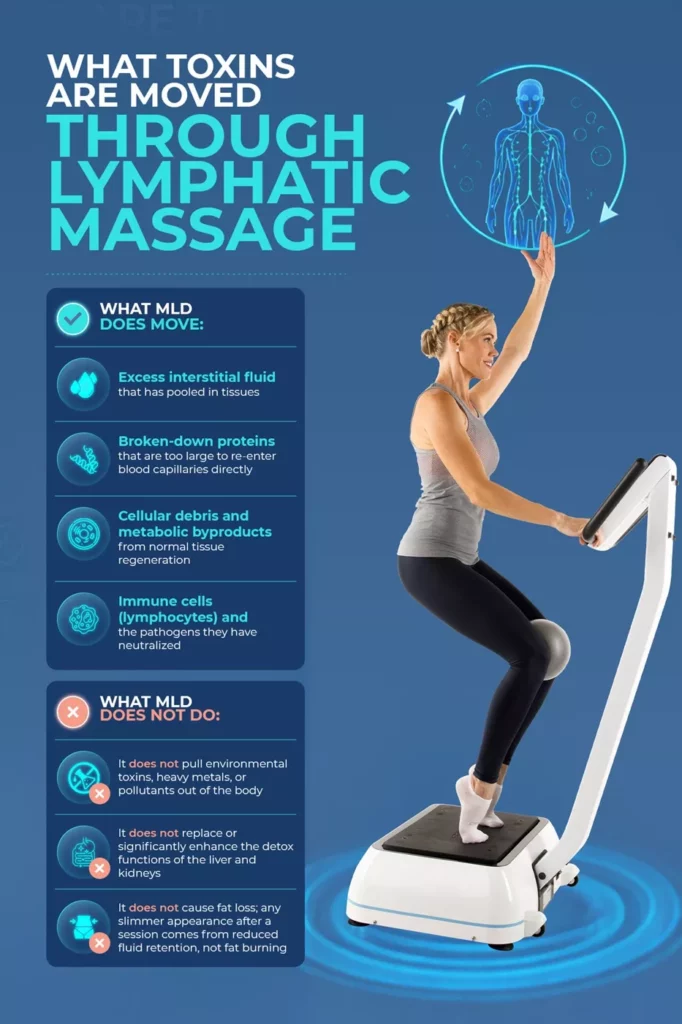
Fact-checking common misconceptions about detoxification and manual lymphatic drainage (MLD).
Social media is full of dramatic claims: that lymphatic drainage massage flushes toxins, triggers deep detoxification, or produces rapid weight loss.
According to Dr. Rockson of Stanford University’s lymphatic research program, there’s a notion that because the lymphatic system is a drainage system, it is responsible for getting rid of toxins, but that’s not really true.
The lymphatic system drains cellular waste, excess interstitial fluid, and immune system byproducts from the tissues.
What MLD does move:
What MLD does NOT do:
The liver and kidneys are the primary organs responsible for detoxification.
The lymphatic system clears cellular waste from specific tissues it drains, and that waste is then channeled into venous circulation, where it is circulated to the liver and kidneys for final processing.
While “clogged lymphatic system” is not a formal medical diagnosis, people with lymphatic congestion or poor lymph flow often notice a pattern of fluid-related symptoms.
All these symptoms can also occur with other medical issues, so persistent or worsening symptoms should be assessed by a qualified healthcare professional rather than self-diagnosed.


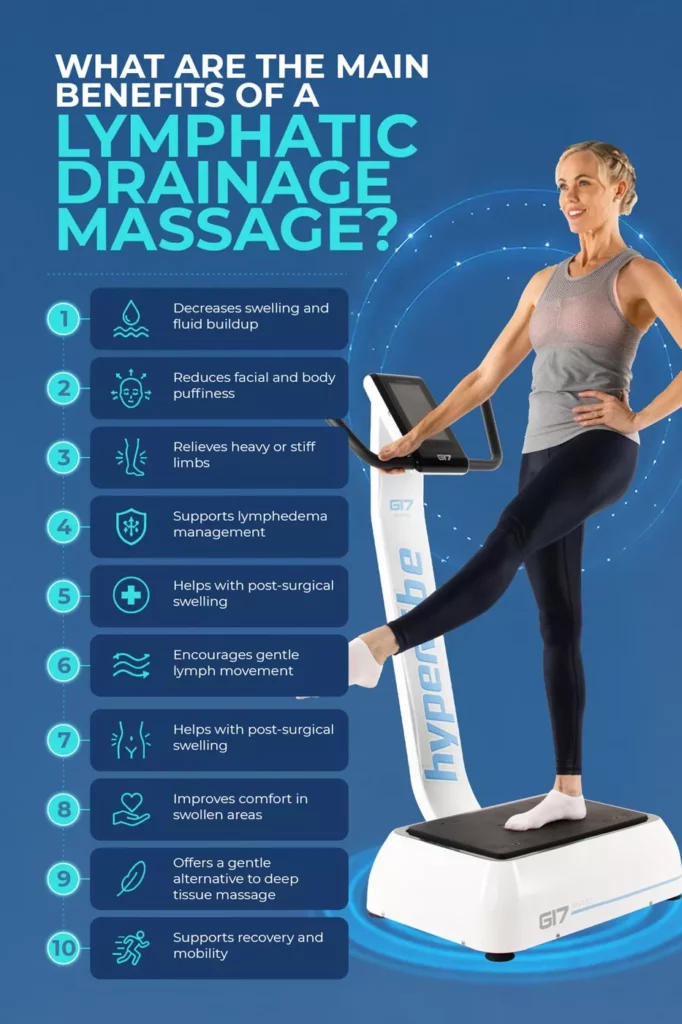
Ten science-backed reasons to incorporate lymphatic drainage practices into your wellness routine.
Yes, technically.
But it’s important to note that lymphatic drainage massage is not a fat-loss treatment.
It does not burn body fat the way a calorie deficit, exercise, or long-term metabolic change does.
What it may do is reduce fluid retention and temporary bloating.
That can shift the scales and make the stomach, face, arms, or legs look less swollen and feel lighter, but that is a de-bloating effect, not fat reduction.
One of the clearest evidence-based uses of lymphatic drainage massage is helping manage chronic swelling, especially lymphedema.
When lymph fluid builds up, people often report heavy limbs, tight skin, discomfort, reduced mobility, and that familiar sense that rings, sleeves, or clothes suddenly feel tighter.
Deep tissue techniques can be too aggressive for someone with lymphedema.
The goal is to use light, structured strokes that help redirect fluid without irritating already stressed tissue.
After surgery, lymphatic drainage can be valuable because surgery can disrupt normal lymph flow and lead to fluid buildup near the affected area.
Lymphatic drainage may support post-surgical recovery by helping manage swelling and tissue congestion, but it is not appropriate in every case,
and it should not be performed over certain problem areas or in people with specific contraindications, such as infection, blood clots, or certain heart and kidney conditions.
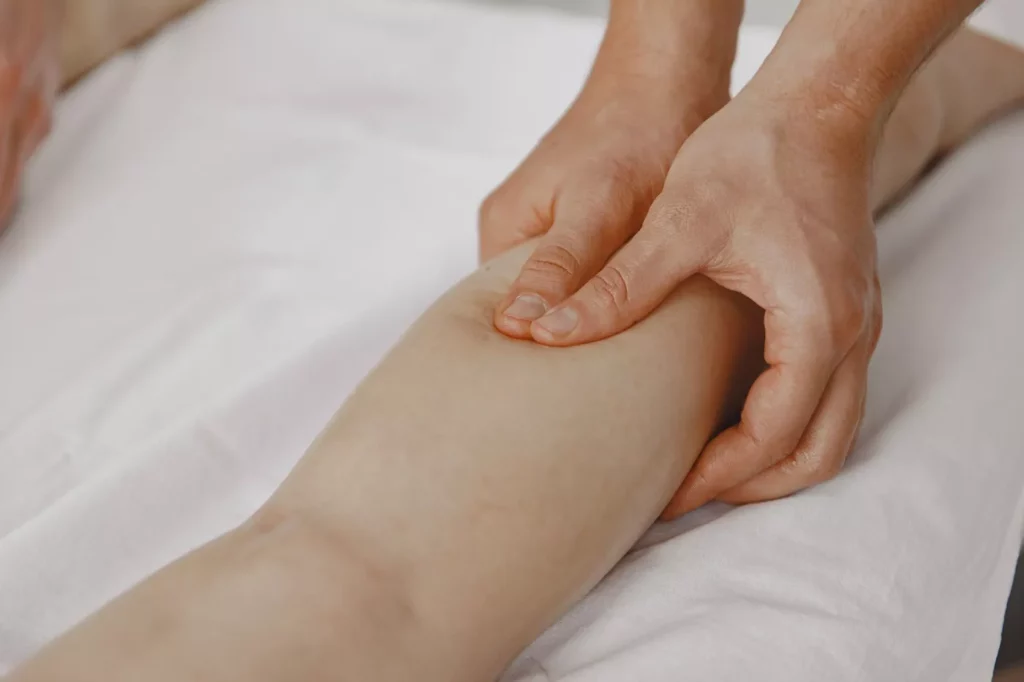
Gentle, specialized hand placement used by professionals during a targeted lower-leg manual lymphatic massage.
Lymphatic drainage is very different from a regular massage.
The pressure used is intentionally feather-light.
MLD uses a specific amount of pressure, less than 9 ounces per square inch and rhythmic circular movements to stimulate lymph flow.
The touch is intentionally superficial: in lymphatic massage, you’re only working the superficial skin structures; that’s where the fluid is trapped.
Pressing deeper would actually compress and close the delicate lymphatic capillaries, reducing rather than improving drainage.
The session follows a deliberate two-phase sequence.
The first phase is clearing, creating a gentle vacuum effect so that the area is prepared to bring in more fluid, producing a flushing effect.
The second phase is “reabsorption,” using sweeping motions to guide fluid from the extremities back toward the body’s core lymph nodes.
Therapy is applied to unaffected areas first, making it possible for fluid to move out of the congested area,
effectively decongesting the region and helping to open the remaining functioning lymph collectors so protein and fluid can move into them.
The liver and kidneys are the primary organs responsible for detoxification.
The lymphatic system clears cellular waste from specific tissues it drains, and that waste is then channeled into venous circulation, where it is circulated to the liver and kidneys for final processing.
This is also why most people need to urinate more in the hours following a session.
Once lymph is back in circulation, the kidneys filter it, which is why increased urination after a session is normal and shows that the system is finally moving fluid more efficiently.
Drinking plenty of water after treatment supports this kidney filtration process and helps prevent the mild headaches or temporary fatigue some people notice post-session.
The safest rule is to start centrally, then move outward to the swollen region, and always guide fluid in the correct drainage direction.
A simple order for many home routines is this: first open the collarbone region, then the side and back of the neck, then the armpits,
and only after that move to the face, arms, trunk, or legs depending on where swelling is present.
For the lower body, the first principle is to work with gravity.
That means preparing the upper drainage route before trying to move fluid from the calves, ankles, or feet.
Prepare the chest and underarm area first, then direct fluid from the hip upward toward the underarm before moving down the leg.
This creates a clearer path for fluid from the thigh and lower leg to travel upward.
For the thigh, begin high on the leg.
Gently stretch the skin from the inside of the thigh toward the outer thigh and up toward the hip.
Then continue the sequence lower, section by section, until you reach the knee.
At the knee, gently prepare the area behind the knee with a soft pumping or rolling upward motion.
Then move to the lower leg by placing one hand on the shin and the other behind the leg, stretching the skin upward toward the knee and repeating this section by section down to the ankle.
On the ankle and foot, continue the same upward direction.
For most beginners, gentle daily practice is more useful than occasional long sessions.
During periods of increased swelling, daily lymphatic drainage may be recommended more consistently, especially as part of a clinician-guided plan.
The ideal routine for long-term maintenance depends on the cause of the swelling, the area affected, and whether other strategies such as compression, walking, or lymphedema care are also being used.
The benefits do not usually last very long after a single session.
Some people notice relief quickly, while others need regular, ongoing practice to manage swelling over time.
Results also tend to last longer when lymphatic massage is combined with hydration, light movement, deep breathing, and any prescribed compression, since all of these help keep lymph fluid moving naturally.
Yes, some do.
Manual Lymphatic Drainage remains the most precise option for clinically managing swelling, especially when fluid buildup is linked to lymphedema, surgery, or disrupted lymph flow.
But for everyday wellness, circulation support, and consistent at-home use, the right technology can still play a valuable role.
Vibration-based tools, including targeted massagers and Whole-Body Vibration (WBV) platforms, work differently, stimulating the lymphatic system indirectly by activating the surrounding musculature and increasing circulatory movement through mechanical oscillation.
Professional Manual Lymphatic Drainage is highly specific.
It uses light, structured movements to encourage fluid to move toward working lymph pathways.
This is very different from the many cheap handheld massagers marketed online as “lymphatic” tools.
Most of those devices do not follow the proper direction, pressure, or sequencing needed to support lymph movement.
In some cases, aggressive pressure may even work against the goal, since lymphatic vessels sit close to the skin and respond best to gentle stimulation.
A well-designed wellness device should support the body’s natural pumping mechanisms through movement, circulation support, and repeatable muscle activation.
They can be an excellent support tool when used correctly.
Whole Body Vibration Plates can effectively stimulate the bodily systems that support healthy lymph movement.
Oscillating Vibration Plates like Hypervibe do a couple of things:
Both of these factors work together to support the lymphatic system.
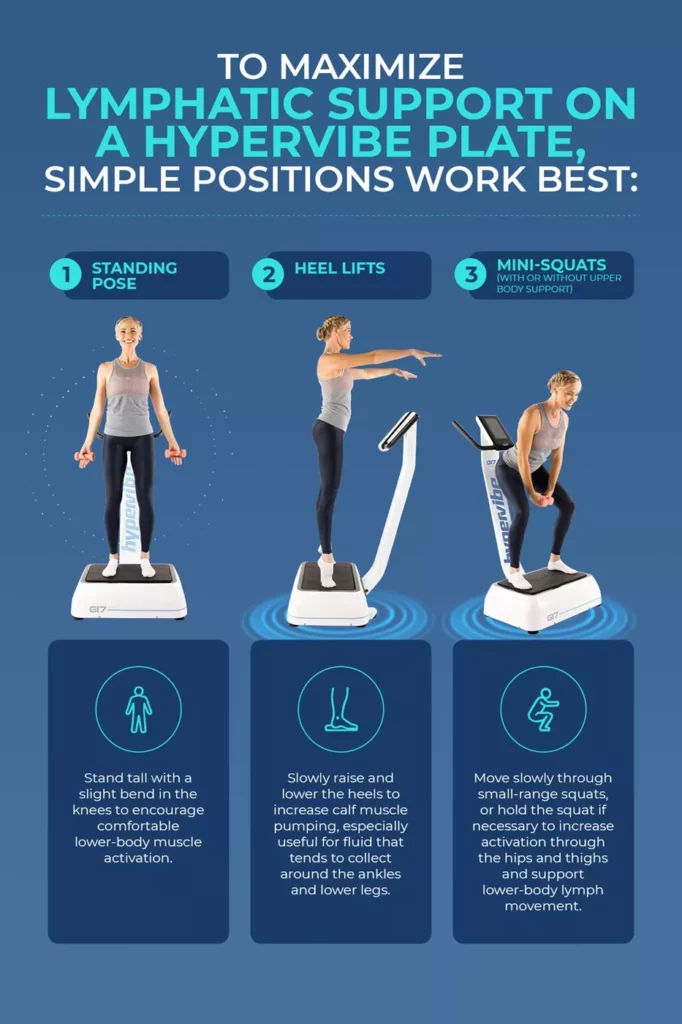
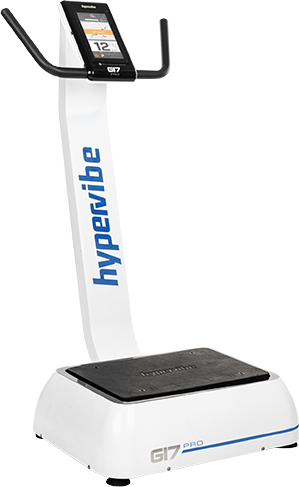
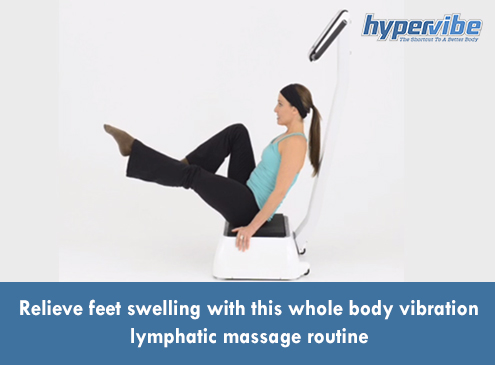
A guide to maximizing lymphatic support using a Hypervibe whole-body vibration plate with simple lower-body exercises.
Professional MLD offers hands-on precision.
Hypervibe offers consistency, convenience, and long-term value.
Users can build regular sessions into their home routine.
That consistency is important because fluid movement is rarely improved by a single session.
It responds better to regular stimulation, gentle movement, and habits that can actually be maintained.
Hypervibe is especially well positioned here because oscillating vibration creates a more dynamic lower-body muscle response than passive massage tools.
To maximize lymphatic support on a Hypervibe plate, simple positions work best:
Lymphatic drainage massage or Whole Body Vibration is generally considered gentle and low-risk when it is done correctly, but it is not appropriate for everyone.
It should be avoided, or only done with medical clearance, in people with the following conditions:
Lymphatic Drainage
Whole Body Vibration
It can be, especially for people who want regular lymphatic support at home. Professional Manual Lymphatic Drainage sessions offer more precision, but a quality Vibration Plate may be practical and affordable over time. The main advantage is convenience: you can use it consistently as part of a long-term routine. Yes, upper body lymphatic massage may help reduce puffiness and support fluid movement in the arms, chest, and face when done correctly. This is especially relevant when swelling is linked to post-surgical changes, lymph node disruption, or fluid retention. Because the drainage pathways in the upper body are specific, people with breast-related swelling or lymphedema should ideally get guidance from a trained clinician. A Vibration Plate supports lymph flow by creating rapid muscle contractions against gravity (G-forces created by the plate’s motion) and increasing circulation. In that sense, an oscillating Vibration Plate may help stimulate the body mechanisms that support healthy fluid movement. No. A proper lymphatic drainage massage should not hurt. That means pain, aggressive soreness, or deep bruising are red flags. This is especially important for post-surgical or clinically swollen tissue, where forceful pressure is not the goal.
FAQs
- Is buying a Whole Body Vibration Plate for Lymphatic Therapy more cost-effective long-term?
- Can upper-body lymphatic massage help the arms, face, and breasts?
- How exactly does a Vibration Plate mechanically stimulate the lymphatic system?
- Does a Lymphatic Drainage Massage hurt?


Here’s how we use a vibration plate for weight loss...

If, a few minutes into your session on the vibration...

Are vibration machines bad for you? Yes, if used incorrectly....
Yes, Vibration Plates or Whole Body Vibration (WBV) platforms, promote...

Most people get the best results using a vibration plate...

If we backtrack to the 1930s in Denmark, we’d find physical therapist Emil Vodder who developed the lymphatic drainage technique...
The Centers for Disease Control and Prevention offers some frightening statistics about breast cancer. Over 264,000 cases are reported in...

The lymphatic system, also called the lymphoid system, is an important part of our immunity and overall health. Its major...
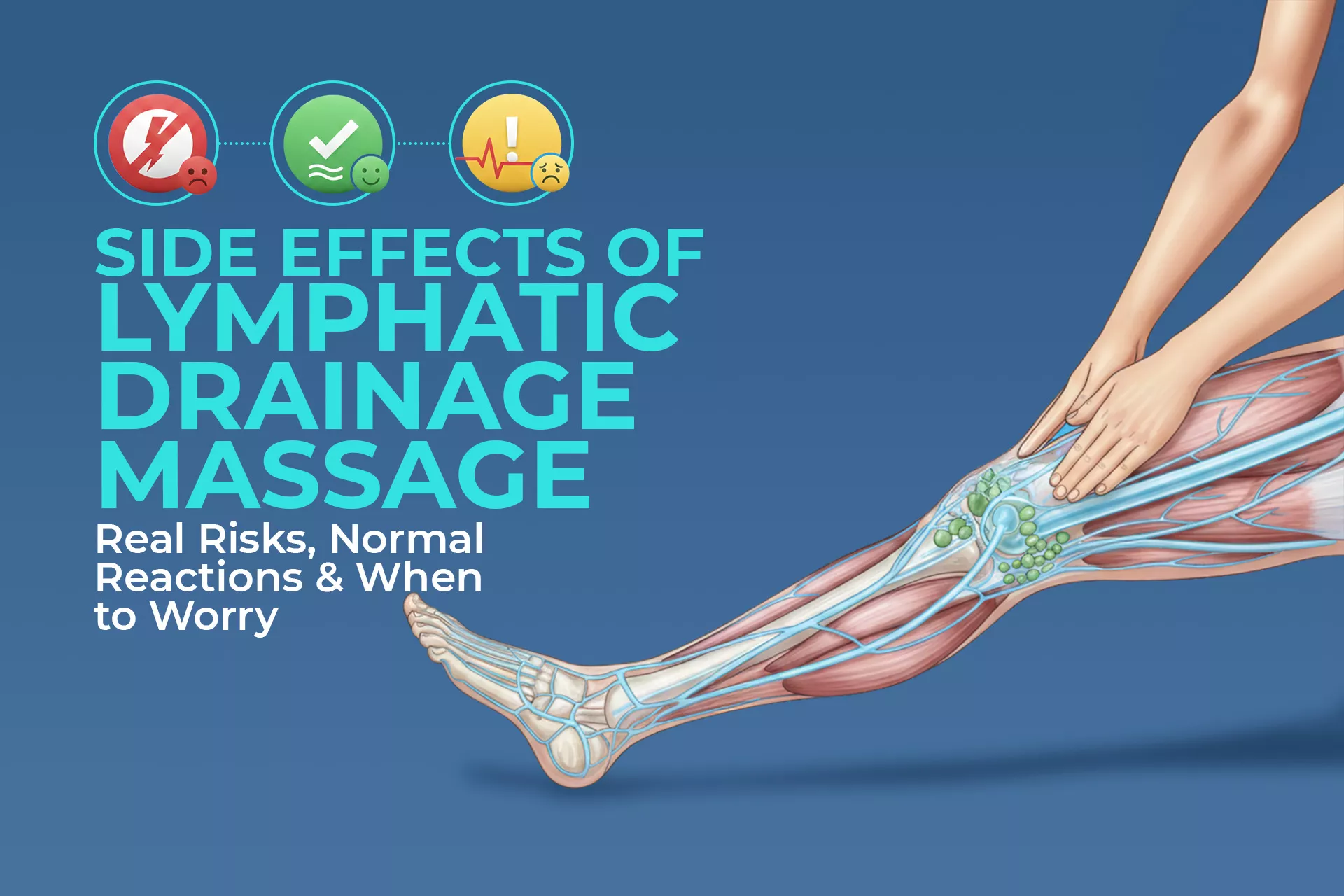
Lymphatic drainage massage (manual lymphatic drainage [MLD]) is a hands-on, directional massage technique used to encourage proper fluid movement in...
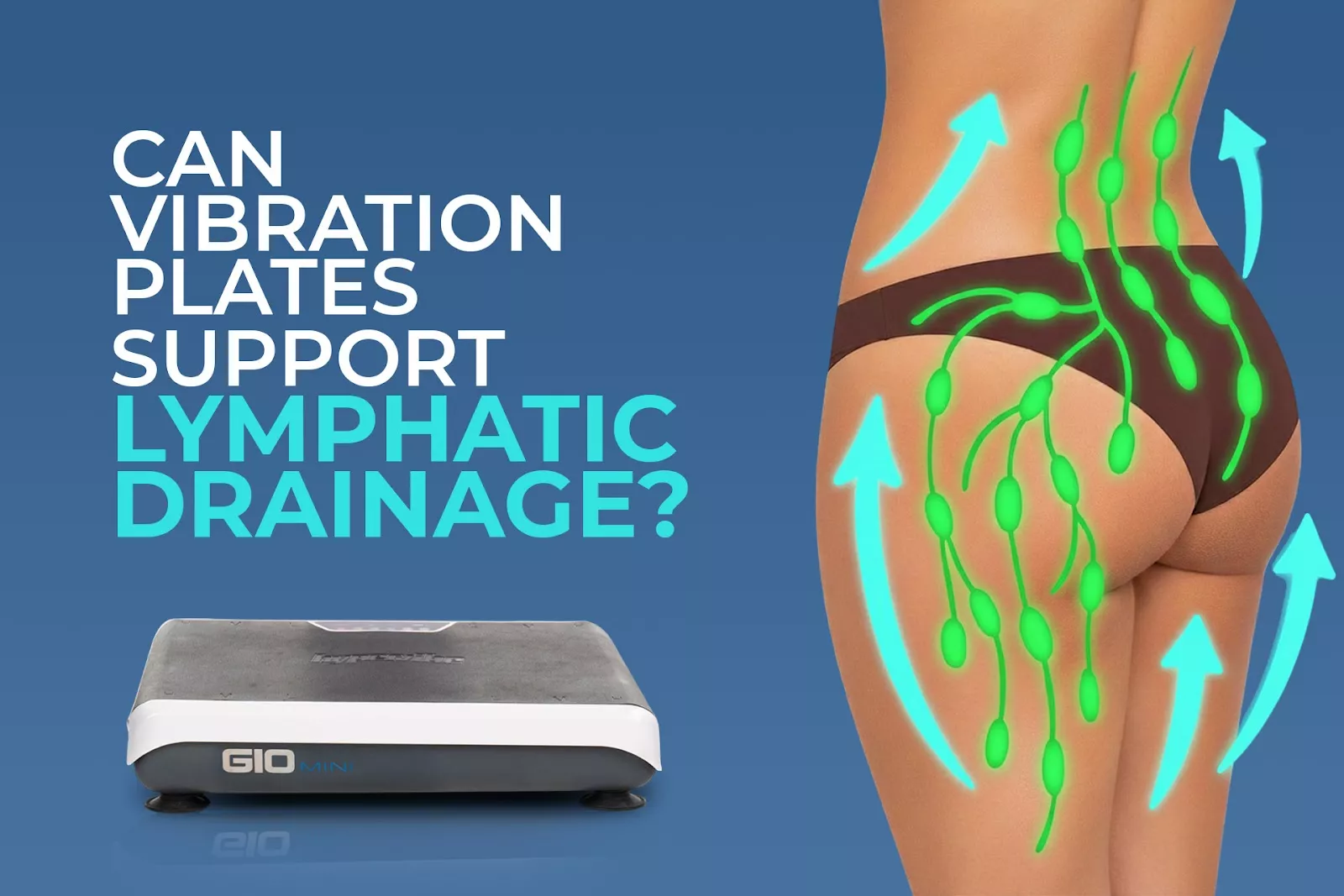
Yes, Vibration Plates or Whole Body Vibration (WBV) platforms, promote lymphatic system movement. The plates create small, rapid oscillations that...
The lymphatic system is responsible for removing excess water from the body and along with it, the toxins and debris...
Here’s how we use a vibration plate for weight loss...
If, a few minutes into your session on the vibration...
Are vibration machines bad for you? Yes, if used incorrectly....
Yes, Vibration Plates or Whole Body Vibration (WBV) platforms, promote...
Most people get the best results using a vibration plate...