
A$1,759.00
Shop Now
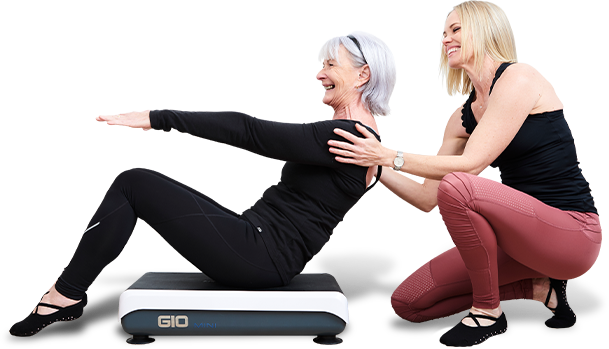
Vibration Plate exercises, also called Whole Body Vibration exercises, involve common exercises such as squats, lunges, push-ups, triceps dips, calf raises, and planks, only performed on a vibrating platform.
The forces generated by the plate’s oscillation enhance the exercises by stimulating rapid muscle contractions, which increase overall muscle activation and nervous system coordination.
This allows the benefit to require less time than without it.
This beginner-friendly routine uses basic isometric holds to build strength and stability.
Perform each move for 30–40 seconds, and rest 20 seconds between exercises.
Complete one round for a quick session, or repeat twice if tolerated.
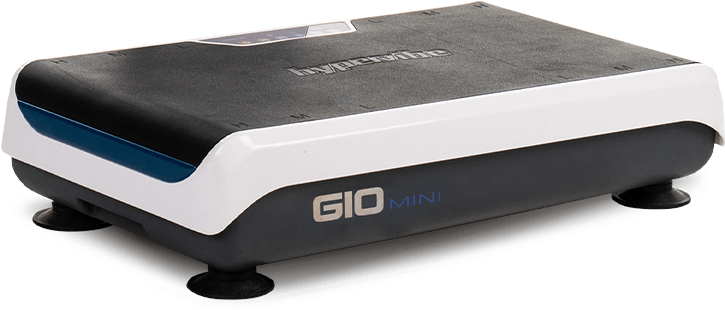
Hypervibe G10 MINI V2


 A$1,759.00
Shop Now
A$1,759.00
Shop Now
Vibration Training is a method that uses controlled mechanical vibration to stimulate rapid muscle contractions, helping increase muscle strength, support bone density, and contribute to weight-management goals.
The vibration is delivered through a platform that moves at specific frequencies and amplitudes, creating gravitational forces (G-forces) that challenge the muscles.
As these resistance forces increase, muscle engagement rises, enhancing the training effect.
Its growing popularity comes from its efficiency and its ability to activate multiple muscle groups at once.
Vibration Training works by tapping into the body’s natural neuromuscular and sensory responses to mechanical vibration and intermittent force.
When you do exercises on a vibrating platform, several physiological mechanisms are activated at the same time, making the workout both efficient and multi-system.
As the platform moves, muscles are rapidly stretched.
In response, they contract reflexively.
This is similar to the knee-jerk reflex tested by a doctor.
Increasing vibration settings raises the intensity of these contractions (increases G-force), which can add resistance, supporting greater muscle strength, bone loading, and energy expenditure.
This also influences circulation and lymphatic flow.
The rapid oscillations of the platform create small, repeated movements in muscles and connective tissue.
This has a massage-like effect, which can help reduce body stiffness, promote soft tissue relaxation, and improve overall joint mobility and muscle flexibility over time.
Because the surface beneath you is constantly moving, your body instinctively works to stabilise itself and maintain your centre of gravity.
This challenges the nervous system and postural muscles, supporting improvements in balance, coordination, and upright posture.
Vibration stimulates specialised sensory receptors in muscles and joints.
In some people, this heightened sensory input may temporarily reduce the perception of discomfort by competing with pain signals, supporting more comfortable movement.
Studies suggest Vibration Training may influence hormones such as growth hormone and testosterone, which are associated with muscle adaptation and recovery.
It has also been shown to affect certain stress-related neurotransmitters, indicating potential benefits for overall neuromuscular and stress regulation when used appropriately.
Whole Body Vibration (WBV) has been studied across multiple health and fitness outcomes.
The evidence suggests measurable benefits, with results varying by population, protocol, and whether WBV is combined with active exercise or rehabilitation.
| Benefit | What the research shows | Peer-reviewed evidence |
| Weight Loss | WBV may support improvements in body composition and metabolic markers when combined with cardio and lifestyle interventions | Effects of Whole Body Vibration exercise on cardiorespiratory fitness, muscular strength and body fat |
| Bone Density | Low-settings mechanical vibration can stimulate bone remodeling, with potential benefits for bone mineral density in older adults and postmenopausal women | Whole Body Vibration Therapy as a Modality for Treatment of Senile and Postmenopausal Osteoporosis |
| Muscle Strength | WBV increases neuromuscular activation and may improve lower-limb strength, particularly when paired with active exercises | Effectiveness of Whole Body Vibration Training to Improve Muscle Strength and Physical Performance in Older Adults |
| Mobility & flexibility | Improvements in functional mobility, joint range of motion, and movement efficiency reported in older and clinical populations | Whole Body Vibration Effects on Flexibility in Artistic Gymnastics |
| Lymphatic & circulatory function | Vibration can enhance peripheral circulation and venous/lymphatic return through rhythmic muscle contractions | The effect of Whole Body Vibration on lower extremity skin blood flow in normal subjects |
| Balance & postural control | Consistent improvements in balance and stability; evidence supports use in fall-prevention and neuromuscular training | Whole Body Vibration Training improves balance control and sit-to-stand performance among middle-aged and older adults |
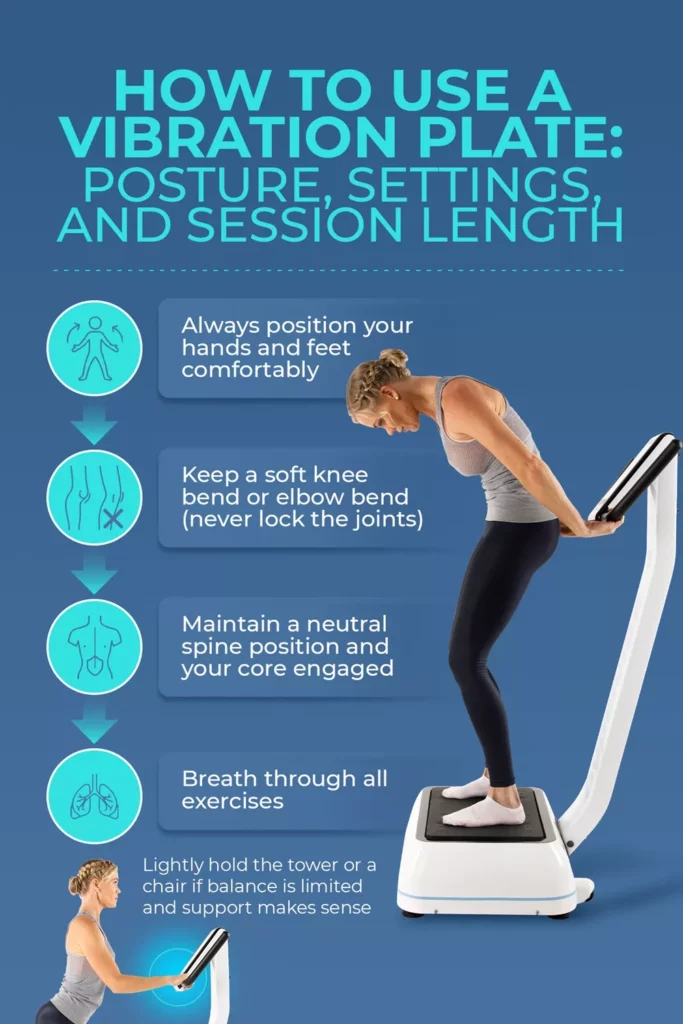
Essential posture and safety tips for getting the most out of your vibration plate session.
Proper posture, appropriate speed settings, and realistic session lengths help you get benefits while protecting your joints and spine.
Vibration Plates work across different setting ranges, and the goal determines the setting:
There’s no universal “fat-burning speed”.
It all comes down to responsible use and careful progression.
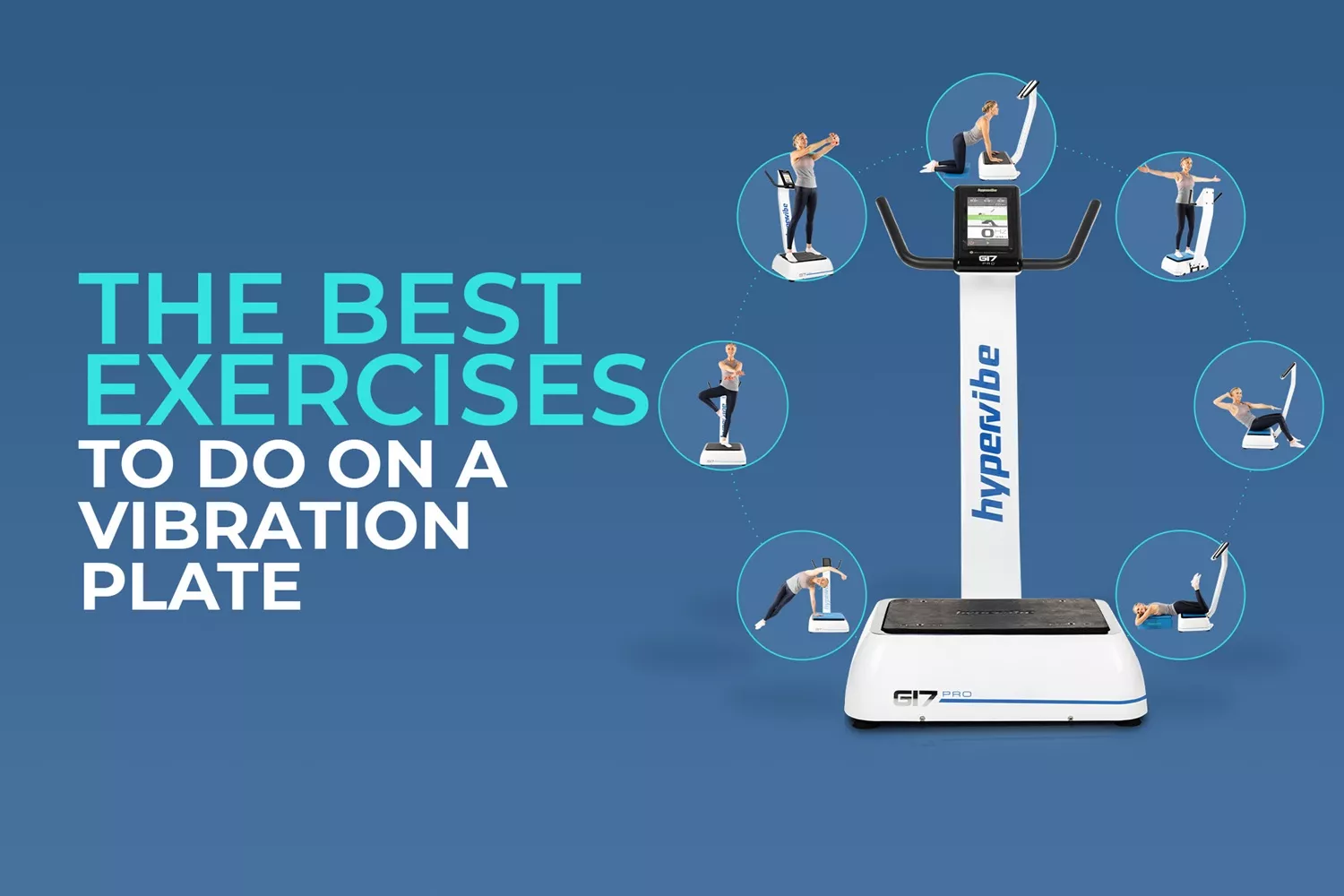
This library groups the most effective Vibration Plate exercises by movement pattern.
Some of the exercises can be done statically (holding the position) or dynamically (moving through reps), or both, depending on experience level and goals.
Static holds emphasise muscle endurance and joint control.
Dynamic versions increase muscle activation and movement coordination.
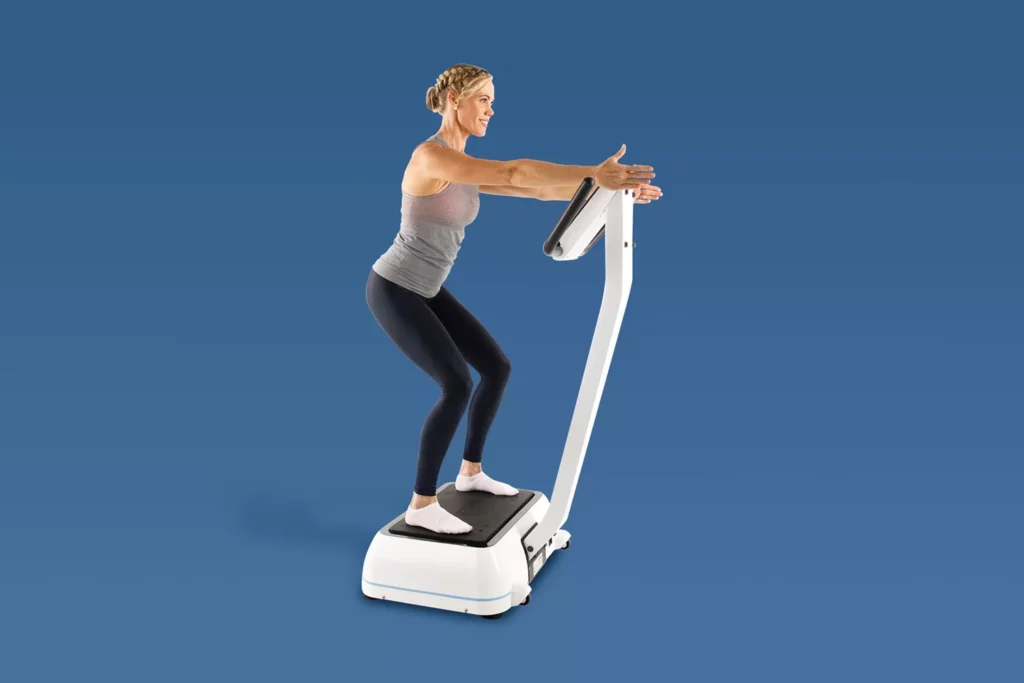
A standard squat performed on a vibration platform to increase muscle fiber recruitment in the quads and glutes.
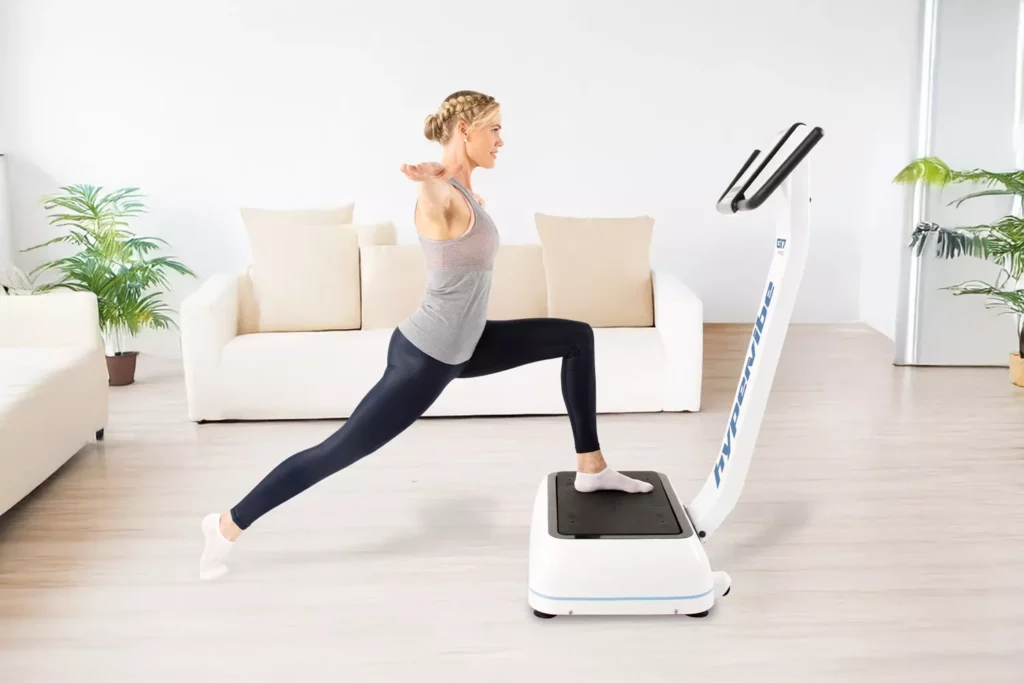
Forward lunge on a vibration plate to target the quads and glutes.
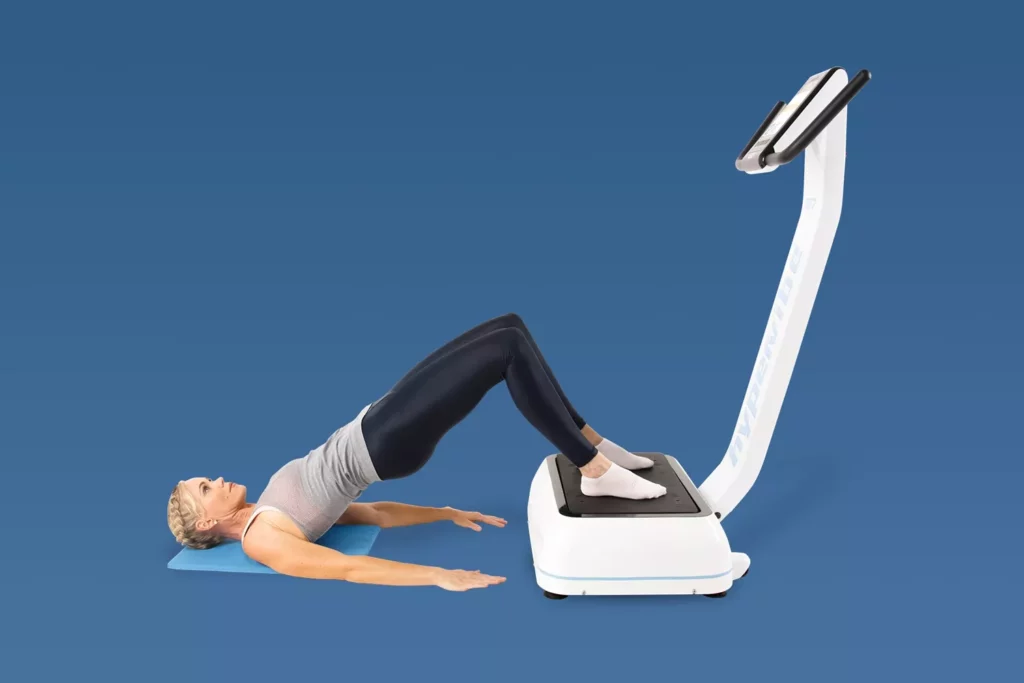
Glute bridge exercise on a vibration plate for posterior chain activation and recovery.
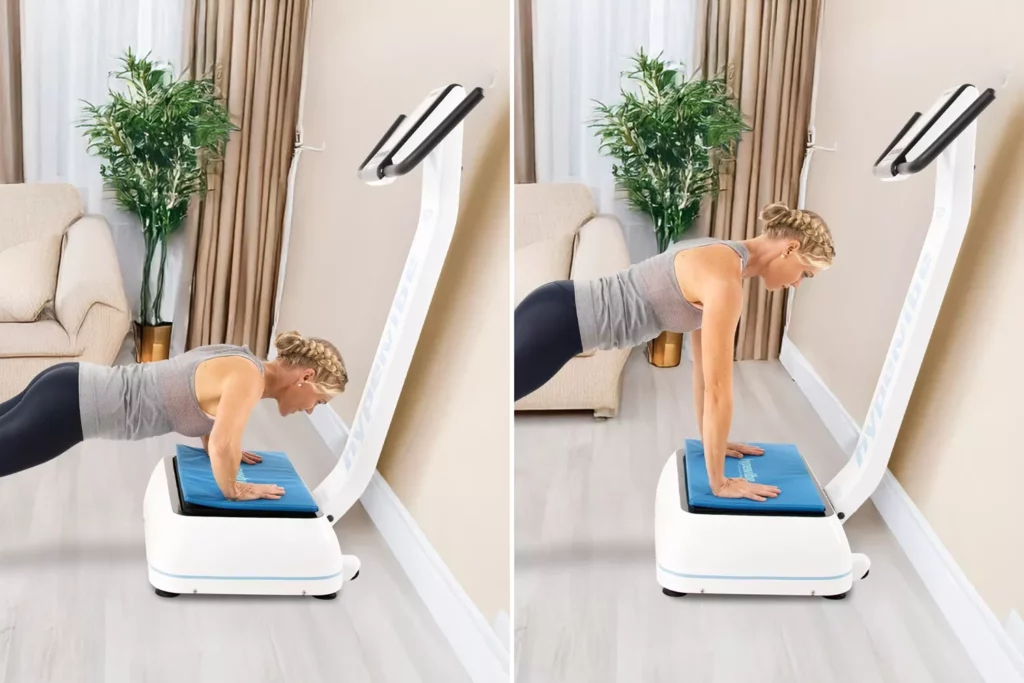
Performing push-ups on a vibration plate to increase upper body muscle fiber recruitment.
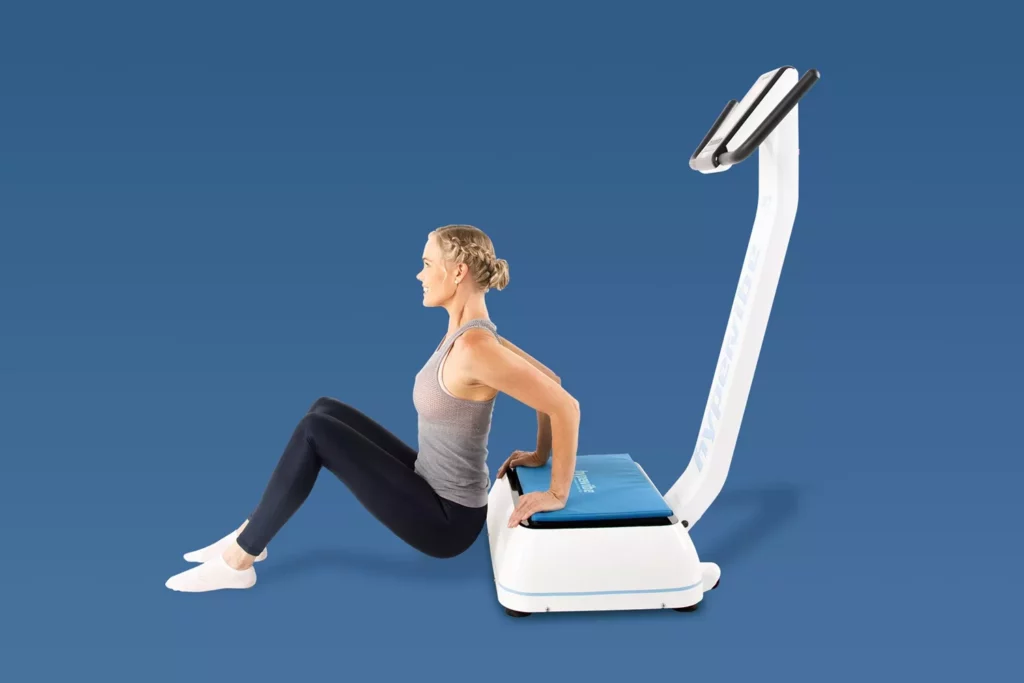
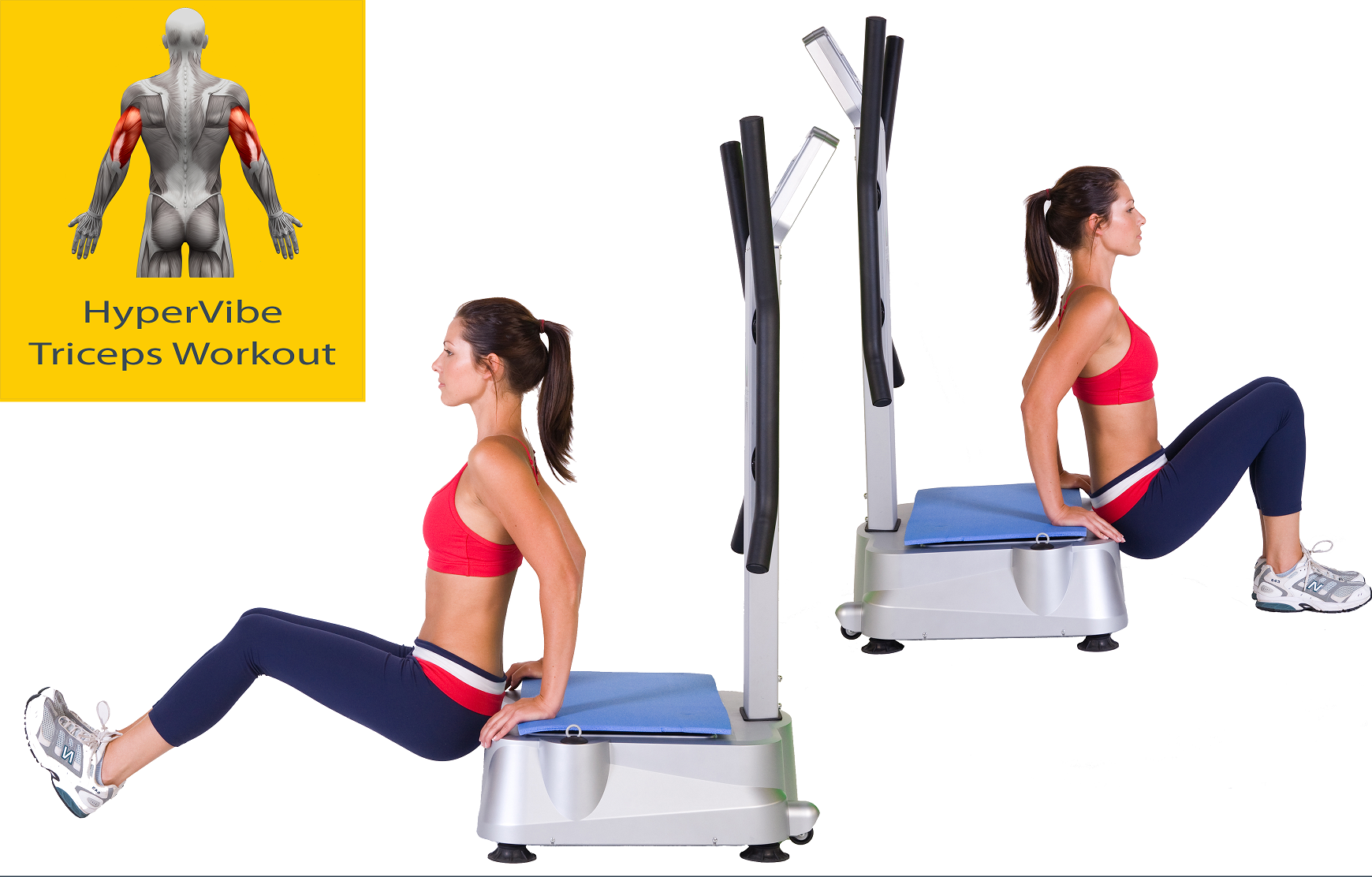
Targeting the triceps and shoulders with dips using a vibration plate for added intensity.
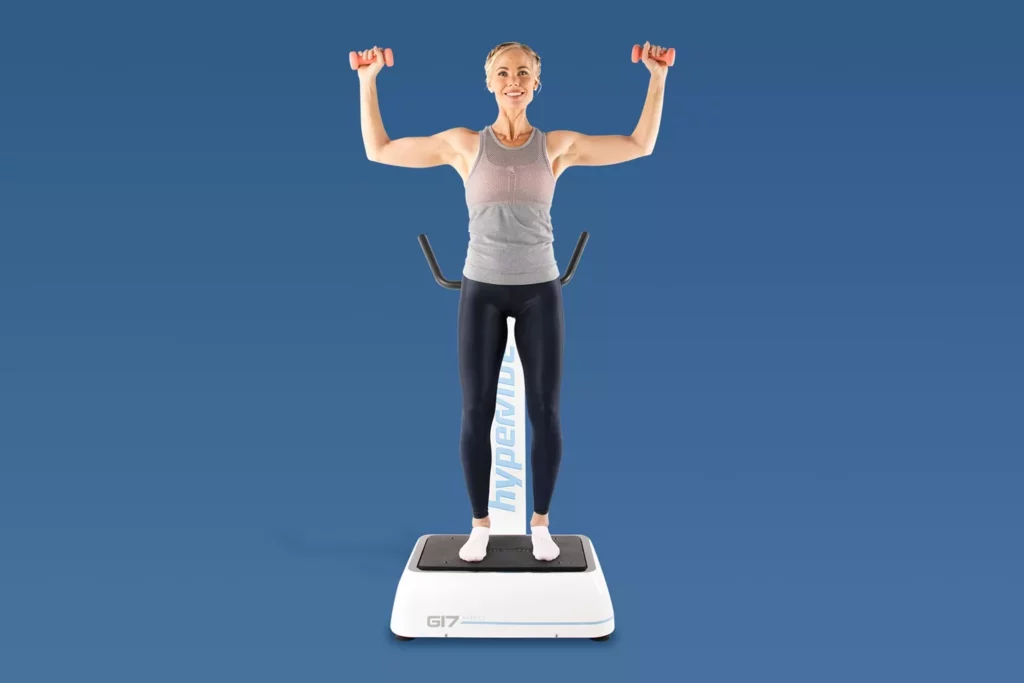
Standing shoulder press exercise on a vibration plate to enhance muscle activation.
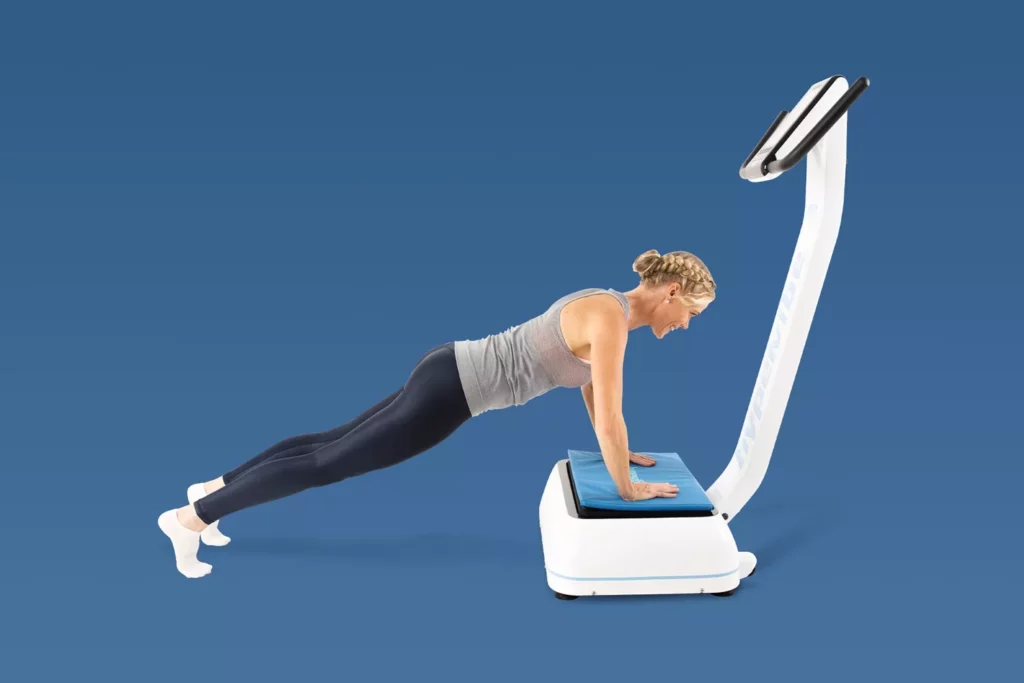
Strengthening the core with a high plank on a vibrating platform.
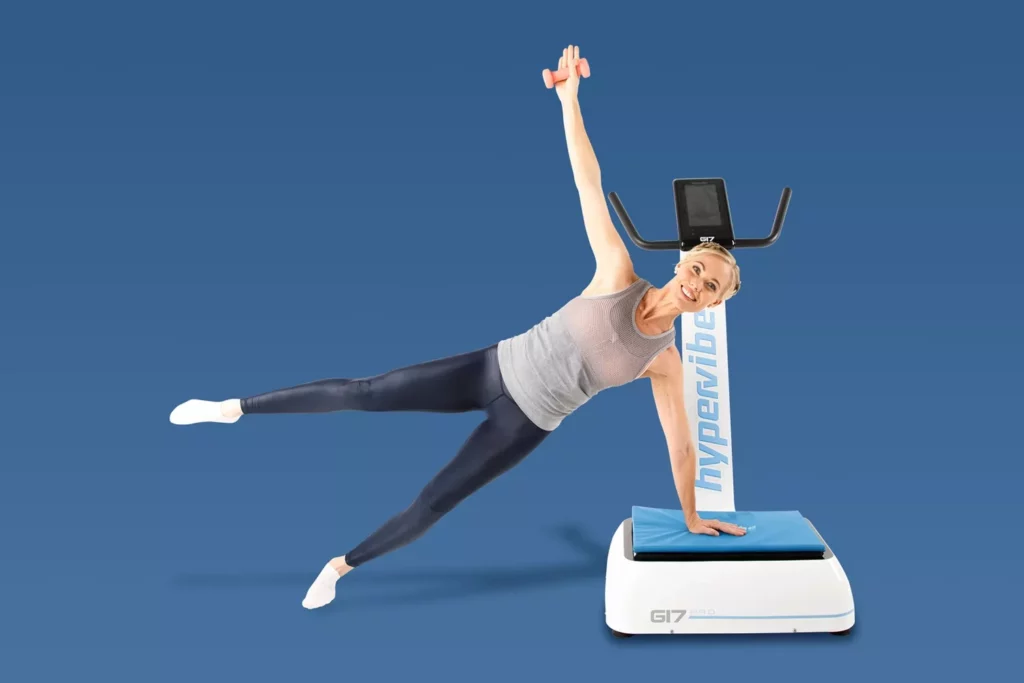
An advanced core and shoulder stability exercise featuring a side plank with added vibration and weights.
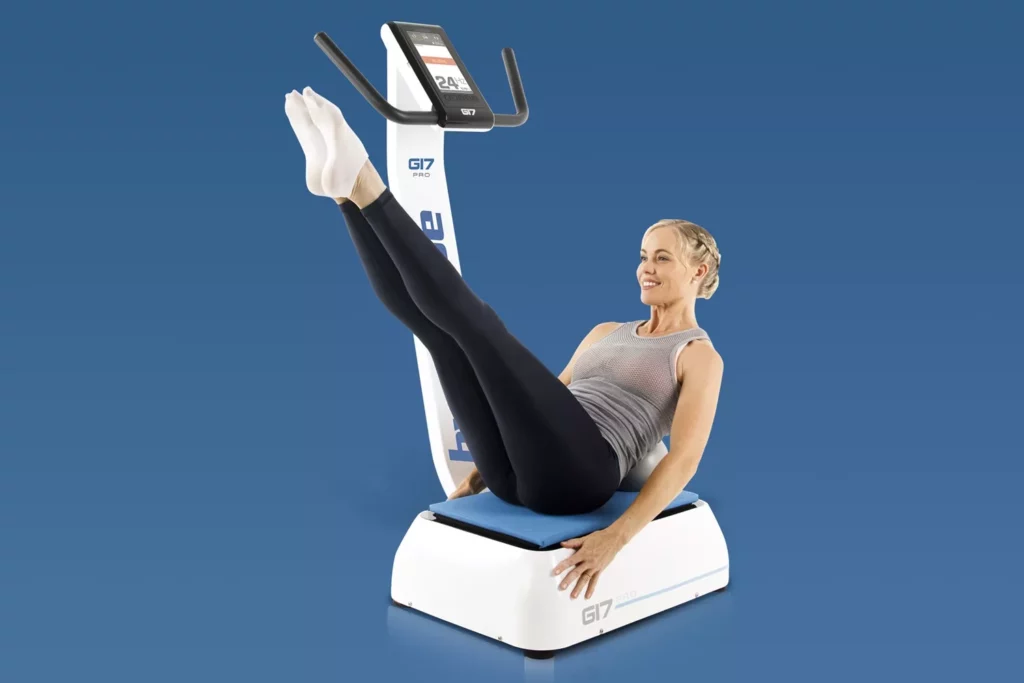
Using a vibration plate to intensify a V-sit exercise for core and abdominal strengthening.
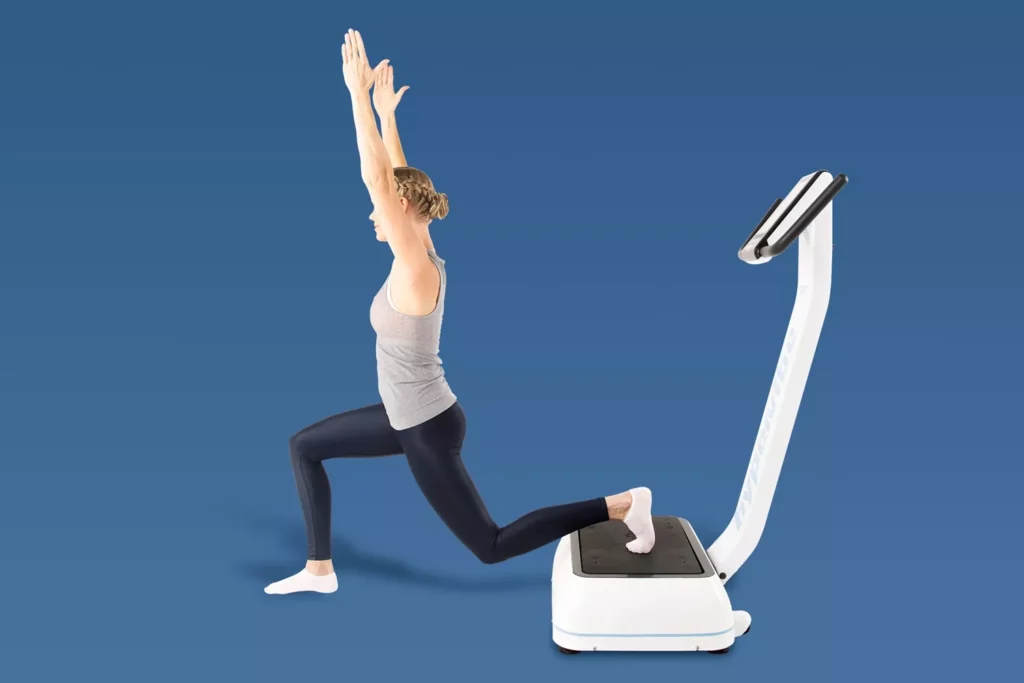
Using a vibration plate for an elevated split squat to improve balance and lower body strength.
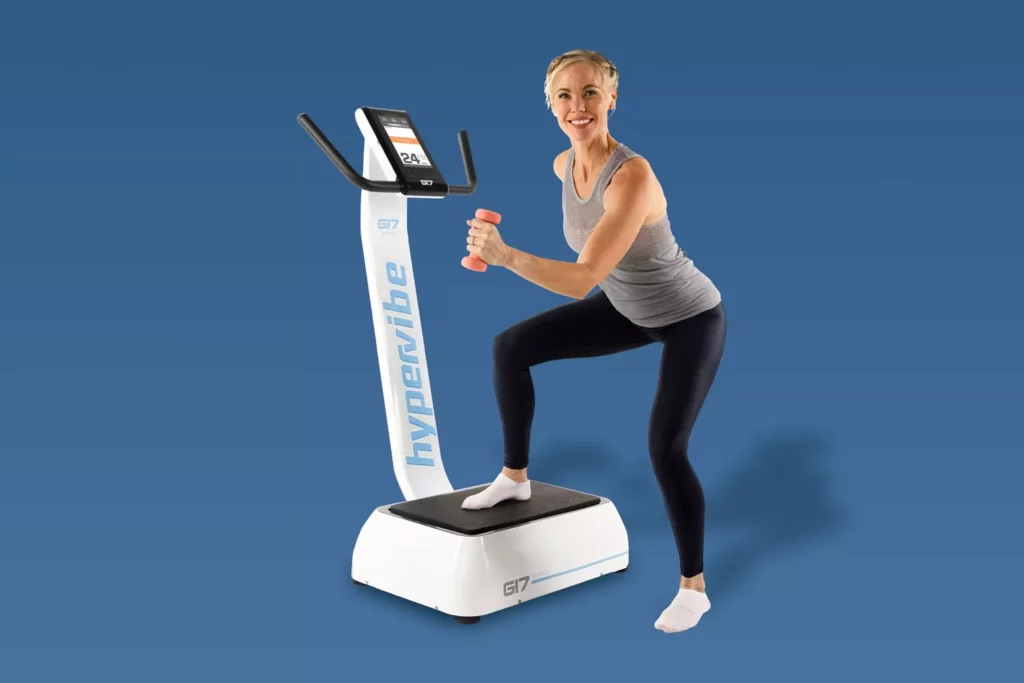
Combining weighted resistance with vibration therapy using a step-up movement.
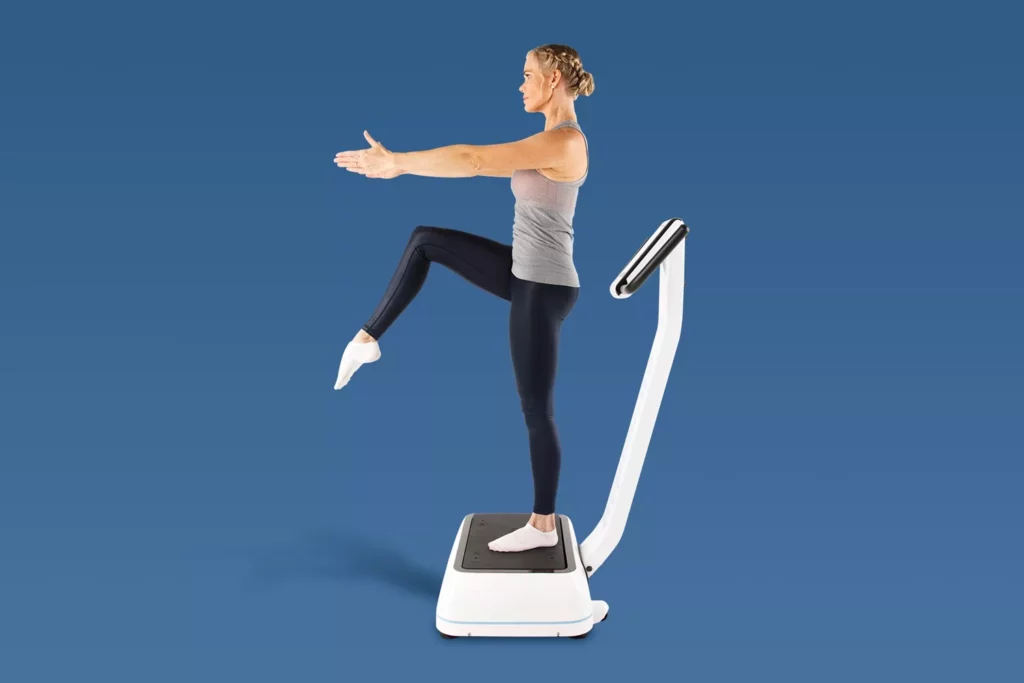
Enhancing proprioception and balance by performing single-leg stands on a vibrating surface.
Whole Body Vibration works best when it’s progressive, structured, and periodised, just like strength or cardio training.
Long-term programmes should increase time, movement complexity, and programme intensity (increased G-forces).
Goal: Learn positioning, adapt to the feeling of vibration, and build consistency.
Hypervibe G14 Home V3
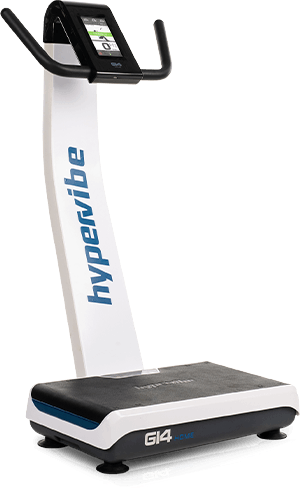

 A$3,969.00
Shop Now
A$3,969.00
Shop Now
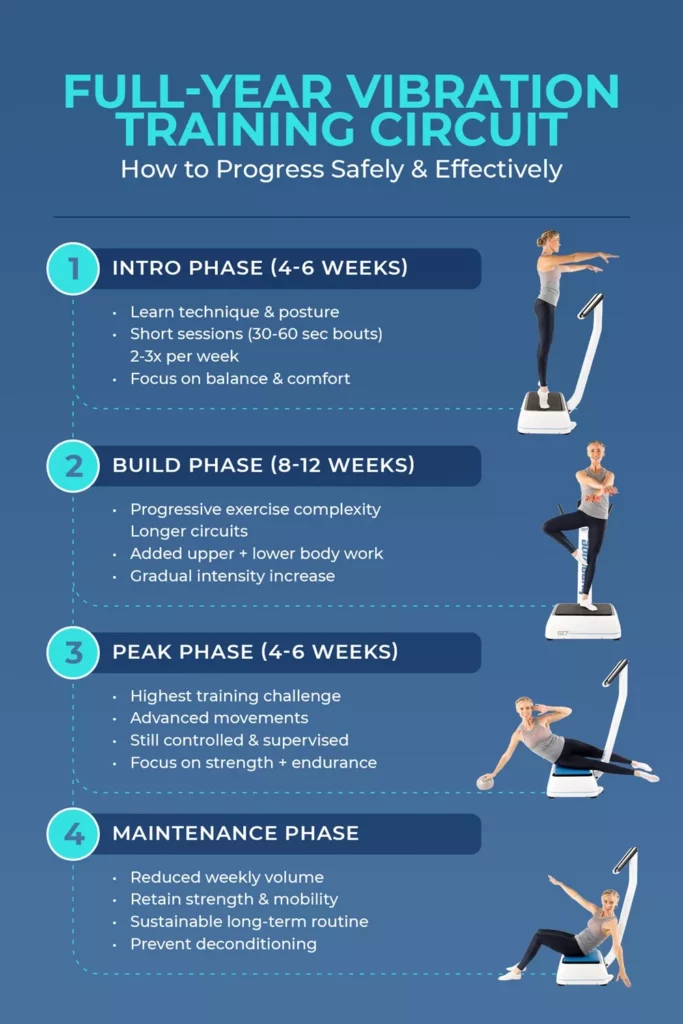
A safe and effective year-long progression guide for vibration plate training.
For fitness enthusiasts and professionals, Vibration Training fits best into a simple annual cycle:
Plan a deload week every 8–12 weeks, cutting volume by 30–40%.
This protects joints, supports recovery, and keeps Vibration Training sustainable long-term.
Picking settings that don’t match your goal can make sessions feel pointless—or too intense too soon. As a general guide:
Doing identical sessions can lead to plateaus. Rotate movements that challenge different areas—legs/glutes, core stability, upper body—so your body keeps adapting and you stay mentally engaged.
Stop immediately and seek advice if you experience:
Seek medical clearance before using a Vibration Plate if you have a contraindicated condition.
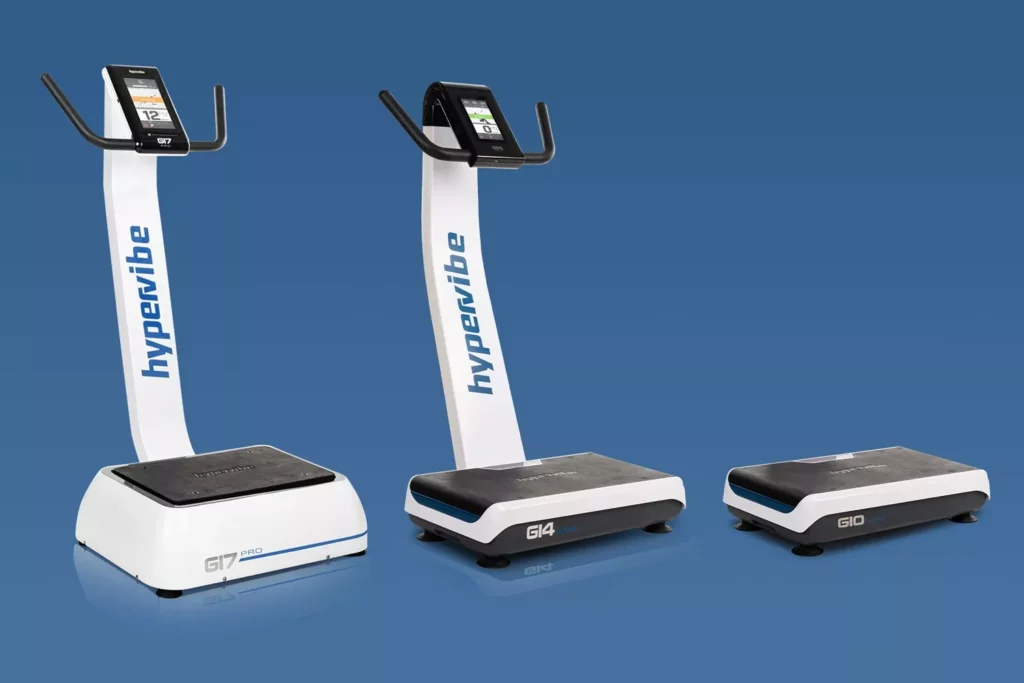
Comparison of different Hypervibe vibration plate models for home and professional use.
When comparing Vibration Plates, focus on the fundamentals:
These factors determine whether a plate can support long-term training.
Hypervibe G17 Pro V2
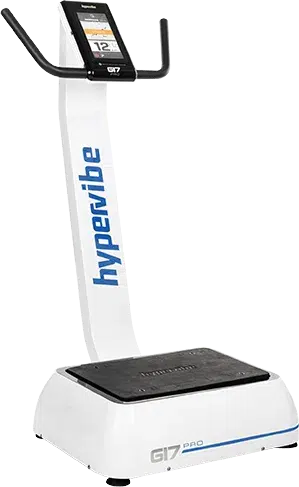
A$5,699.00
Shop Now
Many low-cost plates rely on limited motors, narrow frequency bands, or preset programmes that offer little control.
This can make progression difficult and posture harder to maintain.
Hypervibe platforms are designed around:
Hypervibe’s approach places more emphasis on clinical control and adaptability, which is particularly relevant for people who need a safe, reliable and long-term solution.
Yes. Simply standing passively on a Vibration Plate has benefits alone. However, more dynamic Vibration Plate exercises can increase muscle activation, balance, and circulation, especially when combined with traditional exercises. A Vibration Plate does not directly “burn belly fat”. Fat loss comes from a calorie deficit supported by regular activity. Vibration Training can help by improving calorie deficit through muscle engagement and making short workouts more effective, but it works best alongside cardio and nutrition. Yes. Whole Body Vibration may be appropriate for people with joint or bone conditions. Research supports this too. Be sure to get medical clearance. Most people notice improvements in balance, muscle awareness, or mobility within 2–4 weeks of consistent use. Changes in strength or body composition typically take longer and depend on exercise selection, frequency, and overall activity levels. Potential downsides include dizziness, headaches, itchiness, or joint irritation if sessions are too long or settings are too high. People who are pregnant, have pacemakers, have had recent surgeries, have acute blood clots, have uncontrolled cardiovascular conditions, or have severe migraines should avoid Vibration Plates unless cleared by a healthcare professional. When in doubt, medical advice should come first. It depends on the exercise. Are you running, lifting, or walking? There’s no specific formula. Clinicians use or recommend Vibration Plates as part of rehab, balance training, or supplementary exercise programmes. Benefits depend on appropriate use, supervision, and individual health status. You can explore structured exercise charts, beginner-to-advanced programmes, and condition-aware guides in the Hypervibe buyer guides, designed for home users, 50+ adults, clinics, and performance settings.
FAQs
- Do Vibration Plates actually work as a workout?
- Can you lose belly fat on a Vibration Plate?
- Are Vibration Plates safe for people with arthritis or osteoporosis?
- How long does it take to see results using a Vibration Plate?
- What are the negatives of Vibration Plates?
- Who should not use a Vibration Plate?
- What is 10 minutes on a Vibration Plate equal to?
- Do doctors recommend Vibration Plates?
- Where can I find Hypervibe exercise charts and programmes?


Updated on: 08.09.2021 The lymphatic system is involved not only...
Rebounding (an exercise technique involving jumping on a mini-trampoline) is...
Core exercises done on a Vibration Plate—like Planks, V-sits, and...
Various theories exist to answer this question. As you will...
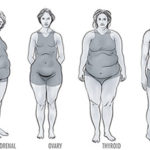
Stress can make you gain weight – we’ve heard this...
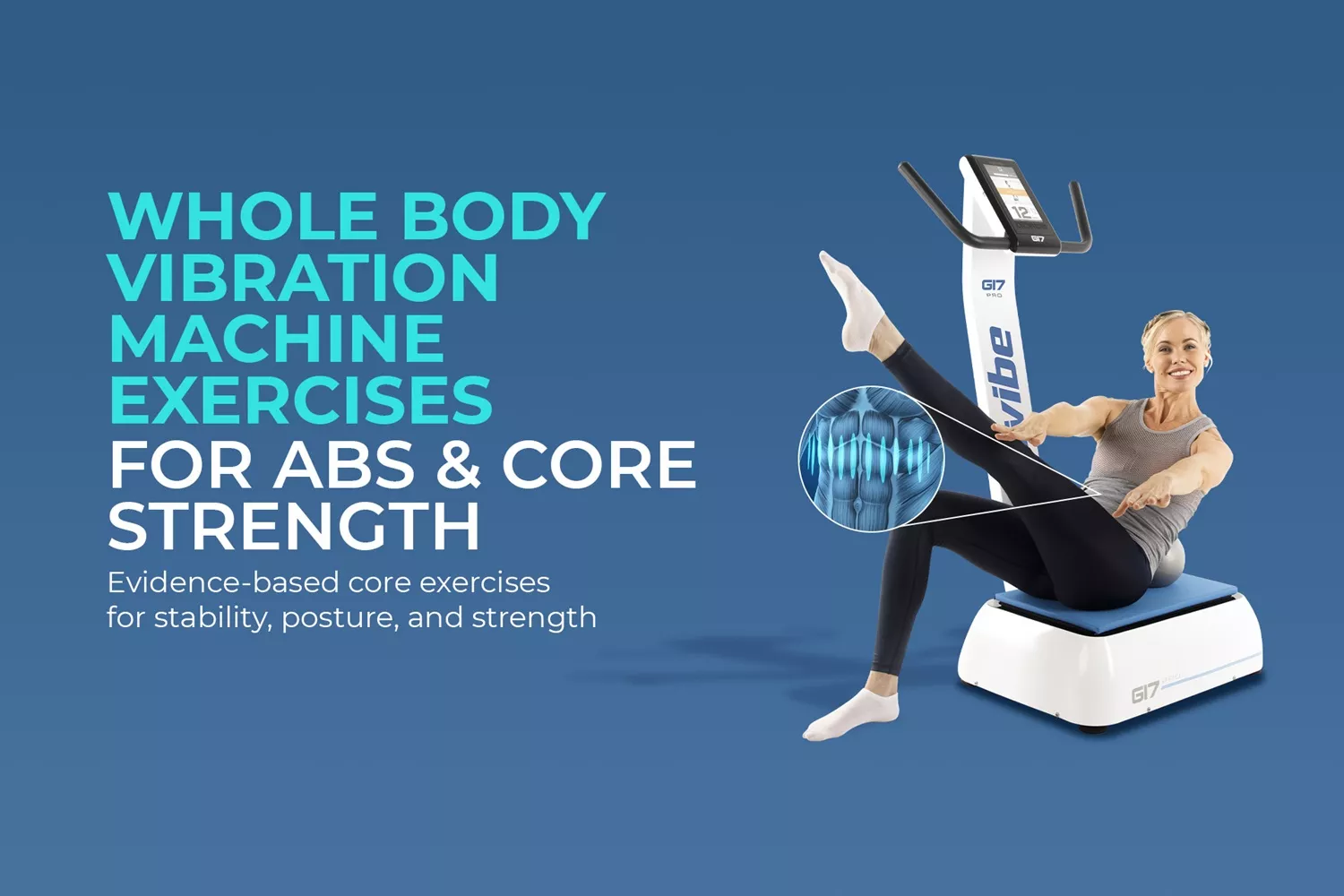
Core exercises done on a Vibration Plate—like Planks, V-sits, and Mountain Climbers—increase muscle activation through Whole Body Vibration (WBV). They’re...
When starting a new training program, the first thing you need to focus on is your short- and long-term fitness...
Whether you are new to whole-body vibration (WBV) or are looking to level up your exercise regime, the first step...
If you've never heard of Whole Body Vibration before and never used a WBV machine until now, you may feel...
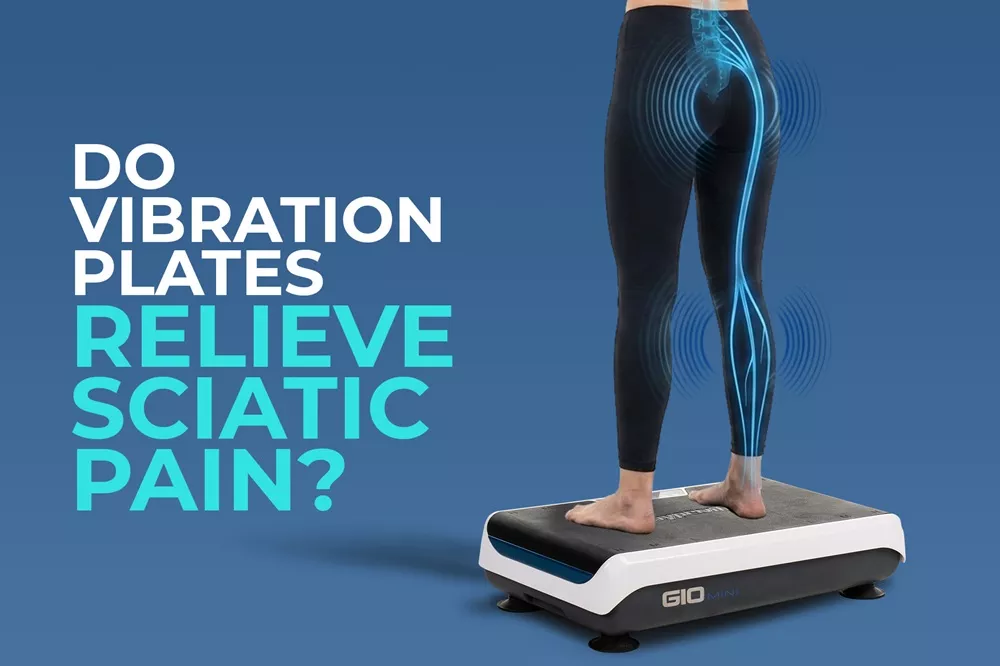
Yes, a Vibration Plate can help with sciatica pain by relaxing and strengthening tight muscles, improving circulation, and reducing pain...
Setting up a workout area for seniors who want to exercise at home doesn't have to require a lot of...
Updated on: 08.09.2021 The lymphatic system is involved not only...
Rebounding (an exercise technique involving jumping on a mini-trampoline) is...
Core exercises done on a Vibration Plate—like Planks, V-sits, and...

Various theories exist to answer this question. As you will...

Stress can make you gain weight – we’ve heard this...