
£1,032.50
Shop Now
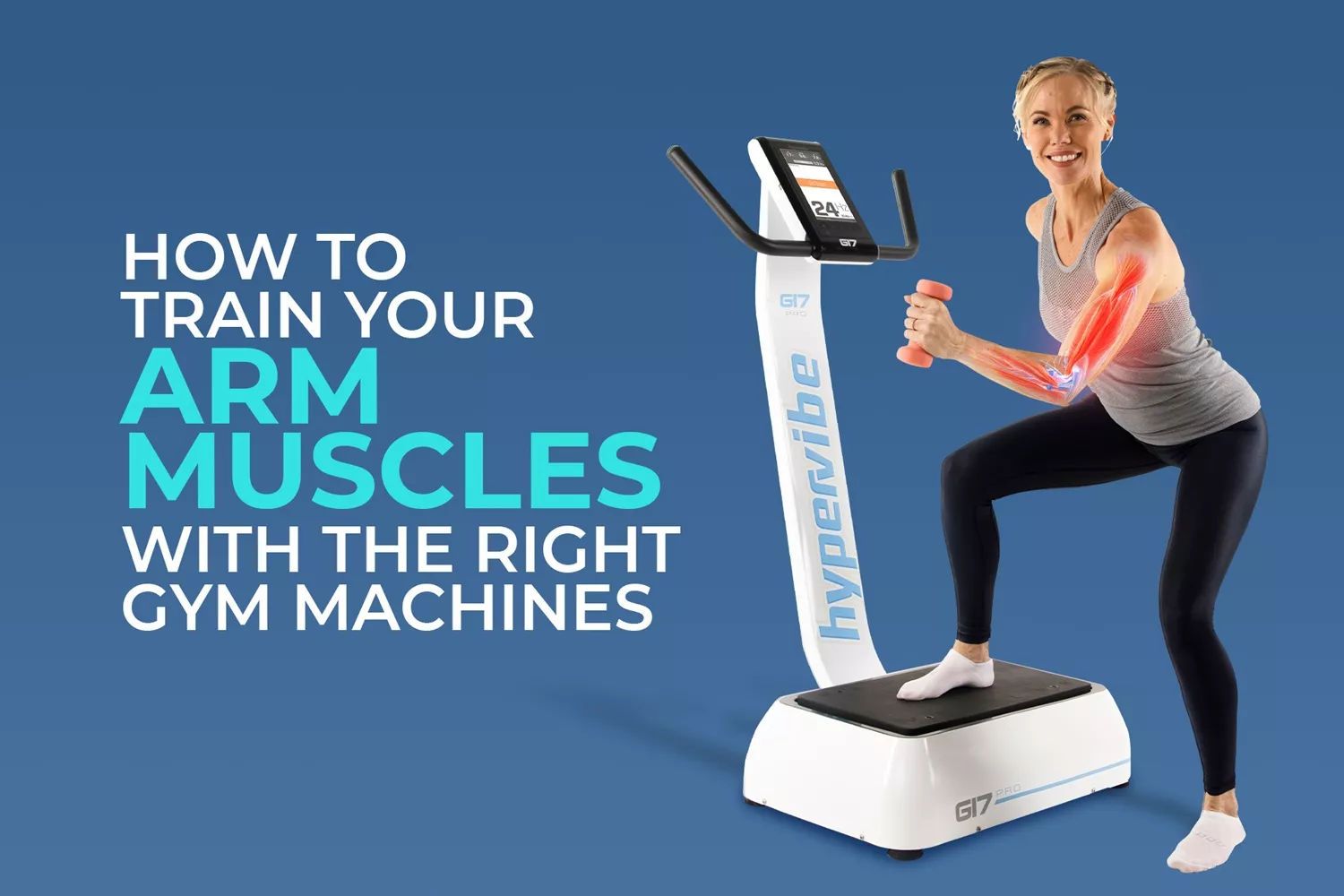
Fitness equipment includes a wide array of machines that are designed to train the arm muscles with controlled resistance.
This includes the biceps, triceps, forearms, and supporting shoulder muscles.
The best all-around arm machine setup includes a cable station (pulleys), a seated dip/triceps press, and a preacher/biceps curl machine.
The best machines for arms
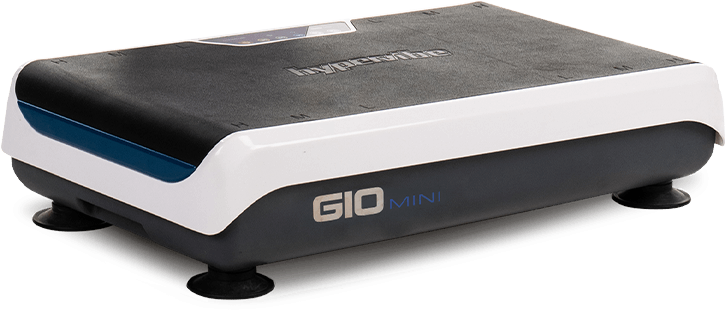
Hypervibe G10 MINI V2


 £1,032.50
Shop Now
£1,032.50
Shop Now
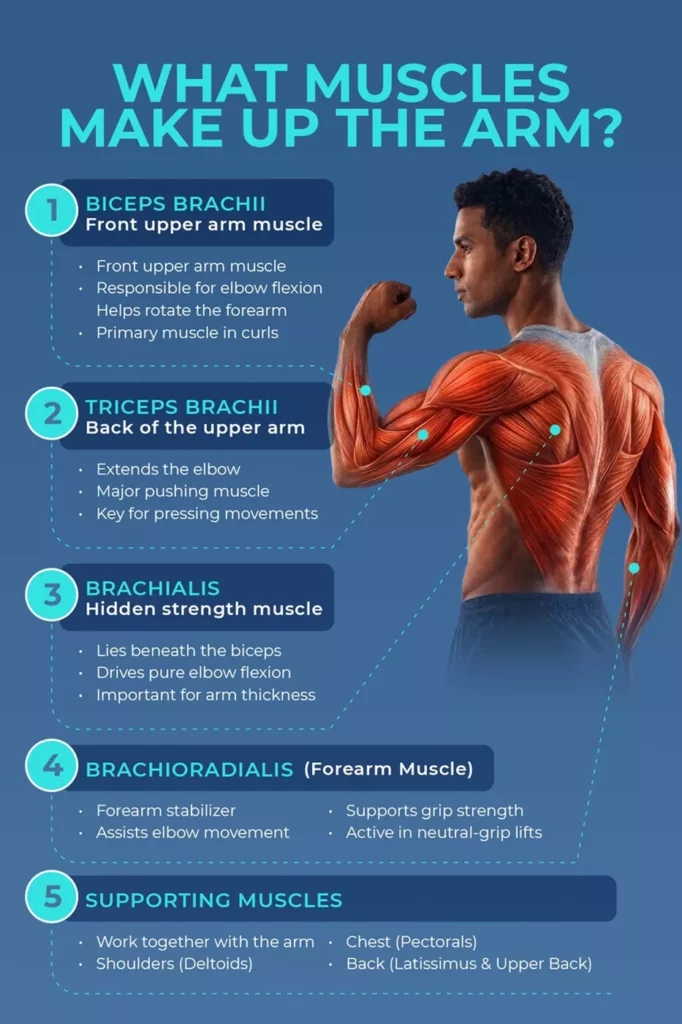
Detailed breakdown of the primary and supporting muscles that constitute the human arm.
Your arms are made up of a coordinated team of muscles that flex, extend, rotate, stabilise, and grip.
The biceps sit on the front of your upper arm and are responsible for bending your elbow and rotating your palm upward (supination).
They’re heavily involved in:
The biceps also assist with rowing machine exercises.
The triceps sit on the back of your upper arm and are responsible for straightening your elbow and extending your shoulder.
They make up roughly two-thirds of your upper-arm size, which is why they play a major role in arm tone and visible definition.
They’re heavily involved in:
This muscle sits underneath the biceps.
It helps bend the elbow and contributes to overall arm thickness.
It’s trained during:
Because it lies beneath the biceps, strengthening it can make the arm look fuller from the side.
This muscle runs along the thumb side of your forearm.
It assists in elbow flexion and stabilises your wrist during pulling exercises.
It works during:
Strong forearms improve grip endurance and support heavier pulling movements.
The arms rarely work alone.
Many other upper-body machines indirectly train arm muscles because the arms assist larger movements.
For example:
This is why some arm fitness equipment directly isolates muscles, while other machines build arm strength indirectly through compound movements.
Below is a table of the best arm machines, including what they train, who they suit, common mistakes, and joint-friendly swaps.
| Machine Name | Target Area/Muscle | Best For | Fast Setup Cue | Common Mistake | Joint-Friendly Swap |
| Cable machine / Functional trainer / Adjustable pulley | – Triceps
– Biceps – Forearms – Shoulders |
– Beginners
– Hypertrophy (bigger arms) – Flabby arms – Busy – Individuals |
Set pulley so elbow aligns with handle path | Swinging torso to move weight | Use rope handle and a lighter load |
| Seated dip machine / Triceps press machine | – Triceps,
– Chest, – Shoulders |
– Flabby arms
– Hypertrophy |
Seat so elbows align with handles | Locking elbows | Reduce range slightly |
| Triceps extension machine | – Triceps | – Joint-sensitive
– Isolation focus |
Upper arms fixed against pad | Letting elbows flare | Switch to cable rope extension |
| Biceps curl machine / Arm curl machine | – Biceps
– Forearms |
– Beginner
– Hypertrophy |
Align elbow joint with pivot point | Lifting shoulders during curl | Use neutral-grip attachment on the cable. |
| Preacher curl machine / Hammer curl machine | – Biceps
– Brachialis |
– Hypertrophy | Chest flat on pad | Dropping the weight too fast | Use lighter load and a slower tempo |
| Assisted pull-up / Chin-up / Dip machine | – Biceps
– Triceps – Lats |
– Beginner
– Hypertrophy |
Knees steady on pad | Using momentum | Increase assistance slightly |
| Lat pulldown machine | – Biceps
– Lats |
– Busy individuals
– Strength – Silhouette support |
Pull elbows towards ribs | Leaning excessively back | Use neutral-grip bar |
| Seated rowing machine | – Biceps,
– Forearms – Upper back |
– Posture support
– Joint-sensitive |
Neutral spine, chest tall | Shrugging shoulders | Lighten the load and slow the tempo. |
| Shoulder press machine | – Triceps
– Shoulders |
– Indirect arm builder
– Strength |
Wrists stacked over elbows | Overarching lower back | Reduce seat height |
| Chest press machine | – Triceps
– Chest |
– Indirect arm builder
– Busy individuals |
Shoulder blades pinned back | Locking elbows aggressively | Stop just short of lockout |
| Rowing machine | – Forearms
– Biceps – Back |
– Fat-loss support
– Cardio |
Drive legs first, arms last | Pulling early with arms | Lower resistance |
| Arm ergometer / Arm bike | – Forearms
– Biceps – Triceps -Cardiovascular |
– Joint-sensitive people
– Rehab – Beginners |
Smooth circular motion | Excessive speed without control | Reduce resistance |
Choosing the right fitness equipment for arms becomes simple when you match the machine to your goal and avoid common deal breakers, such as joint irritation or overcomplicating your routine.
If your main concern is the back of your upper arm (often called “bingo wings”), your priority should be the triceps.
The triceps make up roughly two-thirds of the upper arm’s size, so they have the biggest impact on how firm and defined your arms look.
This means your training should emphasise:
Training triceps from two different angles each week helps stimulate the entire muscle rather than just one portion.
It’s also important to address two common myths.
First, using an arm workout machine will not automatically make you bulky.
Significant muscle size requires years of progressive overload and, usually, a calorie surplus.
Most people aiming for tone simply gain firmness and strength.
Second, spot reduction is a myth.
No gym machine for arms can remove fat only from that area.
Visible toning happens when resistance training is paired with overall fat-loss habits.
If overhead movements irritate your shoulders, try rope pushdowns or neutral-grip cable extensions, which are typically more shoulder-friendly.
Most machines are widely regarded as beginner-friendly because they guide the movement path and reduce coordination demands.
This helps you focus on learning proper muscle engagement rather than balancing weight.
A safe beginner setup usually includes:
Start with fixed-path machines first, then introduce cables once you feel comfortable.
Log your seat height and weight settings so you can track progression instead of guessing each session.
The biggest mistake beginners make is copying advanced lifters too soon.
Master stable machine patterns first.
Strength builds quickly when form is correct and consistent.
If you have 25–30 minutes and need to be efficient, focus on compound machines that train multiple muscles at once, then finish with short isolation work.
A minimal effective structure would include:
You can superset curls and pushdowns to save time.
This combination hits the arms directly and indirectly without dragging your session out.
For busy professionals, compound machines plus cables are often the most effective use of limited time.
If your goal is size (hypertrophy), you need more total triceps volume than most people realise.
Since the triceps contribute most to upper-arm circumference, they should receive slightly more work than the biceps.
A strong hypertrophy-focused approach prioritises:
The progression rule is simple: perfect form and then increase load.
This protects your joints while driving growth.
If your elbows become irritated, switch to rope attachments or neutral-grip, hammer-style curls.
Elbow discomfort is usually a grip issue, not a sign that you must stop training arms entirely.
Joint sensitivity can happen at any age or fitness level.
It is important to choose movements that reduce joint stress while maintaining muscle stimulus.
In this situation, prioritise:
A simple warm-up sequence might involve five minutes on an arm bike, followed by light cable extensions before progressing to working sets.
Mild muscle fatigue is normal.
Sharp joint pain is not.
If there is sharp pain, adjust the grip, range, or load.
If you’re building a home setup and want something that replicates arm gym equipment, it helps to focus on versatility.
Your main options include:
Important considerations:
If choosing compact cables, make sure the anchor point is secure, stable, and adjustable in height.
Smooth pulley motion and a solid attachment system are nonnegotiable for safety.
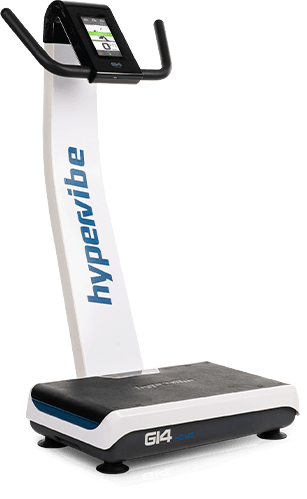
Hypervibe G14 Home V3

 £2,332.50
Shop Now
£2,332.50
Shop Now
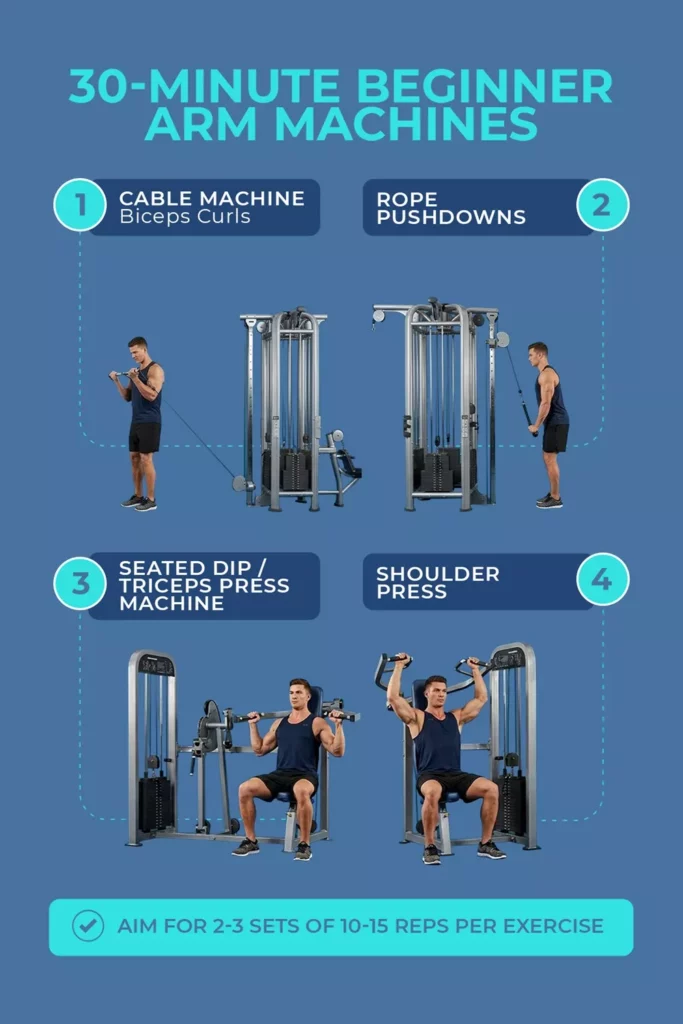
A 30-minute beginner-friendly circuit for training arms using standard gym machines.
Frequency: 2× per week
Goal: Prioritises controlled, fixed-path movements before complexity.
Time: 30 minutes
Machines:
Sets/Reps:
Rest:
Progression Rule: When you can perform 12 reps comfortably on all sets, increase the weight slightly next session.
Frequency: 2–3× per week
Goal: Improve firmness and muscle tone
Time: 25–30 minutes
Machines:
Sets/Reps:
Rest:
Progression Rule:
Shoulder-Friendly Modifications:
Frequency: 2× per week
Time: 35–40 minutes
Machines:
Sets/Reps:
Weekly Volume Target:
Rest:
Progression Rule:
Frequency: 2× per week
Time: 25 minutes
Machines:
Sets/Reps:
Rest:
Progression Rule:
Guidelines:
Frequency: 2–3× per week
Time: 25 minutes
Equipment:
Exercises:
Sets/Reps:
Rest:
Progression Rule:
Anchoring Checklist (Safety First):
Compact cables most closely mimic professional gym equipment at home.
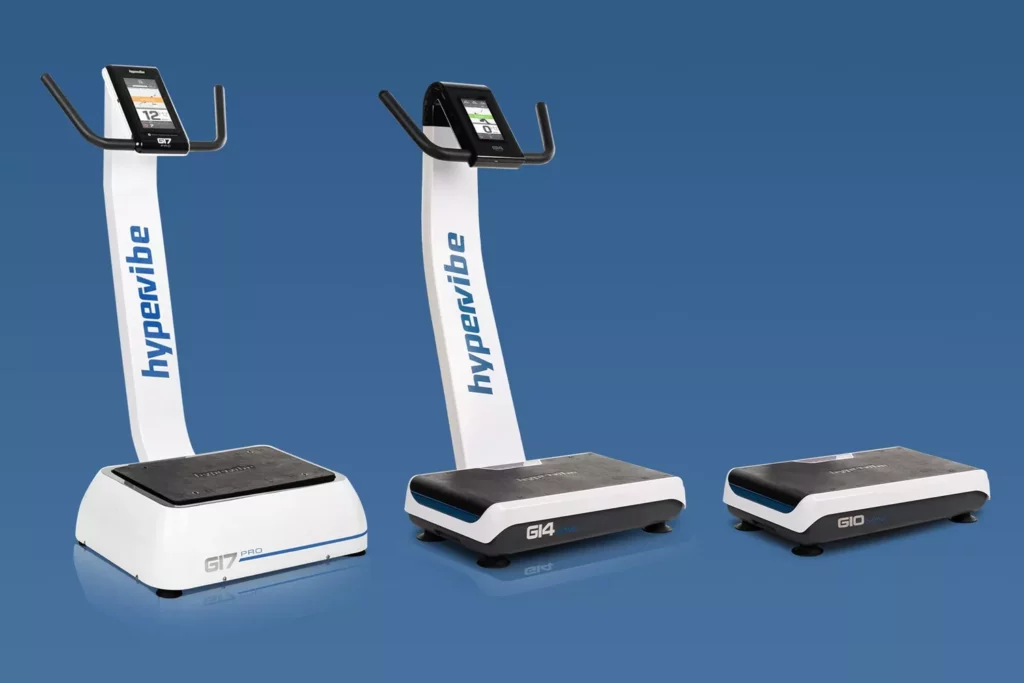
The Hypervibe range of vibration machines suitable for professional, home, and portable use.
Vibration Training can serve as a strategic add-on for activation, conditioning, or recovery when used correctly.
Vibration Platform Add-On Protocols
These are brief integrations that support arm-focused resistance work.
Use before cable curls, triceps presses, or other arm workout machine sessions.
When done with your main routine:
Keep vibration settings comfortable
On non-arm days or after heavy hypertrophy sessions:
This may support circulation and reduce perceived stiffness.
For arm work, especially planks or hand-supported positions, lower settings are better at the beginning. You can progress from there.
A wide, well-controlled frequency range allows:
Arm-focused vibration exercises often involve:
These positions demand a stable base.
Look for:
When using a Vibration Platform, you don’t want a complicated setup.
Helpful features include:
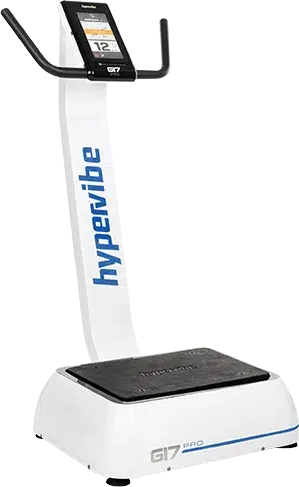
Hypervibe G17 Pro V2
£3,207.50
Shop Now
Hypervibe platforms are designed around precision, control, and progression—which makes them suitable as a complement to structured arm training.
It has:
Prioritise triceps-focused machines because the triceps make up most of the upper arm. Cable pushdowns, overhead cable extensions, and the seated dip or triceps press machine are highly effective. Pair them with overall fat-loss habits, as no arm workout machine can spot-reduce fat. The seated dip machine allows heavier loading and stable strength progression. Cable pushdowns offer smoother resistance and easier grip adjustments. Ideally, use both: dips for strength, pushdowns for controlled isolation. “Toning” typically means building muscle while reducing body fat. A range of 8–15 reps works well on most gym equipment for arms. Progressively increase reps first, then add weight. Rowing machines engage the biceps and forearms, but they primarily train the back and legs. They can support arm endurance and calorie burn, but they don’t replace direct resistance training on a fitness machine designed for arm muscles alone. An arm ergometer (arm bike) is a cardiovascular machine powered by upper-body movement. Yes. The cable machine is one of the most versatile pieces of fitness equipment. It allows constant tension, multiple angles, and joint-friendly grip options. Two to three times per week is sufficient for most people. Ensure at least one rest day between intense arm sessions to allow recovery. Machines provide stability and controlled movement, making them excellent for beginners. Free weights require more stabilisation, but both approaches can be effective. Elbow irritation often comes from excessive load, poor alignment, or straight-bar grips. Switching to rope attachments or neutral grips to reduce strain. Arms are already involved during chest and back exercises. Many people add direct arm work at the end of those sessions for efficiency. With consistent training two to three times per week and appropriate nutrition, noticeable strength improvements often occur within four to six weeks. Visible definition depends on overall body fat levels as well as muscle development.
FAQs
- 1. What are the best gym machines for flabby arms or “bingo wings”?
- 2. Seated dip vs. cable pushdown — which is better?
- 3. What is the best rep range for toning arms?
- 4. Do rowing machines tone arms?
- 5. What is an arm ergometer and who should use it?
- 6. Is a cable machine good for arms?
- 7. How often should I train arms on machines?
- 8. Are machines better than free weights for arms?
- 9. Why do my elbows hurt on arm machines?
- 10. Should I train arms separately or after chest/back day?
- 11. How long before I see arm results?
The best results with fitness equipment for arms come from choosing the right machines for your goal, progressing gradually, and training consistently.
A high-quality Vibration Platform can support circulation, neuromuscular activation, and low-impact conditioning alongside your arm workout machine sessions.
Explore the Hypervibe buyer’s guide for guidance on the best way to use a Vibration Platform, or explore the high-quality Hypervibe Vibration Platforms.


The worst foods for someone looking to maintain a healthy...
Vibration Plates—used for Whole Body Vibration (WBV) or Vibration Training—can...
This article breaks down how many calories you can realistically...
The best fitness equipment for the low back includes back/lumbar...
Whole body vibration exercises may not seem the safest choice...
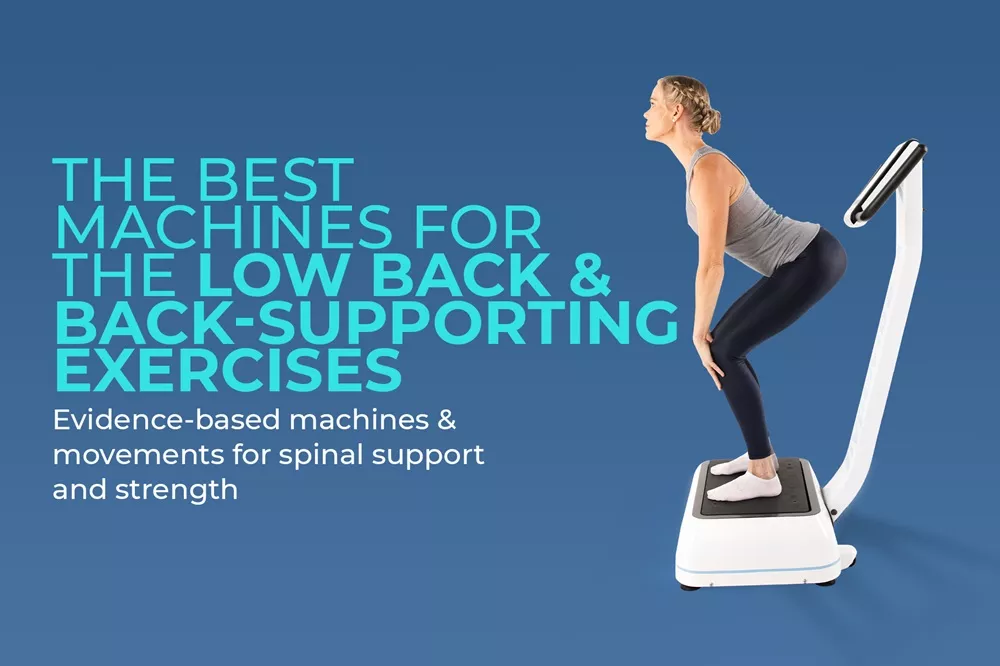
The best fitness equipment for the low back includes back/lumbar extension benches, vibration platforms, pulley cable systems, rowing machines, and...
The health of elders, their ability to live independently, and their overall quality of life can all be significantly improved...
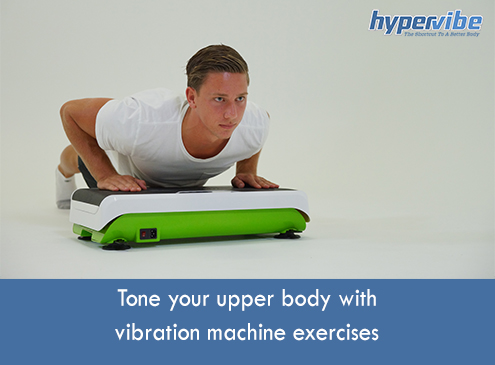
Vibration machine exercises are safe for people of all ages, being suitable for a variety of health and fitness goals,...
If you are someone whose workout routine is becoming a bit stale or your lifestyle has kept you physically stagnant...
To build a lean and athletic body, you need more than slender legs and a six-pack: your back muscles are...

Cerebral palsy (CP) is a neurological disorder caused by brain injuries or malformations that occur in kids while the brain...
The worst foods for someone looking to maintain a healthy...
Vibration Plates—used for Whole Body Vibration (WBV) or Vibration Training—can...
This article breaks down how many calories you can realistically...
The best fitness equipment for the low back includes back/lumbar...

Whole body vibration exercises may not seem the safest choice...