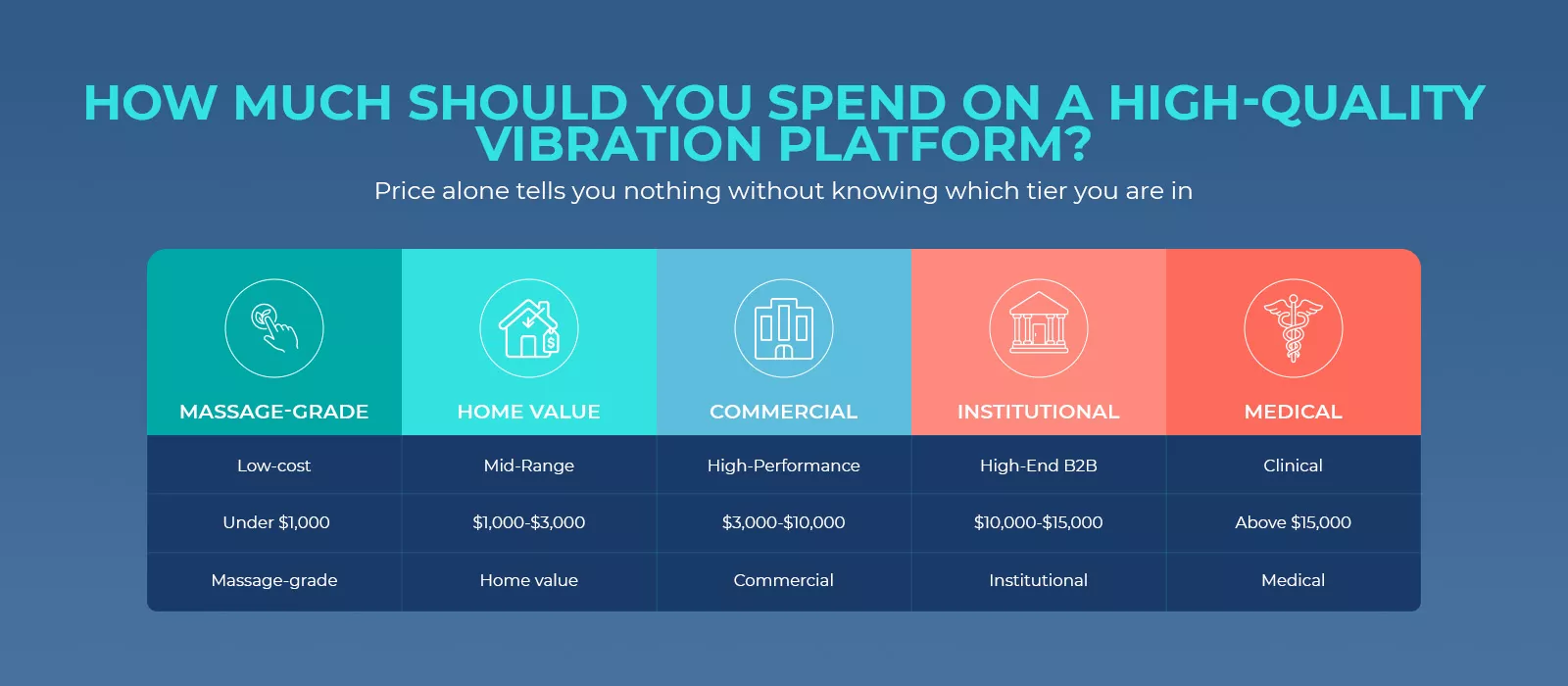
How Much the cost of a vibration platform (also referred to as a vibration plate) can range wildly. At the low end, you may find one for $150, while at the high end, one can cost up to $15,000. This extreme range is mostly a reflection of build quality, performance, and the range of benefits available.
All things considered, for a well-rounded home-use platform, most buyers find the sweet spot sits between $1,000 and $3,000. For a business purchase such as a gym or rehab clinic, it can be $3,000-10,000.
In both cases, you can access a whole-body vibration machine with specifications that deliver both therapeutic and fitness-related results. But before purchasing anything, there are some important things you should know.
First, some truly expensive machines look premium but deliver low-grade performance. The expense is in the aesthetics of the machine (and marketing it) vs. building it for actual performance.
Second, no full-spec whole-body vibration machine is available for under $1,000. Budget models may provide basic vibration, but they do not offer the power and performance needed to deliver the full benefits of high-quality whole-body vibration training.
So what actually separates a good machine from a bad one?
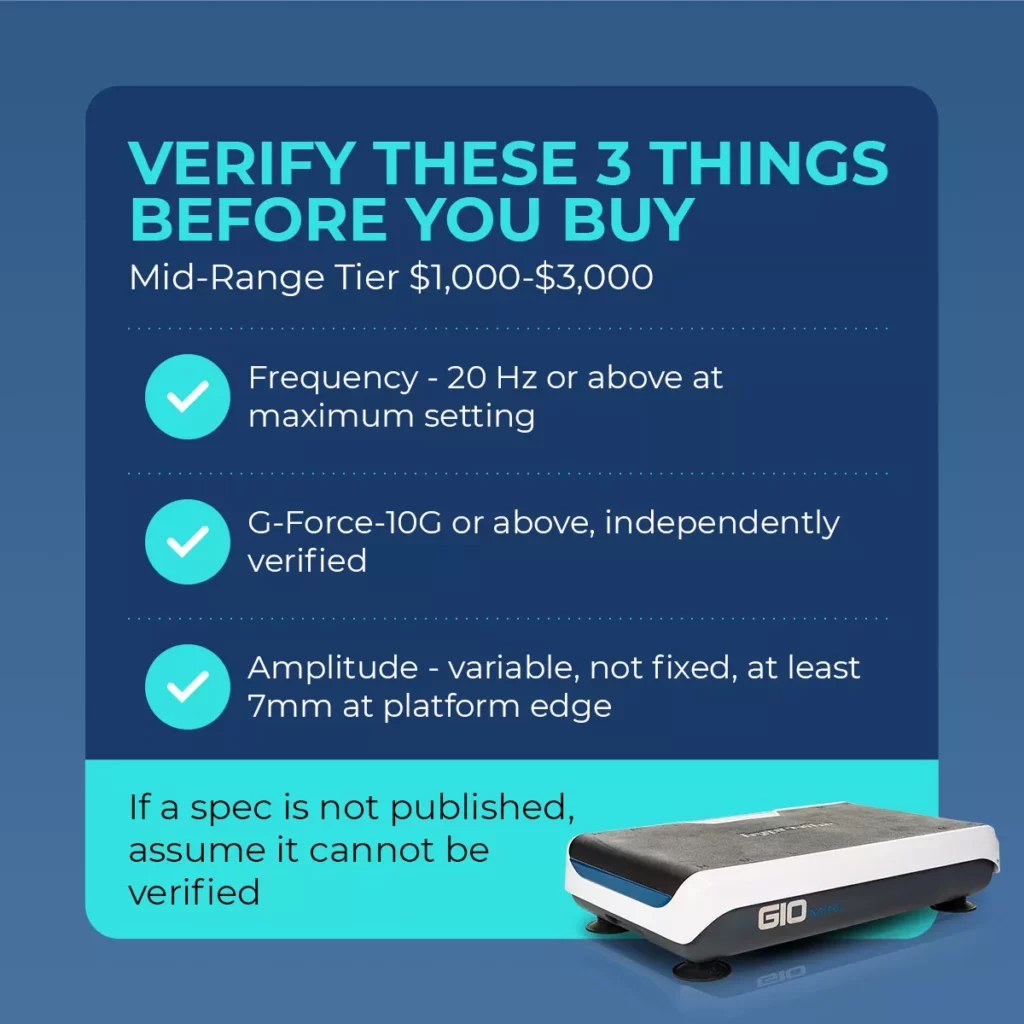
Checklist of essential specifications to verify before purchasing a mid-range vibration platform
Here are three thing:
Why?
Because this is the window that activates the body’s reflexive muscle contractions (the tonic vibration reflex), which is a key factor in accessing the most important benefits of Whole Body Vibration for muscles, bones, and the nervous system.
These higher frequencies are also necessary for the right range of G-forces, which is how a vibration platform generates resistance.
Most budget machines operate well below this range to prevent the machine from breaking. After all, vibration is what often creates problems for any type of machinery. It requires high-level engineering to be able to perform at this level and maintain durability.
This is why most cheaper machines feel more like massage tools than exercise platforms.
Again, G-force is determined by a combination of two factors: frequency and amplitude. A machine that vibrates quickly but with a tiny range of movement can produce very little G-force. Same for one that moves far at a low frequency. These three factors are what separates a real machine from a gimmicky one.
|
Tier |
Product |
Frequency |
Amplitude |
G-force |
Maximum Load |
Price: $ |
|
Low cost Under $1,000 |
Powerfit Elite |
Not published |
Not published |
Not published |
Not published |
149.99 |
|
Low cost Under $1,000 |
LifePro Waver |
Up to 12 Hz |
Up to 8 mm |
3-5 G |
330 lb |
199.99 |
|
Mid-Range $1,000–$3,000 |
Lymphora Whole-Body Vibration Plate |
50–60 Hz |
Not published |
Not published |
425 lb |
2,700 |
|
Mid-Range $1,000–$3,000 |
Hypervibe G10 Mini |
5–25 Hz |
Up to 8 mm |
Up to 10G |
310 lb |
1,799 |
|
Mid-Range $1,000–$3,000 |
Hypervibe G14 Home |
5–30 Hz |
Up to 8 mm |
Up to 14G |
310 lb |
3,999 |
|
High-Performance $3,000–$10,000 |
Hypervibe G17 Pro |
5–35 Hz |
Up to 7 mm |
Up to 17G |
440 lb |
5,749 |
|
High-Performance $3,000–$10,000 |
Power Plate MOVE |
Not published |
Low / High (not published in mm) |
Not published |
300 lb |
3,720 |
|
High-Performance $3,000–$10,000 |
Power Plate My5 |
30–40 Hz |
Low / High (not published in mm) |
Not published |
300 lb |
5,995 |
|
High-End B2B $10,000–$15,000 |
Power Plate pro5 |
25–50 Hz |
Low / High (not published in mm) |
Not published |
400 lb |
12,995 |
|
High End B2B $10,000–$15,000 |
Power Plate pro7 |
25–50 Hz |
Low / High (not published in mm) |
Not published |
430 lb |
17,995 |
|
Clinical Equipment Above 15,000 |
Galileo Med series |
Not published |
Not published |
Not published |
Not published |
On request |
Note: Table content as at 20th May 2026
When it comes to low-quality/low-budget machines, here are some things you can expect.
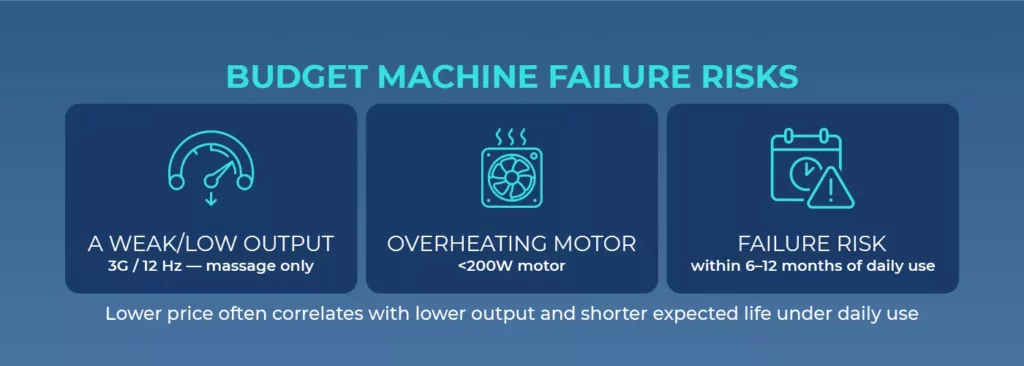
Key performance and hardware risks associated with low-cost, budget vibration plates under daily use.
Budget machines in this range typically operate at frequencies of 5–15 Hz, with low-amplitude output and G-force well below the 3–4G range.
This provides massage benefits alone.
At 3G and 12 Hz, you are simply not generating the mechanical stimulus your body needs to respond.
One of the most widespread misleading claims in this category is the speed level count. A machine advertising 99, 120, or even 999 speed levels sounds impressively adjustable. All they represent is a fraction of a Hz.
Speed levels are not a standardized unit of measurement. A machine with 99 speed levels still likely maxes out at 12 Hz. It will deliver a lower performance than a machine with 20 speed settings that reaches 30 Hz.
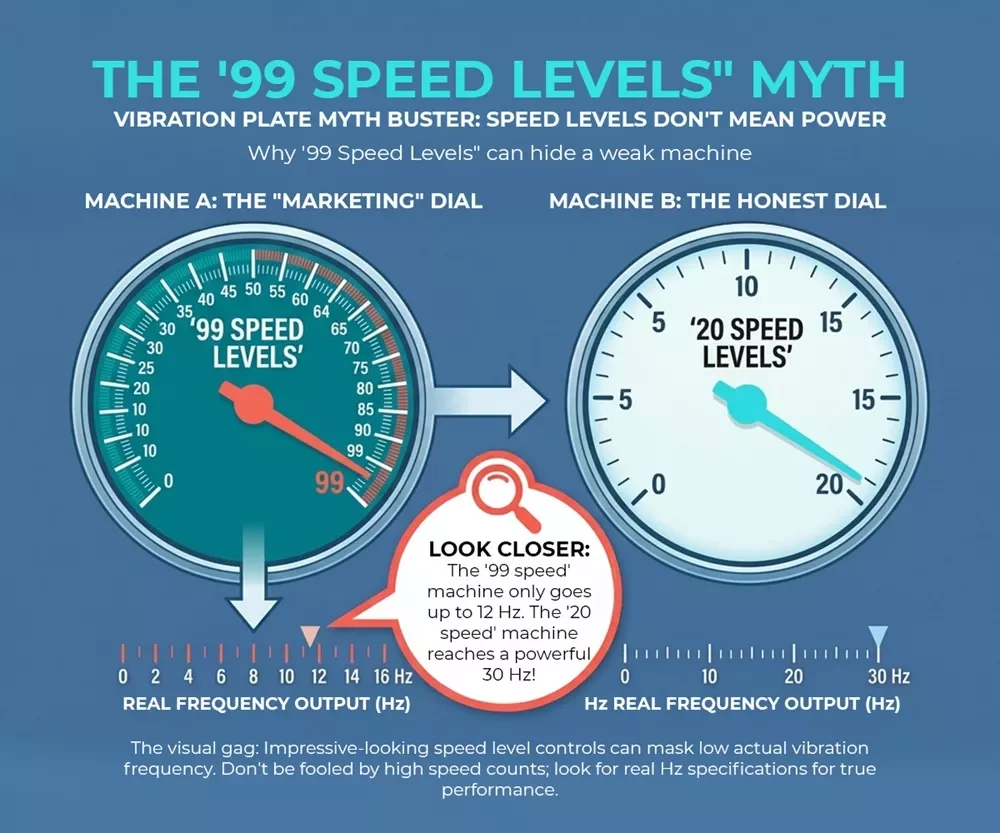
Educational graphic busting the myth that higher speed level counts correlate to stronger vibration frequency or machine power.
Budget machine motors are typically rated at less than 200W, which is adequate for light, intermittent use.
If you use the machine daily at moderate intensity (as you should, to get results), the motor is working near its limits regularly. You may experience motor failure, excessive noise, and platform instability within 6–12 months of regular use.
For a fitness enthusiast who is looking for maximum value in their investment, this is the sweet spot.
You should get well-researched frequency ranges, variable amplitude, 10G+ output, and Bluetooth-connected workout programs designed by physical therapists without paying the premium.
What to demand from any machine in this range:
Before buying, verify three things directly from the manufacturer or independent test data
|
Specifications |
Minimum Threshold |
|
Frequency |
20 Hz or above at maximum setting |
|
G-Force |
10G or above (independently verified, not self-reported) |
|
Amplitude |
Variable (not fixed); at least 7 mm at platform edge |
If you are equipping a professional facility where multiple patients or clients use a machine every day, the $3,000–$10,000+ tier is where your machine needs to be.
Their G-force output has been verified by independent engineering firms, published in peer-reviewed research, or held to medical device manufacturing standards.
Research on WBV and bone density, for example, is conducted at specific, documented G-force values at specific frequencies for specific durations.
If your machine cannot reliably reproduce those parameters, you cannot reliably reproduce those outcomes.
The machines cover 5-35 HZ and even higher.
Larger platforms enable more exercises, better stability, and safer use.
Clinical and commercial machines prioritize space for movement and therapist interaction as well as accommodate the needs of different clients.
Entry-level machines usually average 300 lbs, which may be limiting for a business.
Professional Vibration Platforms scale up to 500 lbs.
The difference between a budget motor and a commercial motor is the duty cycle.
This means how long the motor can run, at what load, before it needs to rest and cool down or begins to overheat and degrade.
Premium motors like those in the Hypervibe G17 Pro are rated for sustained daily throughput.
They are engineered with better thermal management, higher-quality bearings, and construction tolerances that account for the cumulative stress of heavy use over years.
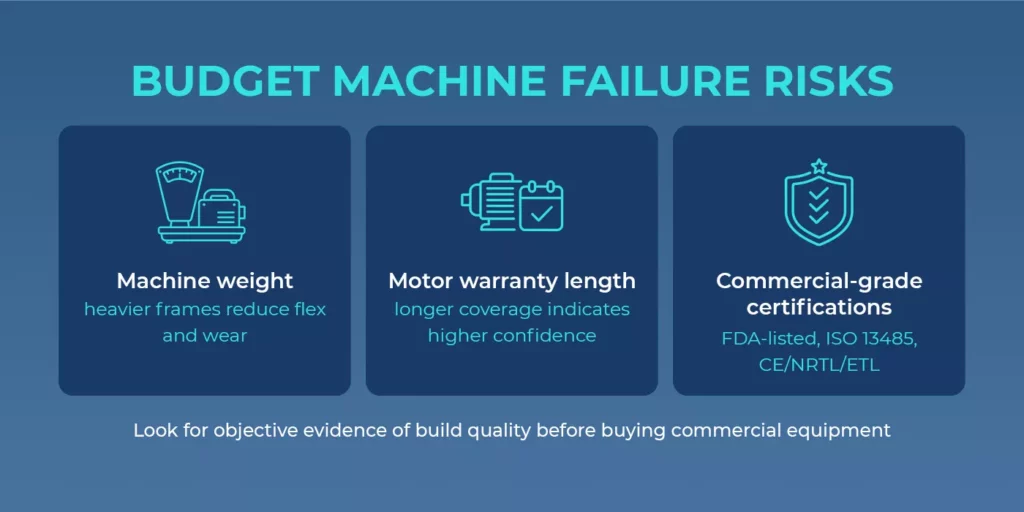
Objective durability indicators to evaluate before purchasing commercial-grade vibration equipment.
Look for these three objective indicators:
The purpose of this guide is to find machines that cross two thresholds: 10G+ acceleration (G-force) and 20–45 Hz frequency at a fair price range.
The Hypervibe G10 Mini, G14 Home, and G17 Pro all meet these requirements.
|
Factor |
G10 Mini V2 |
G14 Home V3 ★ |
G17 Pro V2 |
|
Crosses the 10G threshold |
Yes — 10G |
Yes — 14G |
Yes — 17G |
|
Crosses the 20 Hz threshold |
Yes — 25 Hz |
Yes — 30 Hz |
Yes — 35 Hz |
|
Price under $5,000 |
Yes — $1,799 |
Yes — $3,999 |
No — $5,749 (before discounts) |
|
Variable amplitude |
Yes — up to 8 mm |
Yes — up to 8 mm |
Yes — 7 mm |
|
Handles + tower included |
Optional add-on |
Yes — built-in |
Yes — built-in |
|
Weight capacity |
310 lb |
310 lb |
440 lb |
|
Motor warranty |
2 years |
2 years |
10 years |
|
Outperforms machines 3–5× its price |
Yes |
Yes |
Yes |
|
Price |
$1,799 |
$3,999 Best home value |
$5,749 |
Used machines can offer savings of up to 40–60% off retail but carry a significant hidden risk because the motor condition is impossible to assess. A near-failed motor might look identical to a healthy one.
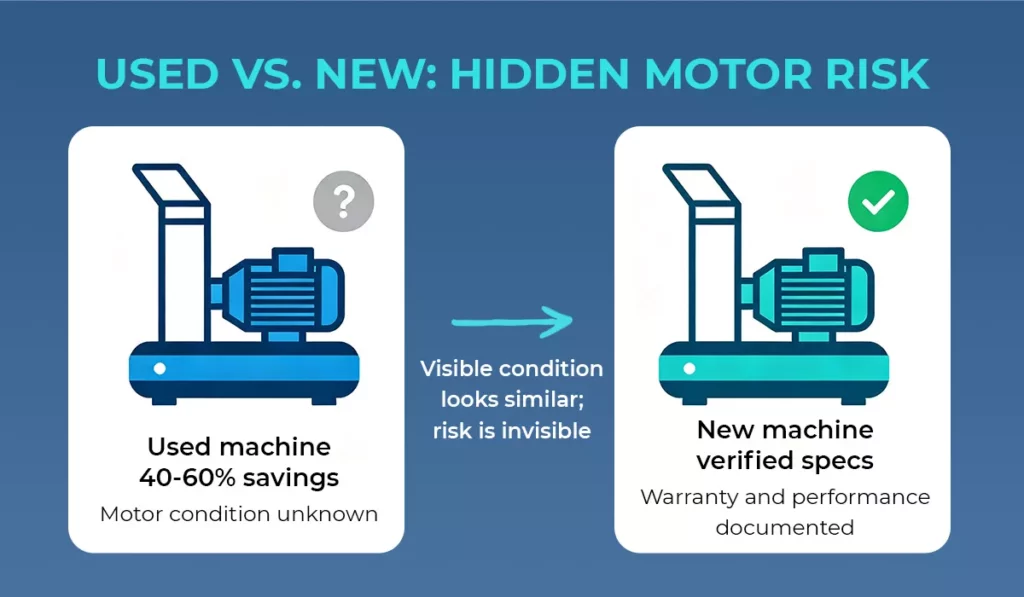
Visual guide highlighting hidden motor risks in second-hand vibration machines compared to guaranteed new models
Commercial-grade vibration platforms start at approximately $3,000 and range up to $10,000 or more depending on the brand, certifications, and intended use. The higher price reflects durability engineered for 8–12 patient sessions per day, commercial warranties of 3–10 years, and in some cases institutional compliance requirements for clinical billing and liability coverage. It depends on the brand. With budget machines purchased through Amazon, Walmart, or Costco, post-purchase support is typically limited to a product manual and a customer service phone number. There is no guidance on frequency selection, exercise protocols, or how to progress safely. Premium brands approach this differently. Hypervibe includes unlimited email helpdesk access, VIP support, and free introductory lessons with every machine purchase. For effective home use, the target budget is $1,000–$3,000. This is the range where independently verified G-force output crosses the 10G threshold that research links to measurable therapeutic outcomes. Below $1,000, no machine on the current market has been independently confirmed to reach 10G at 20+ Hz under real user load. Above $5,000, you are primarily paying for commercial durability and institutional certifications rather than additional health benefits for home use. No. Budget machines under $1,000 average around 4G of output. Most also operate at 5–15 Hz, below the 20–45 Hz range research identifies as effective for muscle activation, bone density, and metabolic improvement. Yes. For clinical goals, the machine determines whether outcomes are achievable at all. For example, A 2022 meta-analysis in Osteoporosis identified 30 Hz consistent vibration as producing measurable improvements in lumbar spine bone mineral density. Budget machines at 5–12 Hz cannot reproduce these parameters.

Here’s how we use a vibration plate for weight loss...

If, a few minutes into your session on the vibration...
Are vibration machines bad for you? Yes, if used incorrectly....
Yes, Vibration Plates or Whole Body Vibration (WBV) platforms, promote...
Most people get the best results using a vibration plate...
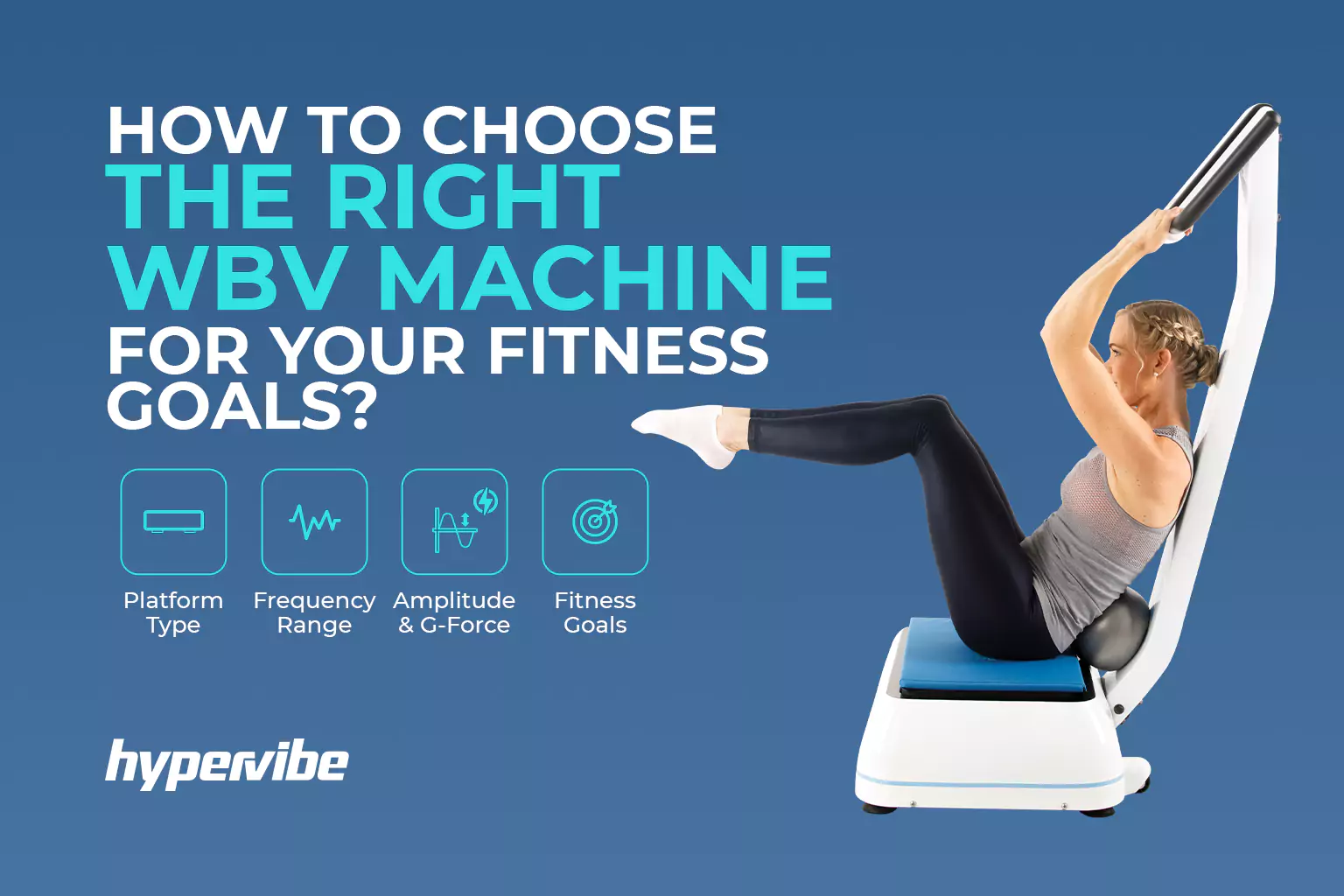
When you are choosing the right Whole Body Vibration (WBV) Machine, also known as a Vibration Plate, there are 5...

Most probably you are already familiar with the benefits that come with whole-body vibration. Perhaps you know that the activity...
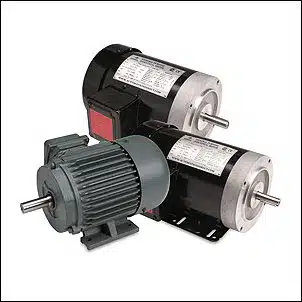
Is this really something people want to know and if so, why? Yes, people do ask this question about Whole...
Is this really something people want to know and if so, why? Yes, people do ask this question about Whole...

By taking your time to work through these blog articles you are gaining some appreciation for the mechanics, motors and...
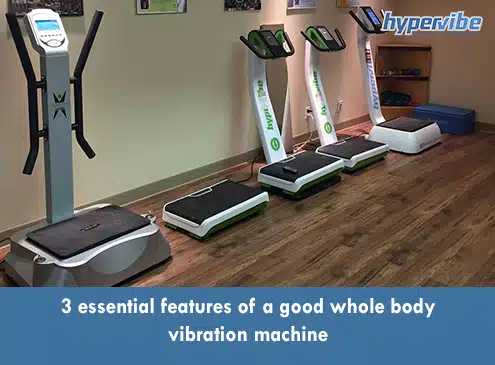
Vibration machine prices vary greatly, some brands being quite expensive while others are extremely cheap. This can be confusing for...
Here’s how we use a vibration plate for weight loss...
If, a few minutes into your session on the vibration...
Are vibration machines bad for you? Yes, if used incorrectly....
Yes, Vibration Plates or Whole Body Vibration (WBV) platforms, promote...
Most people get the best results using a vibration plate...