
£1,032.50 incl. VAT
Shop Now
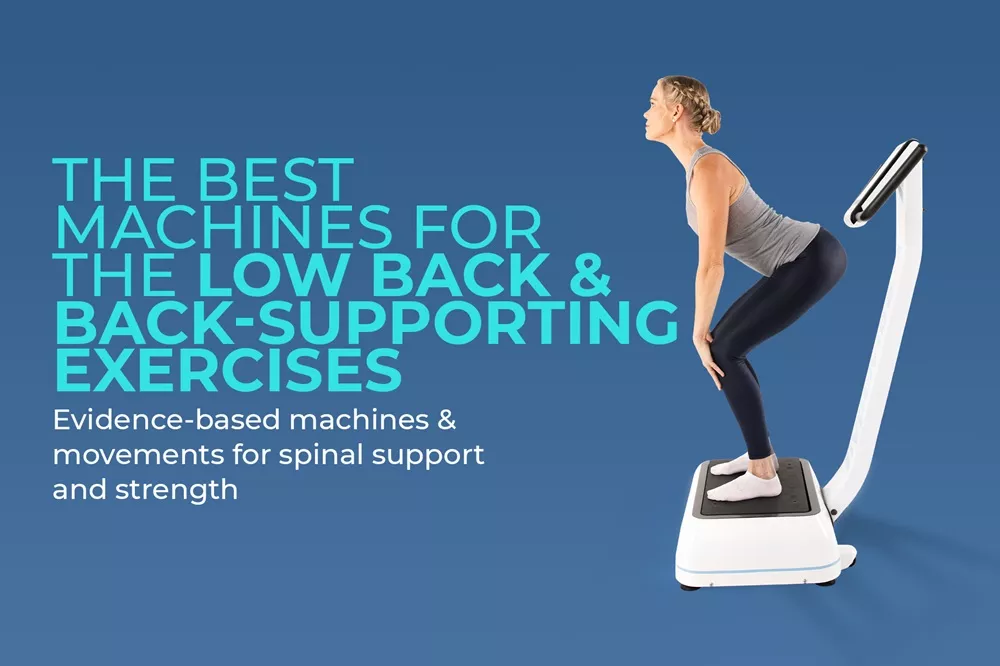
The best fitness equipment for the low back includes back/lumbar extension benches, vibration platforms, pulley cable systems, rowing machines, and other machines that load the spine in a controlled, supported way.
This guide is for beginners, desk workers dealing with stiffness or recurring back pain, adults over 50, strength-training enthusiasts, aesthetics-focused gym-goers, and experienced lifters who want to train their lower back more safely and effectively.
When used correctly, lower back gym machines can help improve strength, stability, posture, and movement, while reducing strain on pain sensitivity.
Key things to pay attention to when choosing a machine:


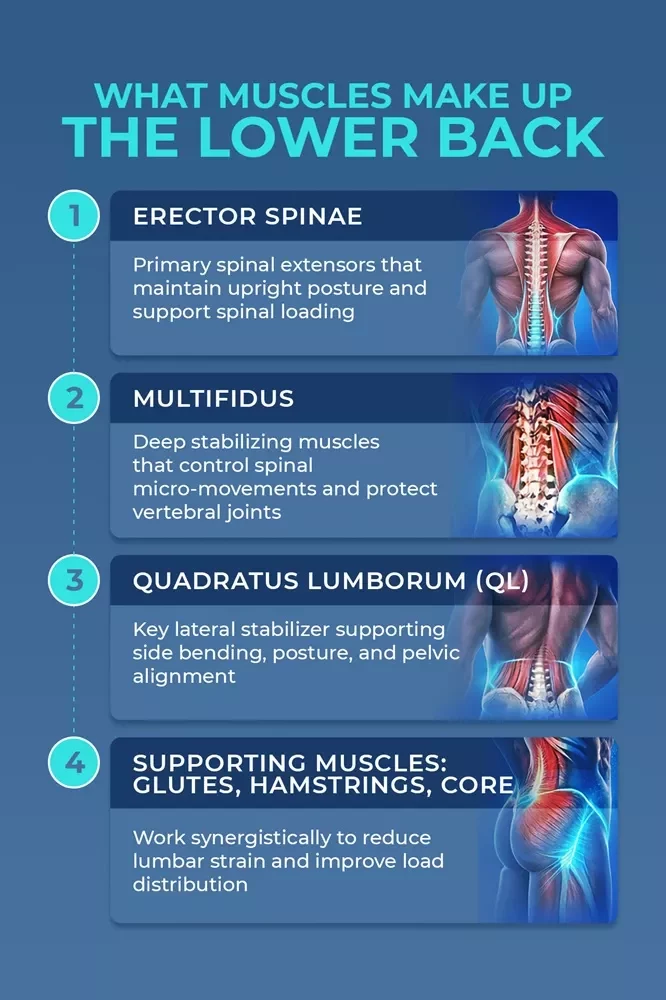
Understanding the anatomy of the lower back is essential for targeted strengthening and injury prevention.
Your lower back is not made up of a single muscle but rather a team of muscles that work together to keep you upright, stable, and pain-free.
These long muscles run along your spine and help you straighten up, control bending, and resist slouching.
They’re heavily involved in back extension machines, reverse hyper exercises, and rowing machines.
These are small but critical stabilizing muscles between each vertebra.
They don’t generate big movements, but they protect your spine during everyday actions involving big movements.
Controlled low back exercises with slow movements help keep them active.
The QL sits on either side of your lower spine and helps with side bending and posture.
It works during unilateral machines, certain cable exercises, and twisting exercises.
The lower back rarely works alone.
Hip exercise machines, seated leg presses, squatting machines, and glute-focused equipment reduce strain on the spine by sharing the load.
Most lower back exercises using gym equipment train the low back and its support muscles at the same time.
Lower back strength and core strength are related, but they’re not considered by most to be the same thing.
Lower back strength is usually focused on your ability to extend, resist flexion, and tolerate load through the lumbar spine.
Exercises like extensions and glute bridges are used to enhance low back strength.
Core strength focuses on stability and control, helping the spine stabilise while you move.
Exercises like planks and V-holds are used to enhance core strength.
You need both:
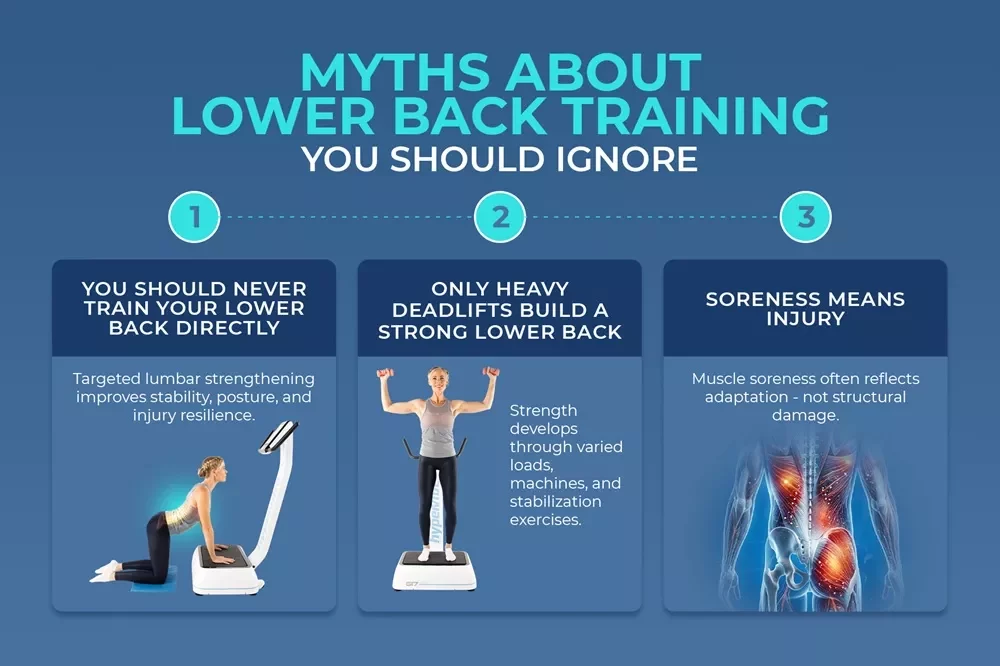
Separating facts from fiction is the first step toward building a resilient and pain-free lower back.
Avoiding direct lower back training often makes the area weaker, not safer.
Properly loaded machines allow controlled strengthening with less risk than uncontrolled lifting.
Deadlifts are effective, but they’re not the only option.
Back extension machines, hip machines, and rowing machines build strength with more support and less technical demand.
Mild muscle fatigue or next-day stiffness is normal when training any underused muscles, including those of the lower back.
Red-flag pain includes sharp pain, nerve symptoms, or pain that worsens after rest—those signals mean stop and reassess.
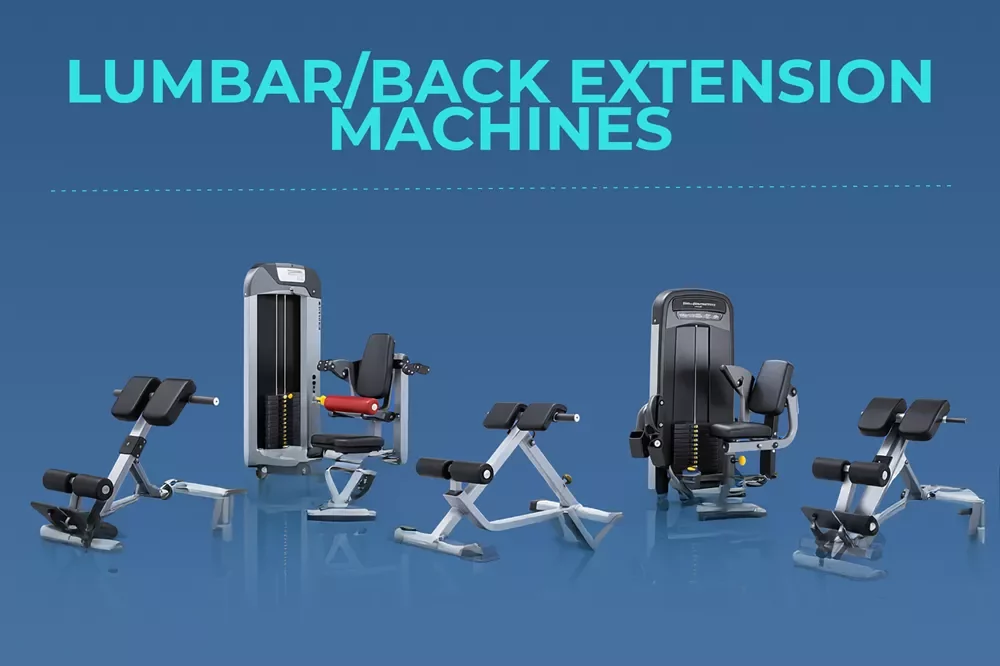
Different types of lumbar extension machines allow for varied resistance and isolated lower back strengthening.
When used with good form and loading, lumbar/back extension machines are among the safest ways to strengthen the lower back, especially for beginners.
These machines guide you through controlled spinal extension, moving your torso against resistance while your hips are stable and supported.
The goal is slow, controlled movement while maintaining a neutral spine and safe range of motion.
Progression pathway:
Are hyperextension machines better than standard back extensions?
They’re not better; they’re more demanding and better suited to experienced users with a greater range of motion and strength.
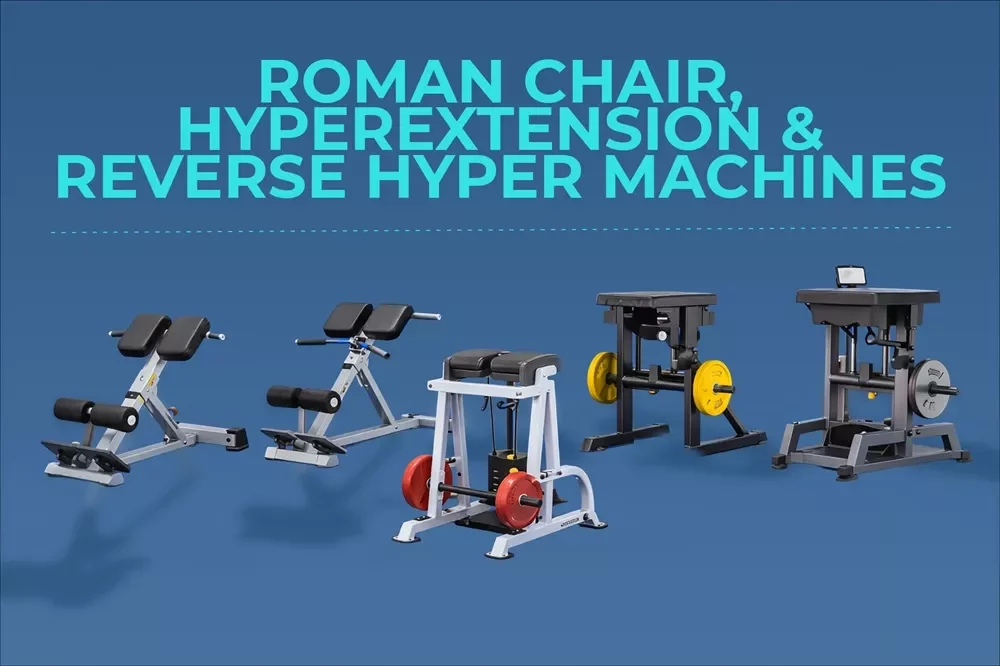
Specialized equipment like the reverse hyper can decompress the spine while building significant lower back strength.
When to use them:
Who they’re good for:
Who should be cautious:
Can strengthening glutes and hamstrings help lower back pain?
Yes, strong glutes and hamstrings reduce the load placed on the lumbar spine during daily movement.
Machines to focus on:
Your lower back often compensates when hips are weak.
Training the posterior chain improves lifting mechanics, posture, and endurance.
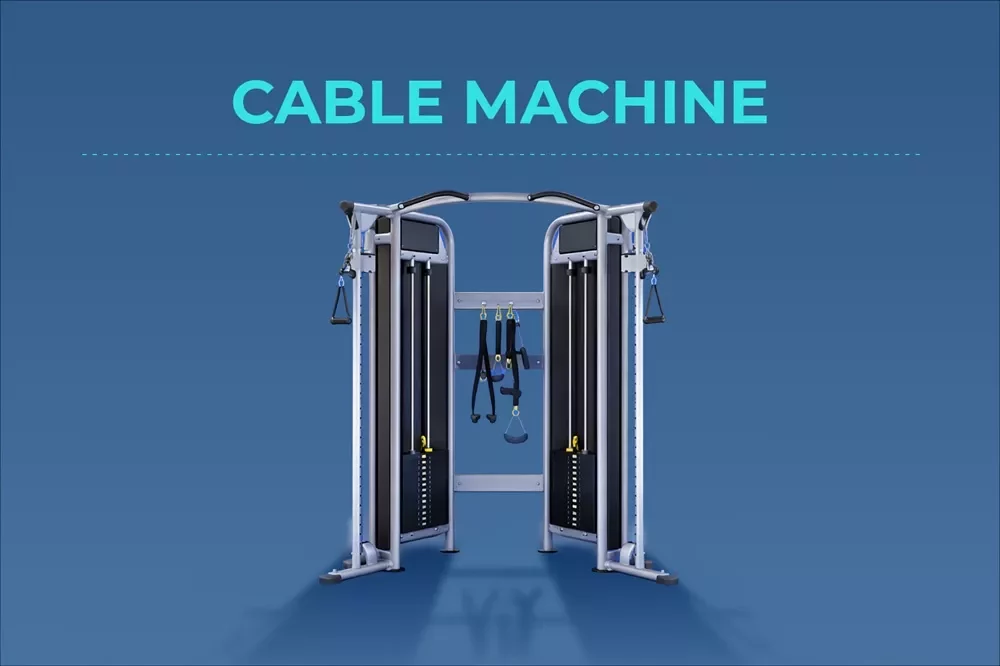
Cable machines offer constant tension and versatility for training the lower back through various planes of motion.
Cables provide adjustable resistance and smooth tension when used with proper form.
Direct cable lower back exercises:
Indirect but highly valuable:
These train the core across large movements, which helps the spine stay stable during lifting and tougher daily tasks.
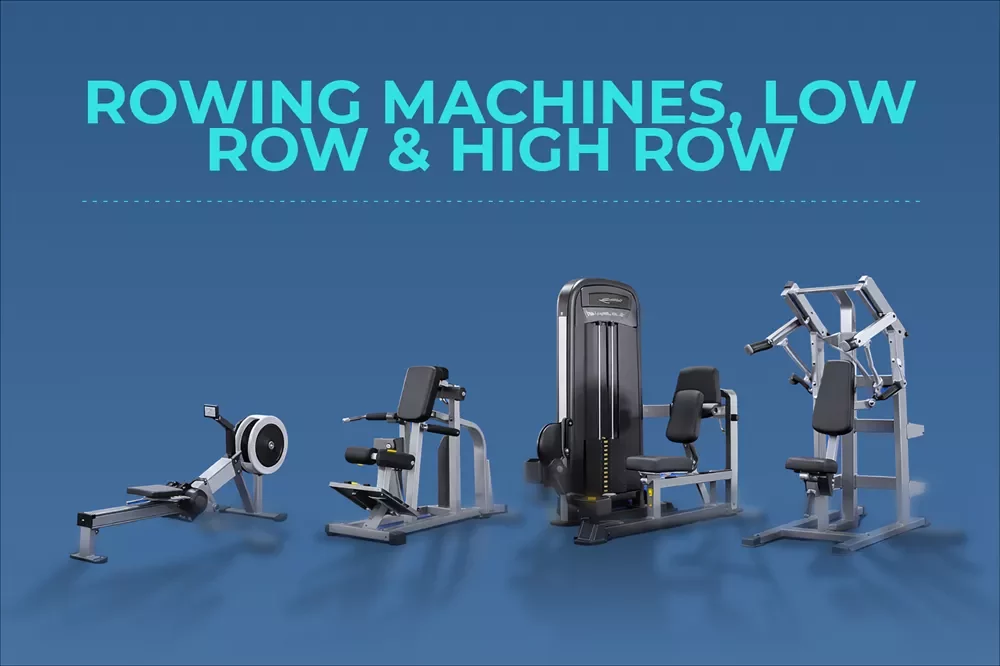
Incorporating different rowing angles helps build thickness and stability across the entire back.
Is rowing good for people with a history of lower back pain? It depends on the machine and technique.
Cardio rowing machines:
Low row & high row strength machines:
What are the best exercise machines for lower back pain at the gym?
The best exercise machines for lower back pain are low-impact machines that support your posture, allow you to control intensity, and avoid sudden spinal loading.
For most people cleared to exercise, gentle cardio machines are the safest place to start.
Some machines aren’t bad in general, but they’re often poorly tolerated during back pain flare-ups or early recovery phases.
Machines to avoid or heavily modify:
Lower back stretching machines can reduce stiffness, decompress the spine, and help you move more comfortably.
These use body weight and gravity to gently decompress the spine.
They may reduce pressure on spinal structures in the short term, but they don’t strengthen muscles or correct movement patterns.
Often found in gyms or clinics, these guide you into controlled spinal flexion or extension.
They’re useful for people who struggle to stretch on the floor or need extra support.
These create a gentle curve through the lower back, encouraging relaxation of tight muscles.
For many people, machines aren’t necessary at all.
If you’re a beginner, desk worker, or someone with mild stiffness, floor-based stretches often work just as well, with less risk and more control.
Effective options include:
These movements encourage natural spinal motion and body awareness.
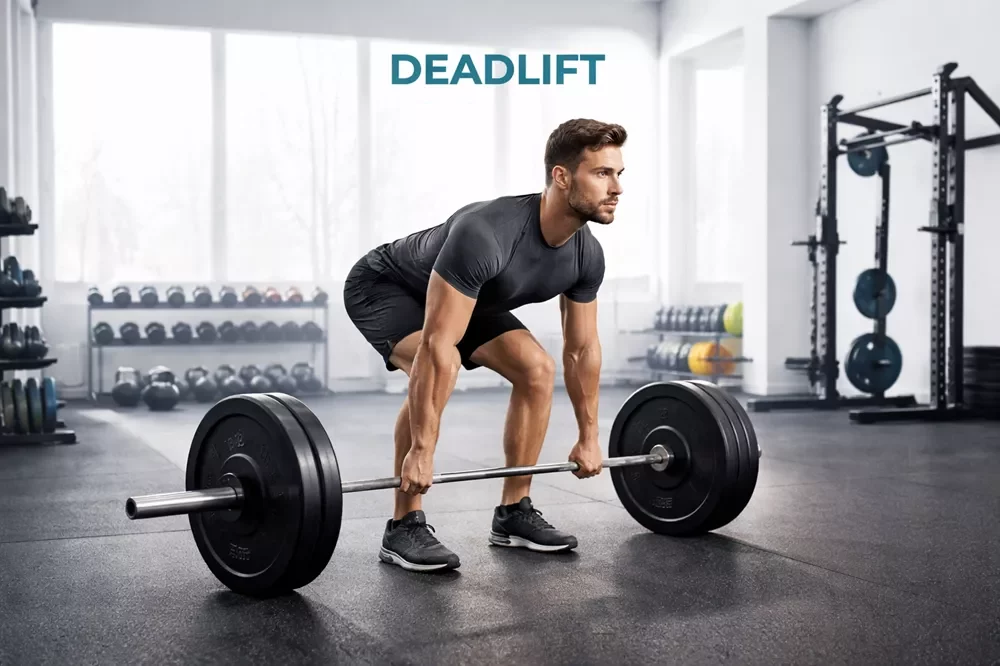
Mastering the deadlift requires precise form to effectively target the posterior chain while protecting the spine.
Free-weight exercises can be powerful tools for building a strong lower back; however, they are not mandatory for everyone.
Deadlifts and Romanian deadlifts (RDLs) strengthen the lower back and the muscles that support it.
What they train:
Key technique cues:
Load progression rules:
When to avoid or pause deadlifts:
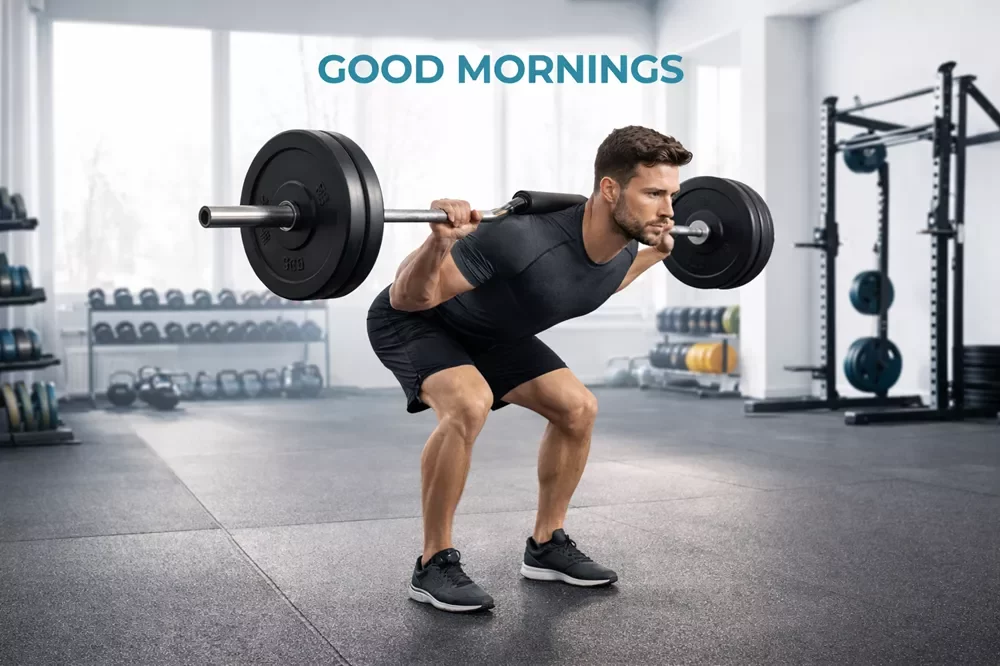
The Good Morning is a highly effective hinge movement for developing a strong and stable lower back.
Are these exercises safe for beginners? These exercises are effective but advanced.
They are not day-one drills for beginners or people with active back pain.
Good mornings:
Rows (barbell or heavy dumbbell):
Kettlebell swings:
Who they’re best for:


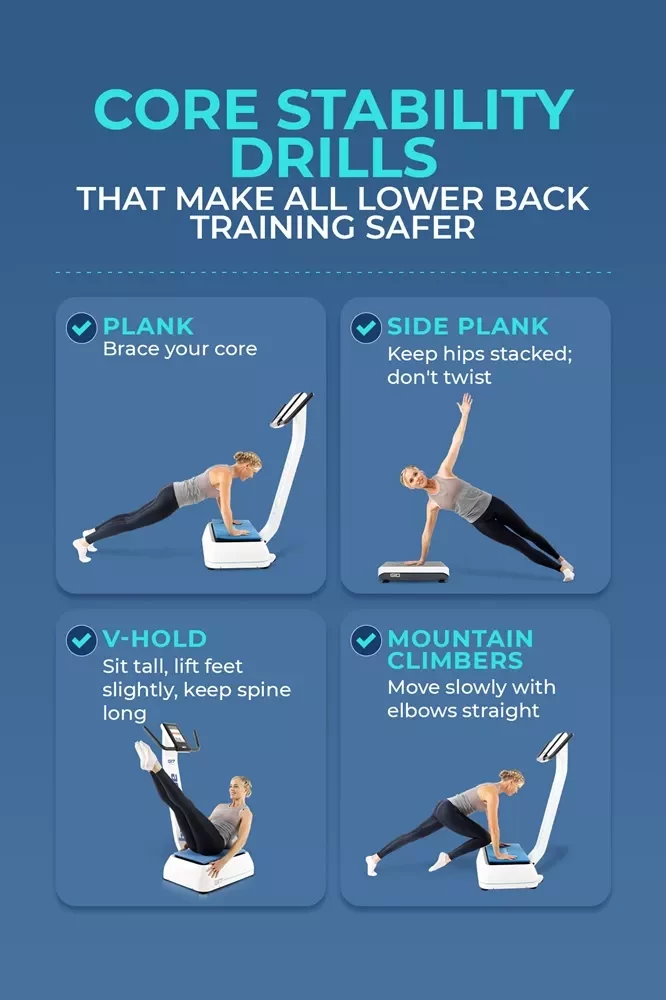
A strong, stable core is the foundation of a safe and effective lower back training program.
Foundational core exercises:
How to program them:
If you’re shaking wildly or holding your breath, the drill is too hard.
The best lower back workout depends on your experience level, pain history, age, and goals. The routines below use gym machines to build strength, stability, and confidence while reducing risk.
Goal: Learn movement, build baseline strength, and avoid overload
Workout (2–3× per week)
Notes:
Goal: Restore movement confidence, reduce stiffness, and rebuild tolerance
Workout (2× per week)
Goal: Stability, endurance, and easier daily movement
Workout (2–3× per week, short sessions)
Goal: Build resilience, performance, and load tolerance
Workout (1–2× per week)
Order:
Goal: muscle tone, posture, and visible change.
Workout (2–3× per week)
Better posture and muscle endurance create the “toned” look most people want.
| Machine | At-Home Alternative |
| Back extension | Hip hinge with wall support |
| Cable row | Resistance band row |
| Lat pulldown | Band pulldown or assisted pull-up |
| Reverse hyper | Glute bridge or hip thrust |
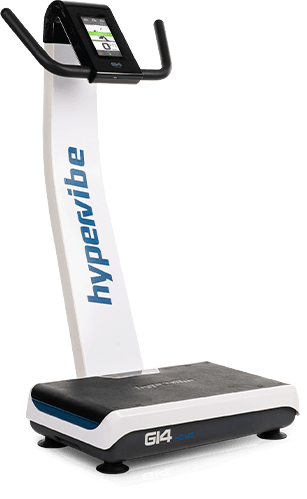
Vibration platforms can be safe and useful for people with lower back issues—but only when used at appropriate settings and after medical clearance for pain, disc issues, osteoporosis, or neurological conditions.
In simple terms, vibration platforms work by delivering low-amplitude mechanical signals through the body.
These signals stimulate muscles and sensory receptors, which may help with:
Current research suggests vibration can be a low-impact adjunct for mobility, balance, and neuromuscular activation.
These examples show how vibration training can fit around lower back machines—not compete with them.
2–3×/week at the gym:
2–3×/week Hypervibe:
Goal: Reduce stiffness, restore movement confidence, and avoid flare-ups.
2×/week gym:
2×/week Hypervibe:
Goal: Walk further, stand up easier, and feel steadier day to day.
2–4×/week gym:
1–3×/week Hypervibe:
Goal: Support recovery and muscle readiness without extra spinal load.
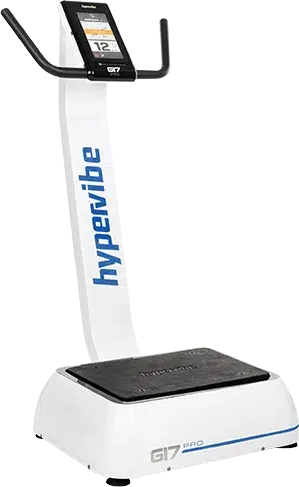
For lower back workouts, lower intensity is better—at least at the beginning.
Many consumer vibration plates are built for fitness intensity, not spinal comfort, and start too strong.
A wide, well-controlled frequency range allows:
Lower back training, especially early on, demands a stable base.
Look for:
Stability reduces unnecessary bracing and helps the spine relax into movement rather than guard against it.
Helpful features include:
Hypervibe platforms are designed around precision, control, and progression, which makes them particularly well suited for lower back use.
They allow:
Back extension machines and seated cable rows are usually best for beginners. They provide support, control the range of motion, and help activate the lower back without the balance demands of free weights. For home use, a recumbent bike, walking treadmill, or vibration platform can help with circulation and stiffness. Strength-focused machines matter later—only after pain is under control and movement feels safe. Lower back and core work two to three times per week is usually enough. On non-training days, walking and general movement are recommended. Twisting torso machines and aggressive ab crunch machines often aggravate pain. These combine loads with spinal flexion or rotation, which many lower backs don’t tolerate well. Yes. Lower back machines can replace or supplement deadlifts, especially during pain-sensitive phases or deload weeks. Many people build strength safely using machines before returning to free weights. Some people notice reduced stiffness within two to three weeks. Strength improvements usually take four to six weeks of consistent, well-managed training—assuming load and recovery are appropriate. No exercise machine can spot-reduce fat. Lower back machines improve muscle tone and posture, while overall fat loss depends on total activity, nutrition, and consistency.
FAQs
- What gym machine works the lower back for beginners?
- What is the best exercise machine for lower back pain at home?
- How often should I train my lower back if I sit all day?
- Which gym machines are the worst for lower back pain?
- Can I replace some deadlifts with lower back machines?
- How long before I feel less pain and more strength?
- Can gym machines really target lower back fat?


The worst foods for someone looking to maintain a healthy...
Vibration Plates—used for Whole Body Vibration (WBV) or Vibration Training—can...

If you keep hearing more about the vibration plate lately,...
The best fitness equipment for the low back includes back/lumbar...
Whole body vibration exercises may not seem the safest choice...
Back pain affects about 60-80% of people in the UK at some point in their lives, being one of the...

If you are someone whose workout routine is becoming a bit stale or your lifestyle has kept you physically stagnant...
Summer is approaching and it’s time to bring out those spaghetti tops, tank tops, v-necks, t-shirts, sleeveless tops and more....
To build a lean and athletic body, you need more than slender legs and a six-pack: your back muscles are...
The health of elders, their ability to live independently, and their overall quality of life can all be significantly improved...
They come in many colors and sizes and whether you call them Swiss balls, balance balls or exercise balls, one...
The worst foods for someone looking to maintain a healthy...
Vibration Plates—used for Whole Body Vibration (WBV) or Vibration Training—can...
If you keep hearing more about the vibration plate lately,...
The best fitness equipment for the low back includes back/lumbar...

Whole body vibration exercises may not seem the safest choice...