Starting Whole Body Vibration (WBV) training is exciting.
The research is compelling, the time commitment is small, and the potential benefits for strength, balance, bone density, and circulation are real.
But a vibrating platform is also a mechanical device that can transmit force through the joints and tissues in your body when using it, so a clear framework matters.
This guide is built from years of biomechanical research, engineering behind the Hypervibe platform, and direct feedback from thousands of users, from cautious first-timers to post-surgical rehab patients.
What follows is the most complete safety manual available for Vibration Plate use: fundamental rules, medical contraindications, gray-area conditions, strange sensations explained, and equipment standards that protect you.
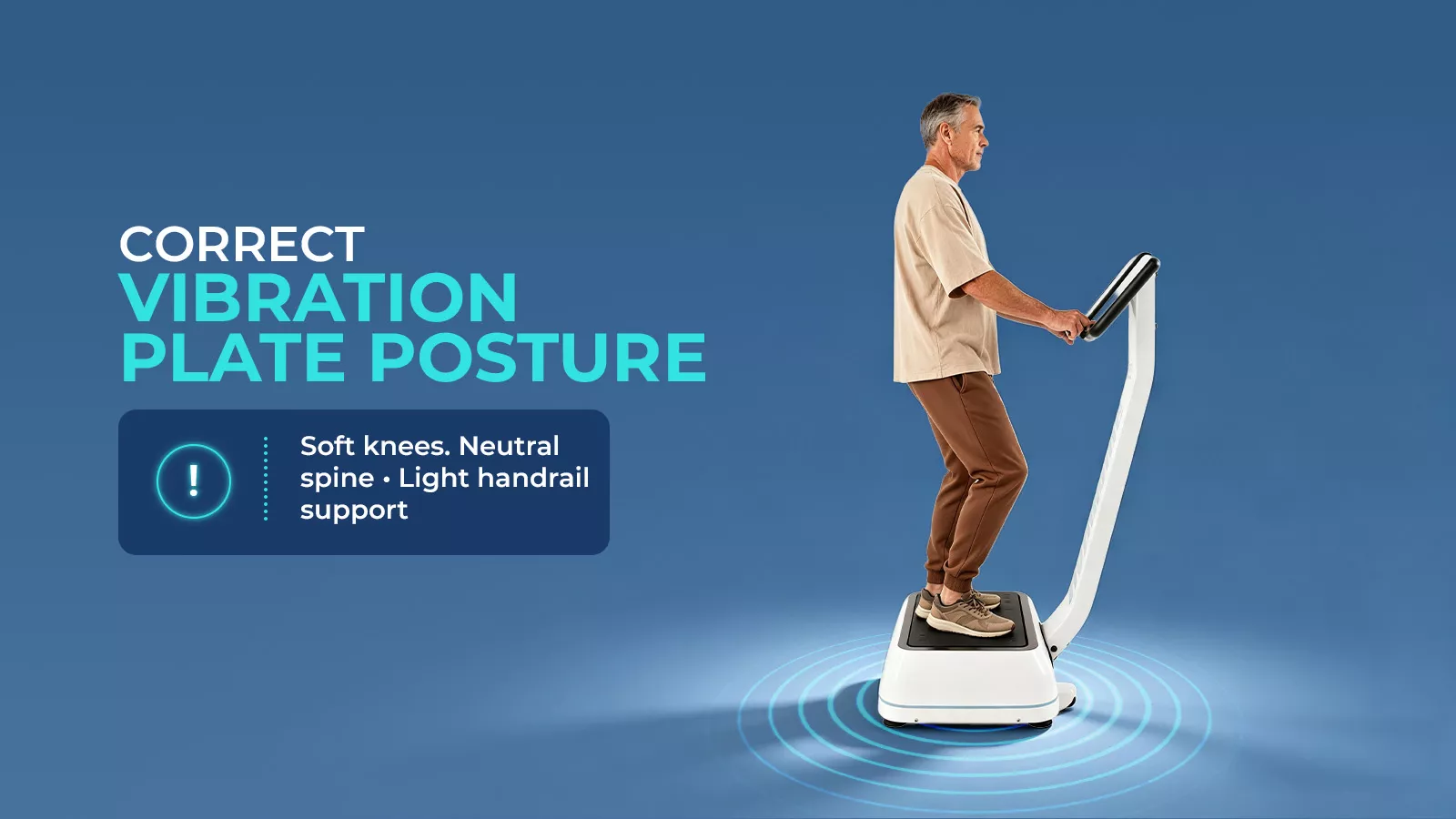
Essential safety guidelines, best practices, and precautions for using a vibration platform.
Posture is not just about looking right.
On a Vibration Plate, it directly determines where mechanical energy goes in your body.
When you stand with straight, locked knees, the platform’s force travels in an unbroken line from your feet, up through your femur, through your lumbar spine, through your cervical vertebrae, and into your skull.
That pathway is why some users report headaches and a rattling sensation in their head.
Soft knees, bent at roughly 10 to 15 degrees, act as shock absorbers.
The quads and hamstrings dissipate the vibratory load before it reaches the spine.
The same logic applies to upper-body exercises.
If you are doing a push-up position or supporting weight through your hands, keep a soft bend in the elbows, roughly 10 to 15 degrees as well.
Locked elbows transmit the same unbroken force pathway up through the wrists, forearms, shoulders, and neck.
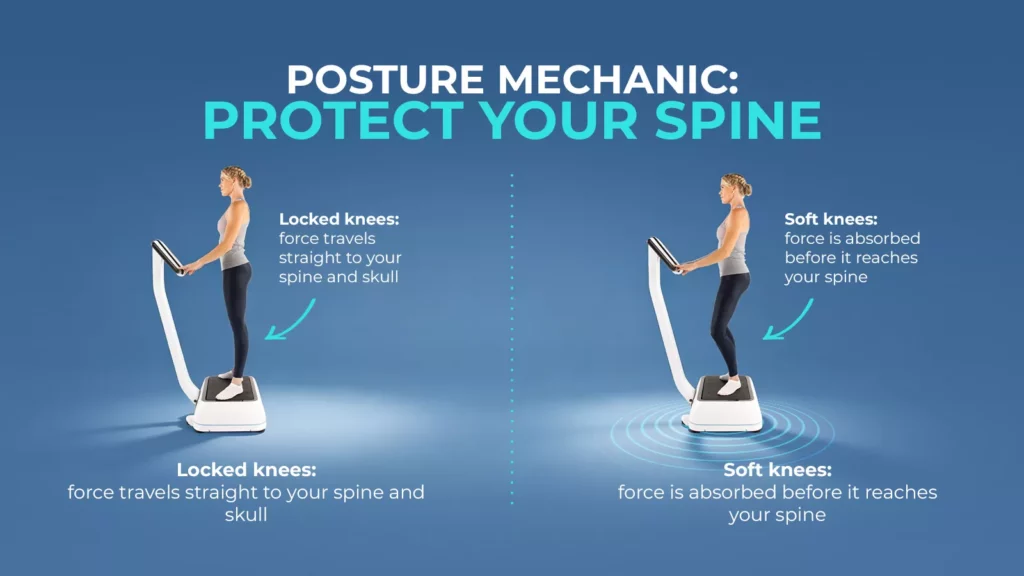
Visual guide explaining how soft knees absorb mechanical vibrations to protect the spine
Additional posture cues that matter:
A study in a 2026 randomized trial found that participants performing static semi-squats at 50 degrees of knee flexion on a side-alternating platform at 30 Hz experienced normal cardiovascular responses with values well within healthy ranges, reinforcing that structured, supported posture keeps the body stable even during significant vibratory load.
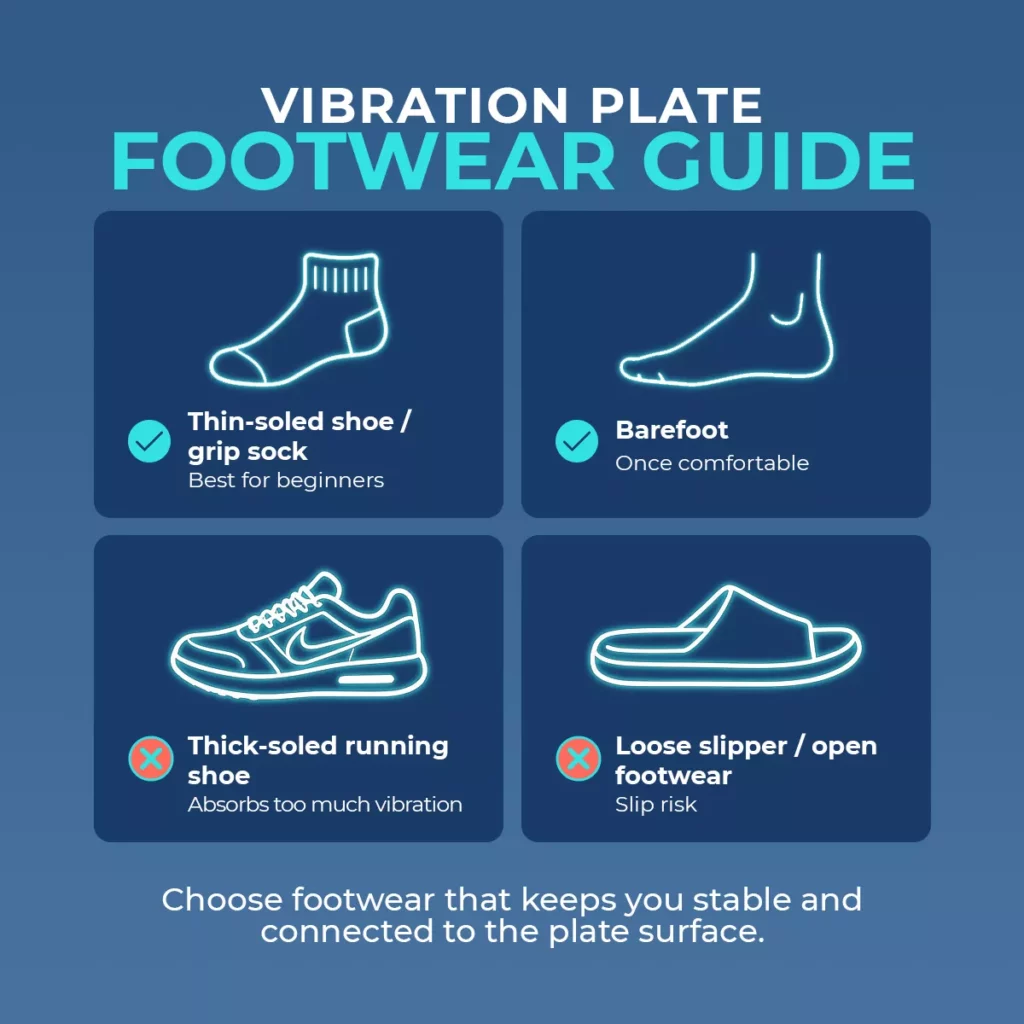
Recommended footwear options for maximizing vibration plate stability and contact
Both options are valid, but they serve different purposes.
Thin-soled shoes or rubber-grip socks provide two key benefits: they dampen some of the surface vibration at bony contact points on the foot, and the rubber sole improves grip, reducing the micro-sliding that can occur at higher amplitudes.
This is the best starting point for beginners.
Barefoot use increases sensory feedback and ground contact, which some users prefer for balance training.
It is a reasonable option once you are comfortable with the machine’s feel.
Avoid thick-soled running shoes, as they absorb too much vibration and reduce training effectiveness.
Loose accessories, open footwear, or soft-soled slippers create slip risk and should be avoided entirely.
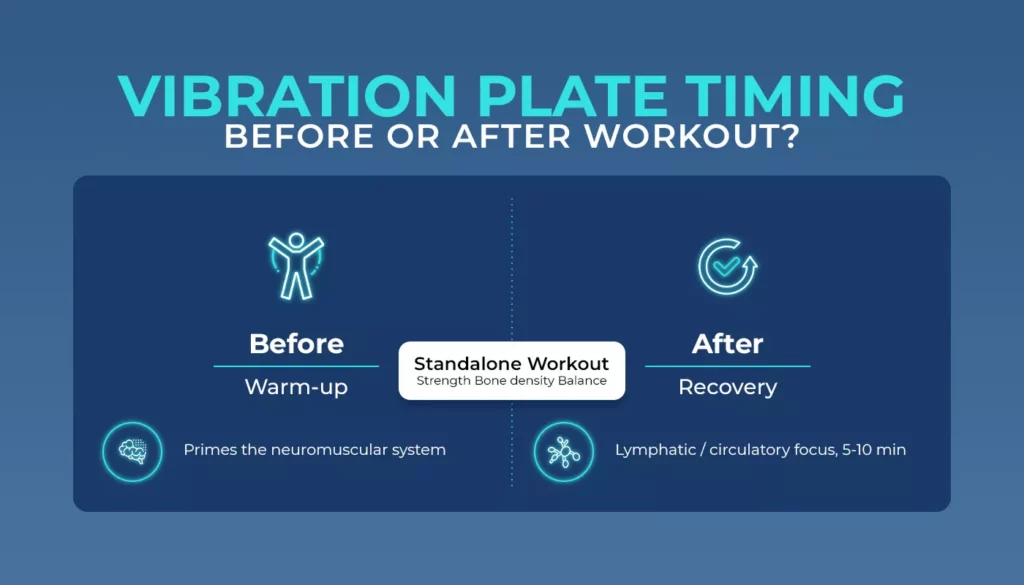
Timing strategy for integrating vibration plate training into warm-up, standalone, or recovery sessions.
Not only can WBV be used for a workout, but it can function as a pre-workout primer or a post-workout recovery tool, and the research supports both applications.
Before a workout, short WBV exposure at moderate frequency warms up muscle tissue, increases local circulation, and primes the neuromuscular system.
A 2022 randomized controlled trial found that five weeks of pivotal WBV training improved countermovement jump height and squat jump power output in male participants, suggesting meaningful neuromuscular activation that could translate to better conventional training performance when used as a warm-up.
After a workout, lower-intensity WBV using programs associated with circulatory and lymphatic benefits helps move metabolic waste products from muscle tissue.
This is also when some users target lymphatic drainage goals, using slower, gentler settings to facilitate fluid movement.
Keep post-workout sessions short (5 to 10 minutes) and at lower G-force settings to avoid adding muscular fatigue on top of an already taxed system.
As a standalone workout, WBV at appropriate G-force levels is effective for strength, bone density, and balance goals.
The research across populations from older adults to those with obesity confirms it functions as a legitimate exercise modality, not just an add-on.
Session length should match your goal, your fitness level, and the G-force output of your machine.
A general starting framework for healthy users is 10 to 20 minutes per session, once per day, with at least one rest day per week.
Goal-based frequency guidance:
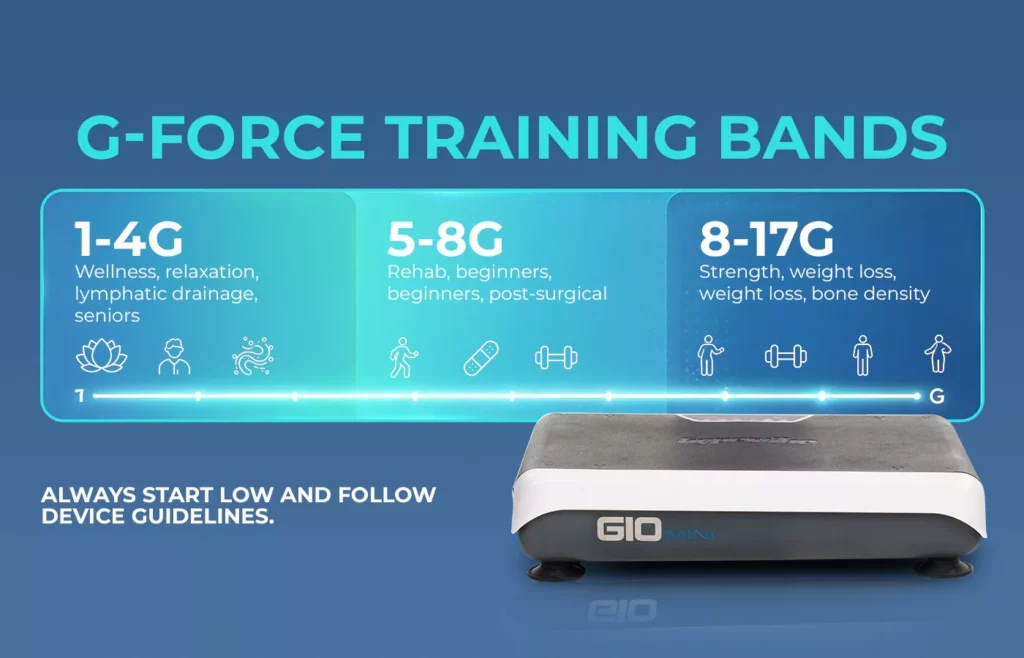
Visual guide outlining intensity levels and exercise applications across different G-force ranges on a whole-body vibration plate.
For context, the Occupational Safety and Health Administration (OSHA) and international standards such as ISO 2631 set daily whole-body vibration exposure action values for workers in industrial settings at 0.5 m/s squared, with a limit value of 1.15 m/s squared over an eight-hour workday. These thresholds are designed for workers exposed to low-frequency, high-duration vibration from vehicles and heavy machinery at occupational levels across full working days, not for structured exercise sessions. Recreational WBV is exercise, not occupational exposure.
The takeaway for home users is that short, structured sessions of 10 to 20 minutes at appropriate G-force settings are very different from hours of continuous industrial vibration.
Staying within session-length guidelines is common exercise programming sense, not industrial risk management.
G-force is the key metric that combines frequency and amplitude into a single measure of training intensity. Hypervibe machines deliver a range of 1 to 17 G, organized into practical training bands:
|
G-Force Range |
Appropriate Use |
|---|---|
|
1 to 4 G |
Wellness, relaxation, lymphatic drainage, seniors |
|
5 to 8 G |
Rehabilitation, beginners, post-surgical recovery |
|
8 to 17 G |
Strength, weight loss, bone density goals |
Always consider both frequency and amplitude together.
Frequency determines the training goal; amplitude adjusts intensity within that frequency.
G-force is the combined output that matters.
More time on a high-G-force platform does not produce better results.
It produces unnecessary fatigue and recovery demands.
WBV at higher intensities engages muscle tissue just as other resistance exercise does, and muscle requires recovery time to adapt and grow stronger.
Symptoms of overuse on a Vibration Plate are the same as overuse in any exercise program: persistent muscle soreness, fatigue that extends beyond 48 hours, joint tenderness, and reduced performance in subsequent sessions.
Delayed Onset Muscle Soreness (DOMS) is normal after starting a new WBV program, particularly in the first one to two weeks, and it does not indicate injury.
If soreness or unusual tingling in the limbs persists beyond 48 hours, reduce session duration and intensity, and consult a clinician if symptoms continue.
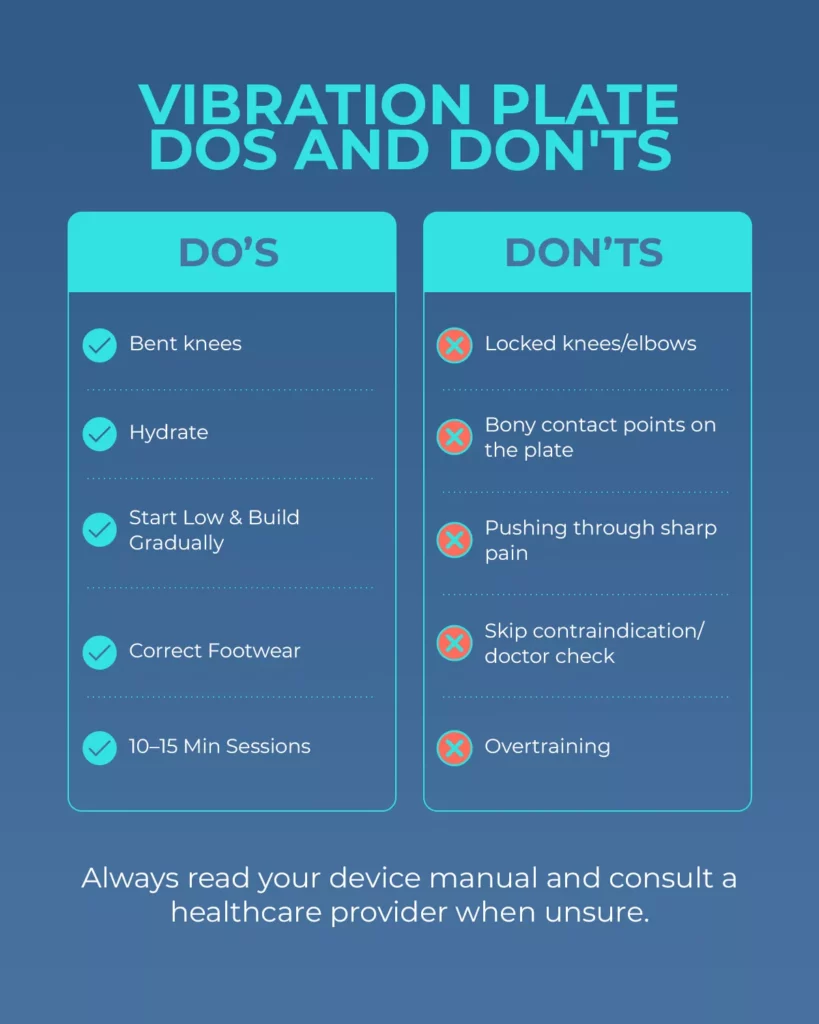
According to clinical insights and leading fitness studies, WBV training should be avoided by individuals with a number of conditions.
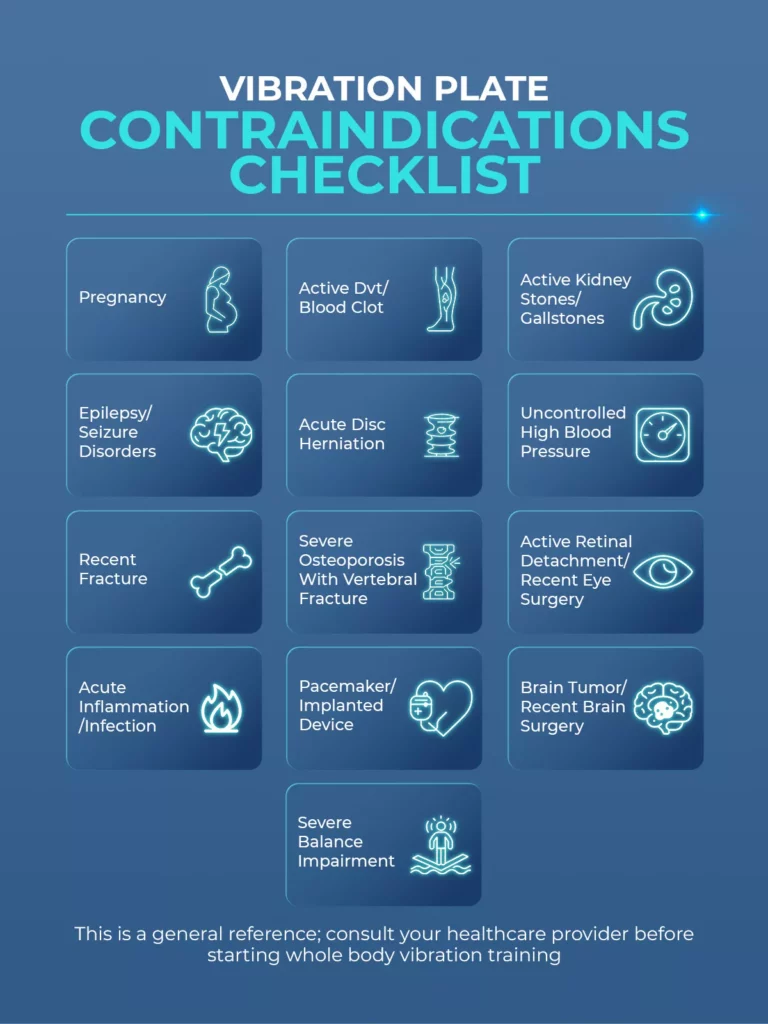
Reference checklist highlighting medical conditions that require physician clearance before starting vibration plate therapy.
The most common ones are:
The sections below address specific contraindications in more detail for users who need clinical clarity rather than a checklist.
High-frequency mechanical vibration stimulates the nervous system through mechanoreceptors and afferent neural pathways throughout the body.
For individuals with epilepsy or seizure disorders, this full-body sensory and neurological stimulation may pose a seizure trigger risk.
WBV should not be used by individuals with uncontrolled epilepsy or a recent history of seizures without explicit clearance from a neurologist.
Individuals with other neurological conditions, including recent concussions, should approach WBV with caution.
After a concussion, the brain’s sensitivity to sensory input and mechanical stress is elevated.
Allow full neurological recovery before returning to WBV, and reintroduce it only at the lowest G-force settings with medical guidance.
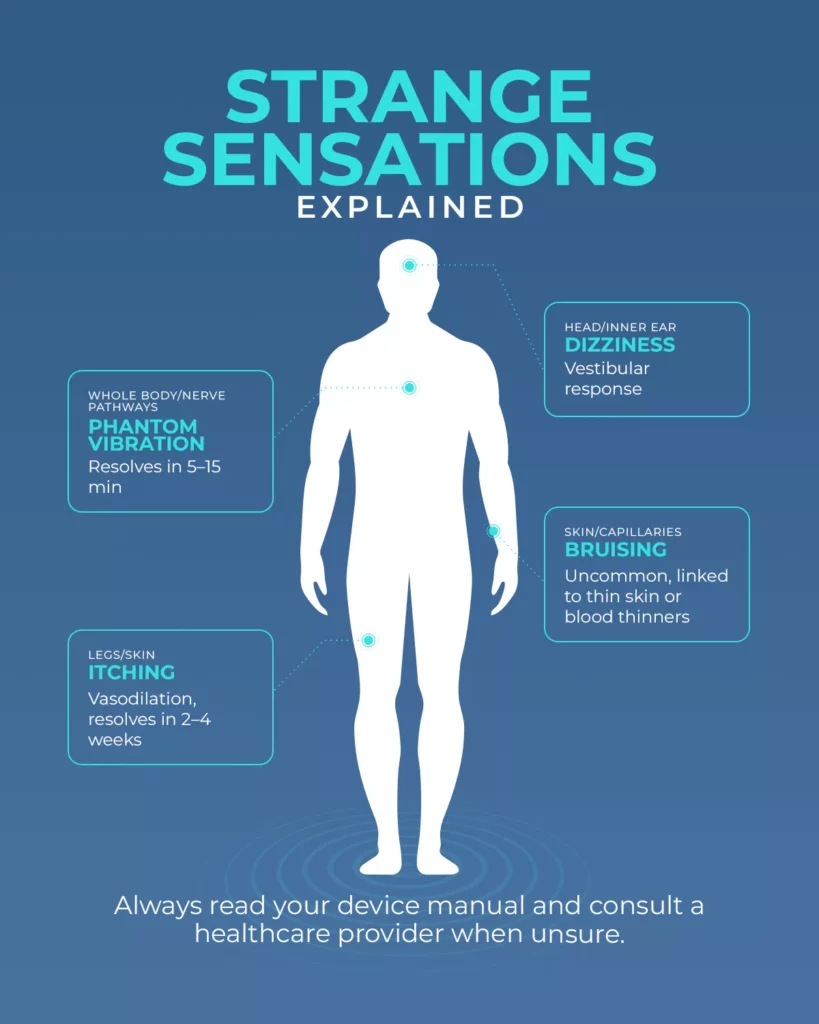
Anatomical map outlining expected body sensations and temporary responses during vibration therapy
A persistent myth circulates that vibration machines can “safely help pass” kidney stones.
This is not supported by evidence and carries genuine risk.
An active kidney stone lodged in the ureter or renal pelvis is subject to the same mechanical forces as the rest of your body during WBV use,
and there is no reliable clinical mechanism by which vibration safely dislodges stones.
If vibration does move a stone, that movement can cause severe acute pain and, in rare cases, complications requiring urgent care.
Do not use a Vibration Plate if you have a known active kidney stone.
Consult a urologist for evidence-based treatment options.
Active deep vein thrombosis is an absolute contraindication.
A blood clot in a deep vein can be dislodged by significant mechanical force and become a pulmonary embolism, which is a life-threatening emergency.
If you have been diagnosed with DVT or suspect you have one, do not use a Vibration Plate under any circumstances until cleared by your physician and the clot has resolved.
Users with active retinal detachment, very recent retinal surgery, or severe pathological myopia should avoid WBV.
Retinal tissue is delicate, and high-frequency vibration transmitted through the skull may increase intraocular pressure or stress in compromised retinal tissue.
Users with general age-related vision changes or stabilized eye conditions can typically use WBV safely, particularly at lower G-forces, but should confirm with their ophthalmologist if in doubt.
This is one of the most frequently searched and most misunderstood areas of WBV safety.
The short answer is: it depends on the type of implant, the location, and the time since surgery.
Most modern orthopedic implants, including titanium hip and knee replacement components, are designed to integrate with bone.
They are not magnetically active and are not at risk from the electromagnetic concerns relevant to MRI machines.
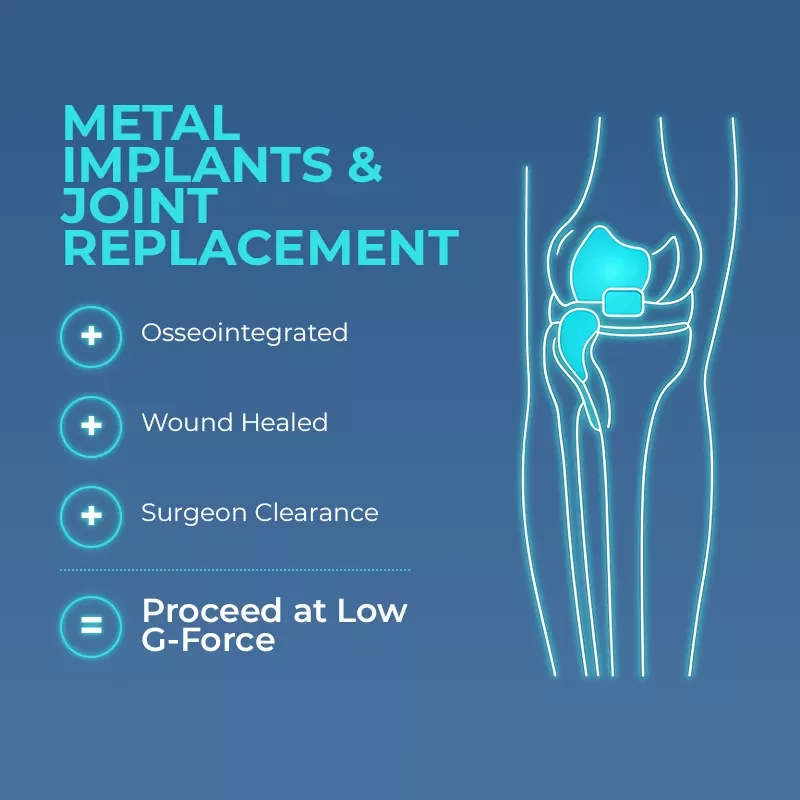
The primary question for joint replacements is whether the implant is fully osseointegrated (bonded to the surrounding bone) and whether any surgical wound or tissue healing is complete.
Medical clearance guidelines for using low G-force vibration therapy with joint implants
A 2019 single-blinded randomized controlled trial studied WBV in patients immediately following total knee arthroplasty (TKA, or knee replacement surgery).
Participants using low-frequency, low-amplitude WBV (8 to 10 Hz, 2 mm amplitude, approximately 1 to 2 G) starting on the second day post-surgery showed significantly greater knee extensor strength improvement and significantly less calf swelling compared to the control group.
The vibration group showed a 45.5% improvement in quadriceps isometric strength versus 16.7% in the control group, and calf circumference decreased by 0.33 cm in the WBV group while it increased by 0.41 cm in the control group (p = 0.045).
No significant complications were observed.
This research suggests that low-intensity WBV can be a viable early post-surgical rehabilitation tool after knee replacement, but it was administered in a controlled clinical setting by physical therapists.
For home use, wait until your surgeon formally clears you for vibration exercise, typically after wound healing and initial osseointegration.
The post-surgical window varies by individual and implant type.
Do not assume a general timeline.
Get explicit clearance.
For ferromagnetic implants, spinal cord stimulators, cochlear implants, or any electronically active implanted device, consult the relevant specialist before any WBV use.
Active inflammation, acute joint flare-ups (such as rheumatoid arthritis exacerbations), and unhealed fractures are contraindications for WBV.
Adding mechanical load to acutely inflamed or structurally compromised tissue worsens the injury and delays healing.
Pause WBV during any acute inflammatory episode and return only after the flare resolves and with physician guidance.
Joint hypermobility, which is defined as excessive range of motion in joints due to connective tissue laxity, requires a thoughtful approach.
WBV can strengthen the muscles that support hypermobile joints, but sessions should begin at low G-force to avoid stressing already lax ligaments.
A study on WBV in a falls and osteoporosis protocol used progressive frequencies from 12.6 Hz to 30 Hz across eight weeks, building amplitude exposure gradually, a model that translates well to hypermobile users.
There is no universal contraindication to Vibration Plate use during menstruation.
For most users, low-to-moderate intensity WBV during a period is safe and may even help reduce cramping through muscle relaxation and circulation improvement.
Users who experience particularly heavy flow or pelvic pain during menstruation may benefit from lowering session intensity during that window, staying at lower G-force settings focused on gentle circulation rather than higher-intensity training.
Listen to your body. If pelvic discomfort increases during a session, stop and rest.
After abdominal surgeries, including hysterectomy, the standard guidance is to wait until your surgeon has cleared you for general physical exercise, which typically includes a defined period of pelvic rest.
Once cleared for exercise, begin WBV at the lowest settings and monitor for any abdominal discomfort or pressure.
Do not proceed if either sensation occurs.
Botox (botulinum toxin) injections create temporary neuromuscular blockade at targeted injection sites.
The concern with WBV post-Botox is that mechanical vibration may increase local circulation and potentially influence diffusion of the toxin from the injection site.
Most practitioners recommend waiting a minimum of two weeks after facial or cervical Botox before resuming any high-vibration exercise.
Confirm the specific waiting period with your injector, as recommendations vary by location and volume injected.
For wrist and upper limb injuries, WBV exercises involving hand loading (plank variations, push-up positions) should be avoided during active healing.
Lower-body exercises with good upper-body support are appropriate as long as the injured limb is not bearing load on the platform.
Itchy legs (sometimes called vibration urticaria in its more intense form) are one of the most commonly reported and least-explained beginner experiences.
It is almost always harmless.
The cause is rapid vasodilation.
WBV significantly increases peripheral blood flow, as confirmed by a meta-analysis showing WBV increases blood flow and muscle oxygenation in the lower extremity.
When blood vessels that have been partially dormant suddenly dilate and fill with blood, the sudden change in pressure and temperature in surrounding tissue activates skin nerve fibers, producing an itching sensation. This response typically diminishes over two to four weeks as the vascular system adapts to regular WBV sessions.
To manage it in the short term, start with very short sessions (three to five minutes) at low intensity, increase duration gradually, and ensure you are well-hydrated.
The sensation should not be accompanied by hives, swelling, or difficulty breathing.
If it is, stop use and seek medical advice, as true allergic vibration urticaria is rare but does exist.
Although rare, dizziness during or after WBV use is usually a vestibular response.
The inner ear’s fluid-based balance system (the vestibular apparatus) detects movement and orientation.
High-frequency mechanical vibration can temporarily disrupt the signals this system sends to the brain, creating a sensation of movement or imbalance that produces dizziness.
Practical steps to prevent and manage this:
A 2026 randomized trial in obese adults found that heart rate and perceived exertion responses during WBV were within normal physiological limits, suggesting that well-structured WBV does not impose dangerous cardiovascular stress.
However, users who experience persistent dizziness lasting more than a few minutes after stepping off the machine should consult a clinician to rule out vestibular conditions.
Bruising from WBV is uncommon but can occur in users with compromised circulation, very thin skin (common in older adults), or those taking anticoagulant medications.
The mechanism is capillary fragility: when blood vessels are not resilient enough to handle the sudden increase in blood flow and pressure from vibration, small capillaries can rupture beneath the skin surface.
If you bruise easily in general, or are on blood thinners, start at the lowest G-force settings.
Use a thin mat under the feet to reduce direct mechanical impact at bony contact points.
If unexplained bruising appears, pause use and consult your doctor.
After a WBV session, some users feel as though their body is still vibrating.
This is a temporary neurological phenomenon.
The afferent nerve pathways that carry vibration signals from mechanoreceptors in muscles and joints continue firing briefly after the stimulus ends, similar to the way you might still feel movement after stepping off a boat.
It resolves on its own, typically within 5 to 15 minutes.
To speed recovery, do two to three minutes of gentle static stretching after your session, focusing on the calves, quadriceps, and hamstrings. Light walking helps reset proprioceptive input.
Avoid immediately sitting still in a confined position, as movement helps the nervous system recalibrate.
A safe Vibration Plate for general home use should include:
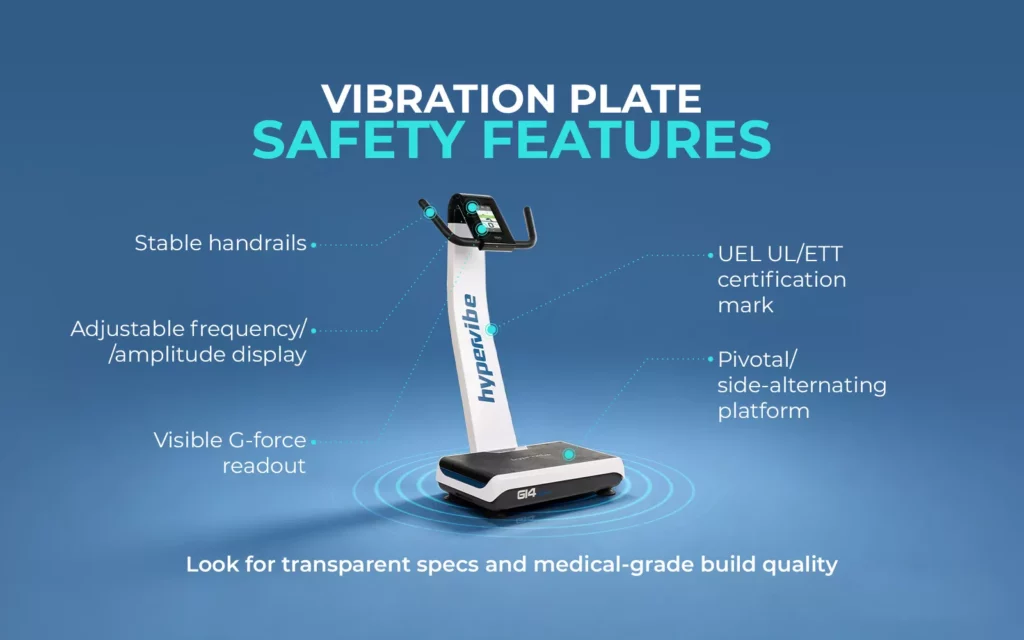
Key safety components and design standards to evaluate on commercial vibration equipment
The vibration plate market contains many machines that make clinical claims they cannot support and publish specifications that have not been independently verified.
Before buying, check for the following red flags:
|
Warning Sign |
Why It Matters |
|---|---|
|
No published G-force range |
You cannot match intensity to your goal or safely limit exposure |
|
No UL or ETL certification |
Electrical safety is unverified |
|
Frequency range listed as “up to X Hz” with no amplitude data |
Frequency alone does not determine G-force or training effect |
|
No contraindication information provided |
The brand has not engaged with clinical safety standards |
|
Medical outcome claims without cited research |
Violates responsible health product marketing and should prompt skepticism |
|
No physical handrail or stability support |
Unsuitable for seniors, beginners, or rehab users |
A machine that exceeds your target G-force range without your knowledge is not just less effective; it imposes a physical load you did not consent to and may not be ready for.
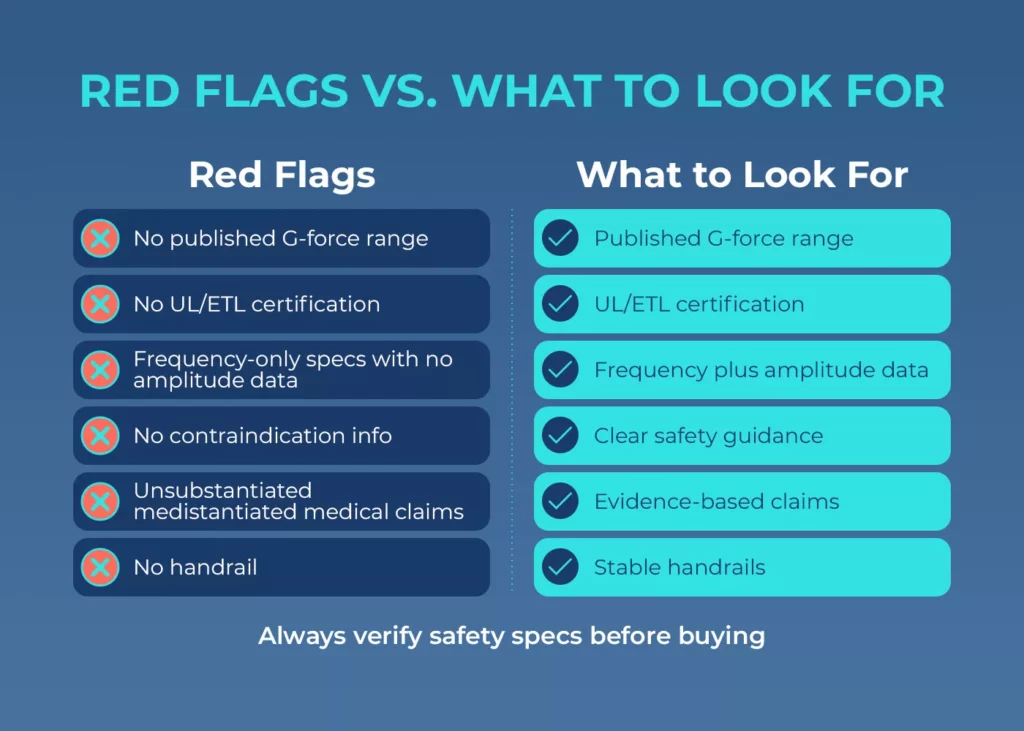
Checklist for comparing vibration plate technical specs, safety certifications, and manufacturer claims.
Transparency about specifications is a baseline requirement, not a premium feature.
Daily use is appropriate for lower-intensity goals like lymphatic drainage, circulation, and mobility, using 4 to 5 sessions per week at lower intensity settings. For strength, bone density, and weight loss goals at higher G-forces, three sessions per week with rest days allows the neuromuscular system and connective tissue to recover and adapt. Consecutive high-intensity sessions without rest do not accelerate results, but do increase overuse risk. For lymphatic drainage purposes, sessions of 5 to 15 minutes at low G-force (1 to 4 G) and lower frequencies are appropriate. Four to five sessions per week is reasonable for this goal. Consistency matters more than session length. Hydrate well before and after, and combine with light movement (walking, stretching) for best effect. Users with diagnosed lymphedema should work with a lymphatic therapist to integrate WBV into a supervised plan. Yes. A 2026 randomized trial found that WBV did not produce significant changes in blood pressure in obese adults during sessions at 30 Hz, and values remained within normal physiological ranges. However, individuals with uncontrolled high blood pressure (above 180/110 mmHg) were excluded from that research for safety reasons. If your blood pressure is controlled by medication and your physician has cleared you for general exercise, WBV at low to moderate intensity is likely appropriate. Always get explicit cardiovascular clearance first. There is insufficient research on WBV in children and adolescents with developing musculoskeletal systems, particularly developing growth plates. Until age-appropriate safety data exists, WBV use in children should be approached with caution and only with pediatric medical guidance. Adolescents with specific clinical indications (such as in supervised physical therapy) may use WBV under professional supervision. Using both simultaneously creates overlapping mechanical and neurological stimulation across the body. There is no research specifically evaluating this combination. The sensible approach is to separate them: use the Vibration Plate for your session, cool down, then use a handheld massager afterward for targeted muscle recovery if desired. Combining both at once adds an unquantified sensory and mechanical load and is unnecessary for any training goal. Avoid machines that do not publish verified G-force data, lack UL or ETL certification, make unsubstantiated medical claims, or provide no contraindication guidance. Prioritize machines with wide frequency and amplitude ranges, physical handrails, and transparent specification sheets. Cheap machines that publish only maximum frequency without amplitude data are hiding the information you need to train safely. There is no established evidence that WBV exercise used correctly causes brain damage. The concern typically arises from poor posture: locked knees allow vibratory force to travel unimpeded up the spine to the skull. Maintaining soft knees (10 to 15 degree bend) and a neutral spine posture dissipates this force through the musculature before it reaches the cervical spine and head. Users with recent concussions, brain surgery, or active neurological conditions should seek medical clearance before resuming WBV. Do not use a Vibration Plate when you are experiencing an acute illness with fever, an active inflammatory flare of any joint condition, acute dizziness or vertigo unrelated to WBV use, pregnancy, or during recovery from surgery before your physician has cleared you for exercise. Also avoid use immediately after eating a large meal, or if you feel acutely unwell for any reason. When in doubt, rest and consult your clinician.Can a vibration plate cause brain damage or be bad for your brain?
Whole Body Vibration training is a legitimate, research-supported exercise modality with an excellent safety profile when used correctly.
The rules are not complicated: maintain soft joints, start conservatively, respect your body’s signals, and be honest about your medical history before stepping on the platform.
The contraindications are not there to scare you.
They are there because mechanical vibration is real force, and force interacts differently with different bodies.
Knowing which conditions require clearance, which sensations are harmless, and which machine specifications actually matter gives you control over your training outcomes and your safety.
Hypervibe machines are built around the philosophy that medical-grade vibration technology should be accessible without compromising the clinical rigor that makes it effective.
If you have questions about which platform and settings are right for your specific situation, our team is available to help.
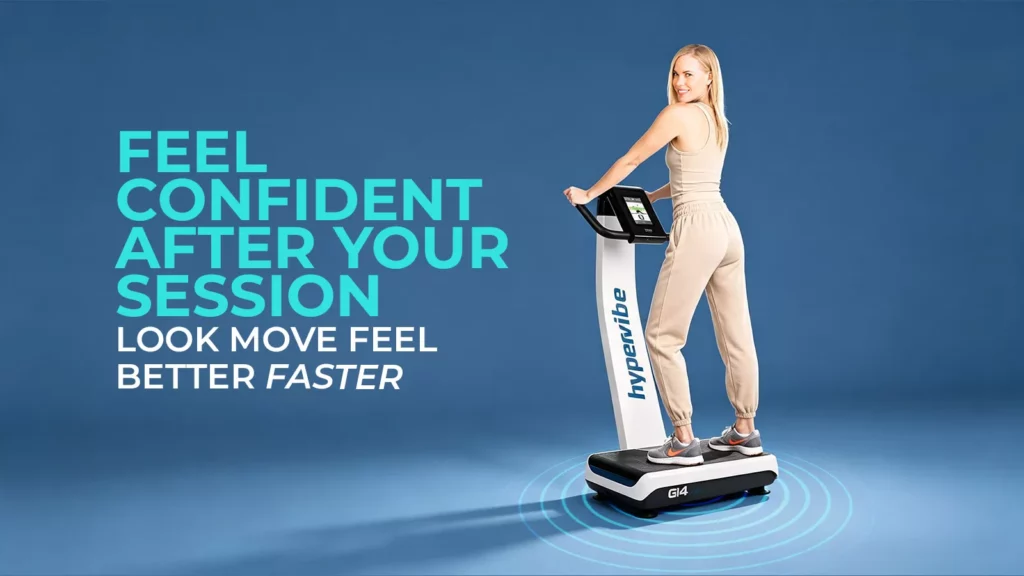
Post-session recovery and movement confidence on a pivotal vibration machine.
Disclaimer: This article is for educational purposes only and does not constitute individual medical advice. If you have a specific health condition, injury history, or are recovering from surgery, consult a qualified clinician before beginning any WBV program.

Here’s how we use a vibration plate for weight loss...

If, a few minutes into your session on the vibration...
Are vibration machines bad for you? Yes, if used incorrectly....
Yes, Vibration Plates or Whole Body Vibration (WBV) platforms, promote...
Most people get the best results using a vibration plate...

If you are one of those people who have tried every exercise routine and gym machine under the sun without...
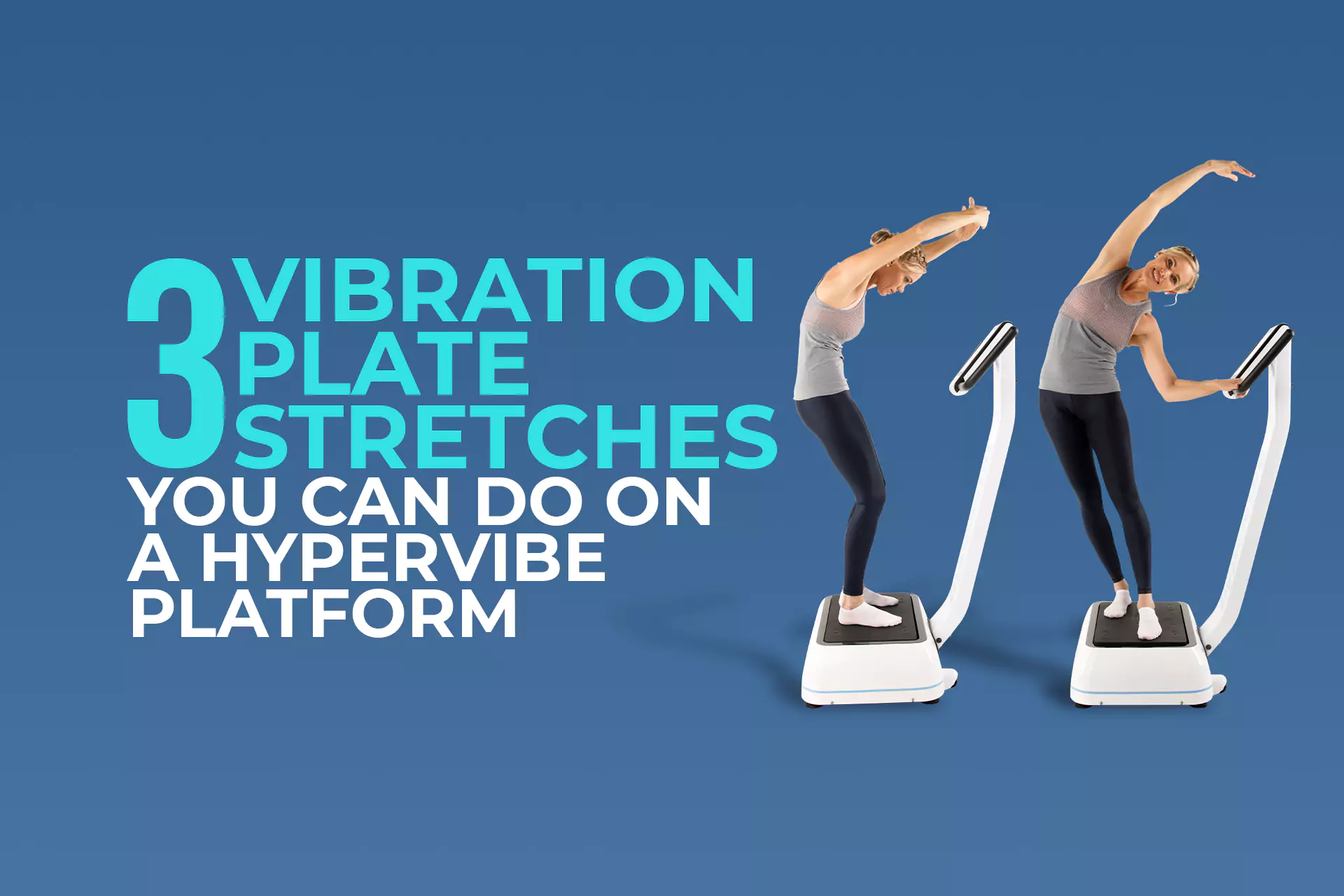
Three effective Vibration Plate stretches you can do include Low Back-Hamstring-Calf Combo Stretch (Posterior Chain Stretch) Hip Flexor Stretch Cat-Camel...
For many families and individuals living with Cerebral Palsy, daily life is a constant balance between effort and adaptation. Muscle...
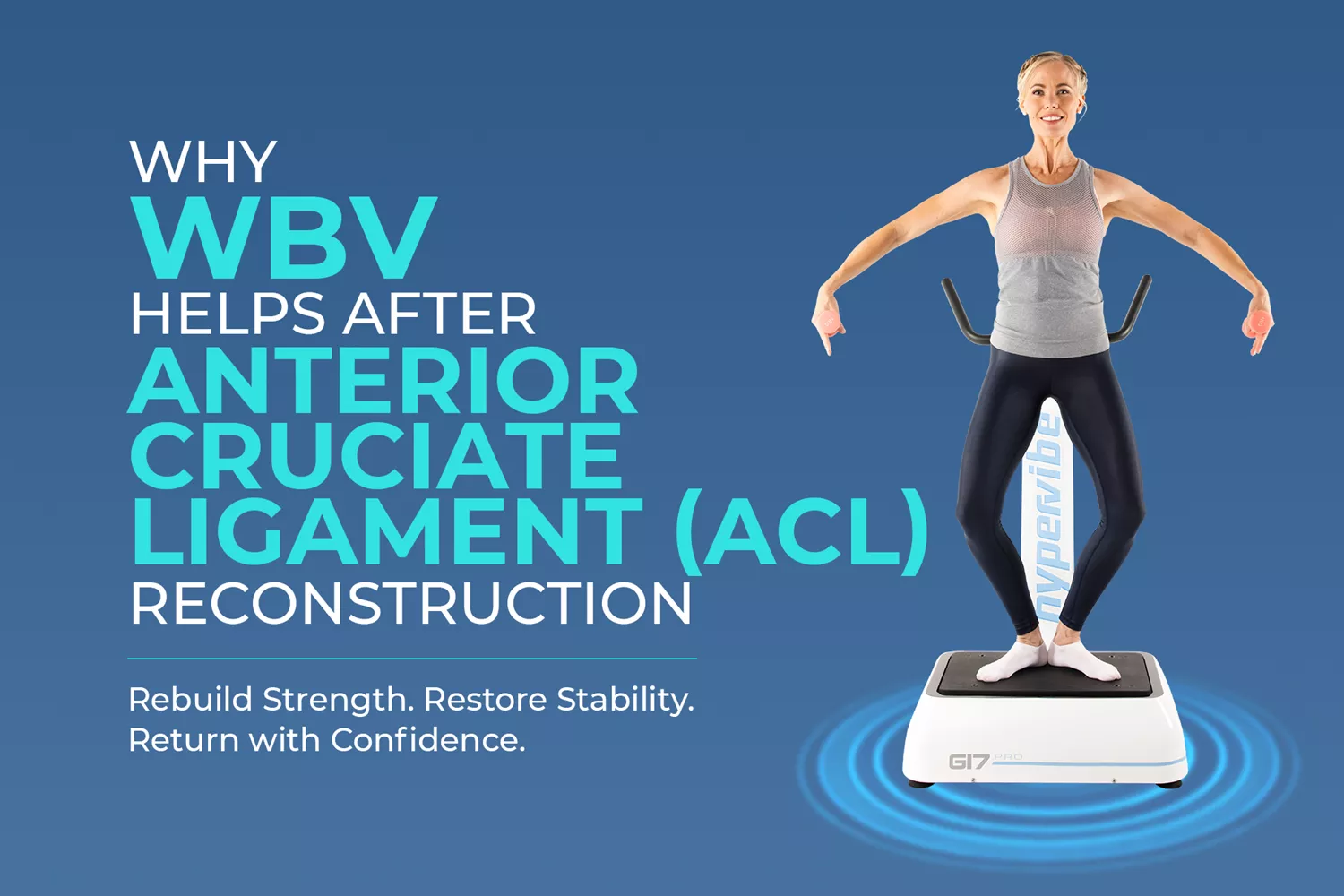
Can You Use a Vibration Plate After ACL Reconstruction? Yes, using a clinical-grade Vibration Plate after ACL surgery is both...
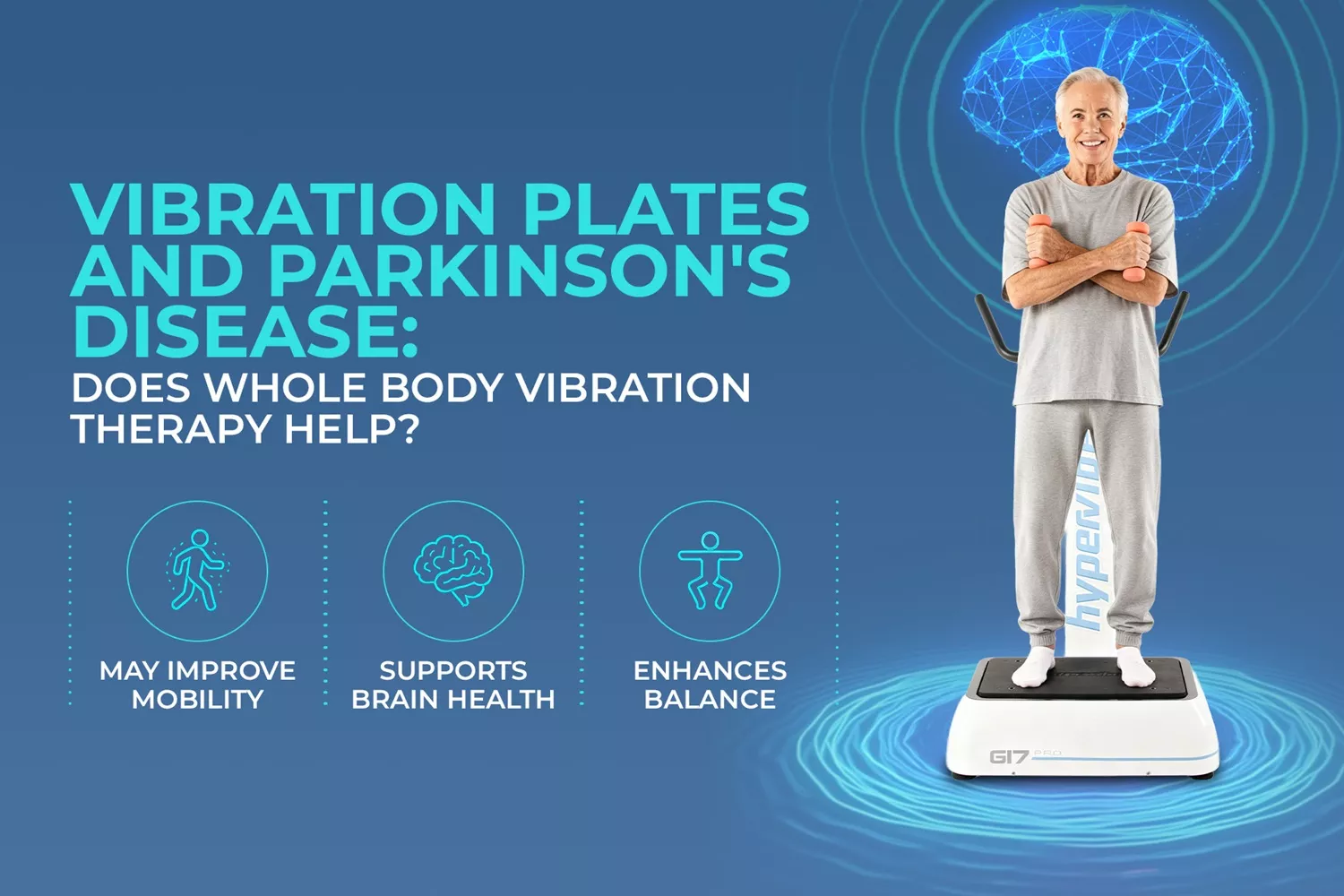
Does using a Vibration Plate help with Parkinson's disease? Emerging clinical evidence suggests that when used correctly and consistently, a...
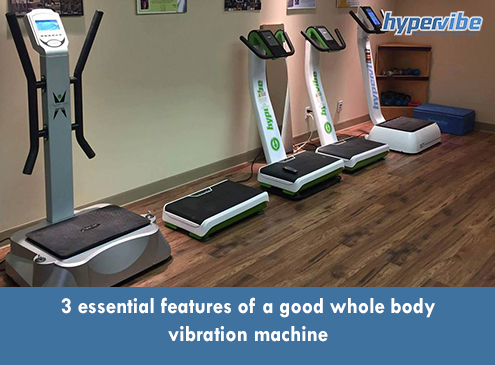
Vibration machine prices vary greatly, some brands being quite expensive while others are extremely cheap. This can be confusing for...
Here’s how we use a vibration plate for weight loss...
If, a few minutes into your session on the vibration...
Are vibration machines bad for you? Yes, if used incorrectly....
Yes, Vibration Plates or Whole Body Vibration (WBV) platforms, promote...
Most people get the best results using a vibration plate...